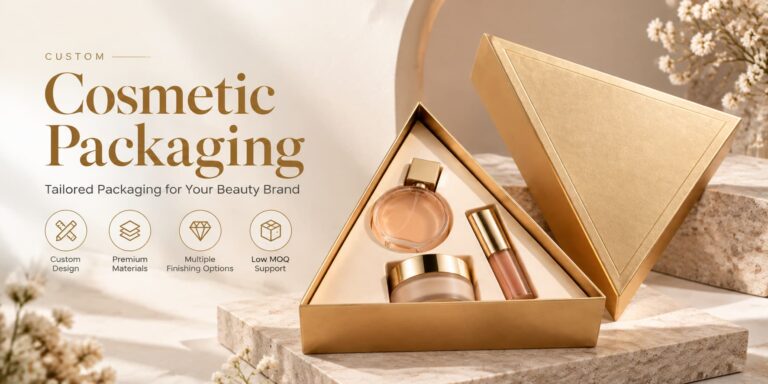
Custom Cosmetic Boxes for Skincare, Makeup, and Beauty Brands

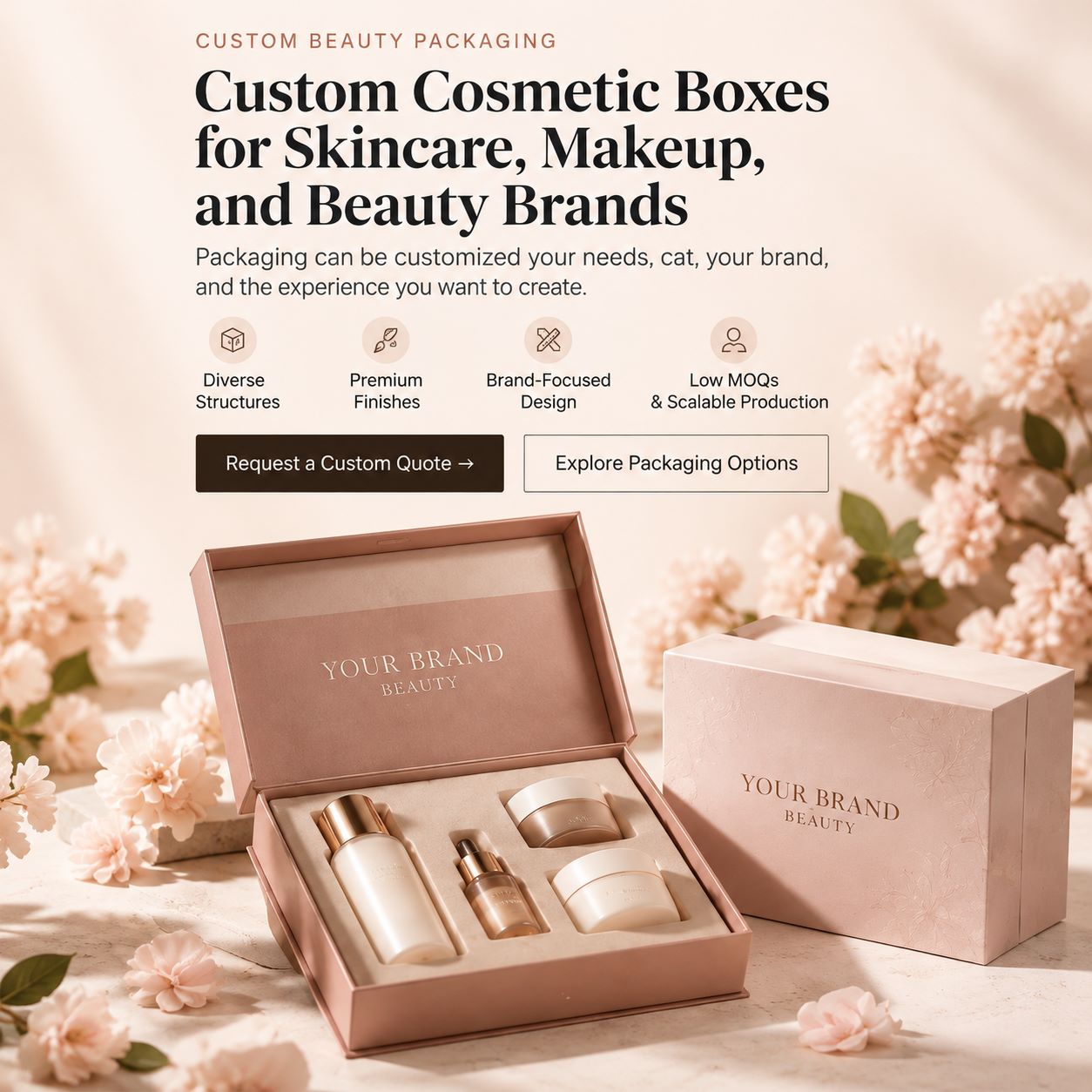
Packaging does more than hold a beauty product. It shapes the first impression, communicates brand positioning, protects the product, and influences how customers experience a purchase. A well-designed cosmetic box can make a skincare collection feel more cohesive, present a perfume bottle more elegantly, and help a makeup brand create a recognizable identity across its product range.
However, attractive packaging is only part of the equation. The box must also fit the product, support its weight, accommodate the required printing and finishes, and work within the project’s budget and production schedule. A design that looks impressive on screen may need structural adjustments before it can be manufactured consistently.
LVPACK develops custom packaging solutions for brands looking to create packaging around their products and presentation requirements. From individual skincare boxes to coordinated beauty gift sets, the objective is to balance appearance, functionality, and production practicality.
Custom cosmetic boxes can include different structures, paper and board materials, printed graphics, decorative finishes, and internal inserts. The right combination depends on the product, brand identity, order quantity, and intended use.
Whether you are developing a new product line or updating existing packaging, understanding these choices will help you make better decisions before sampling and production begin.
1. Custom Cosmetic Boxes for Skincare, Makeup, and Beauty Brands
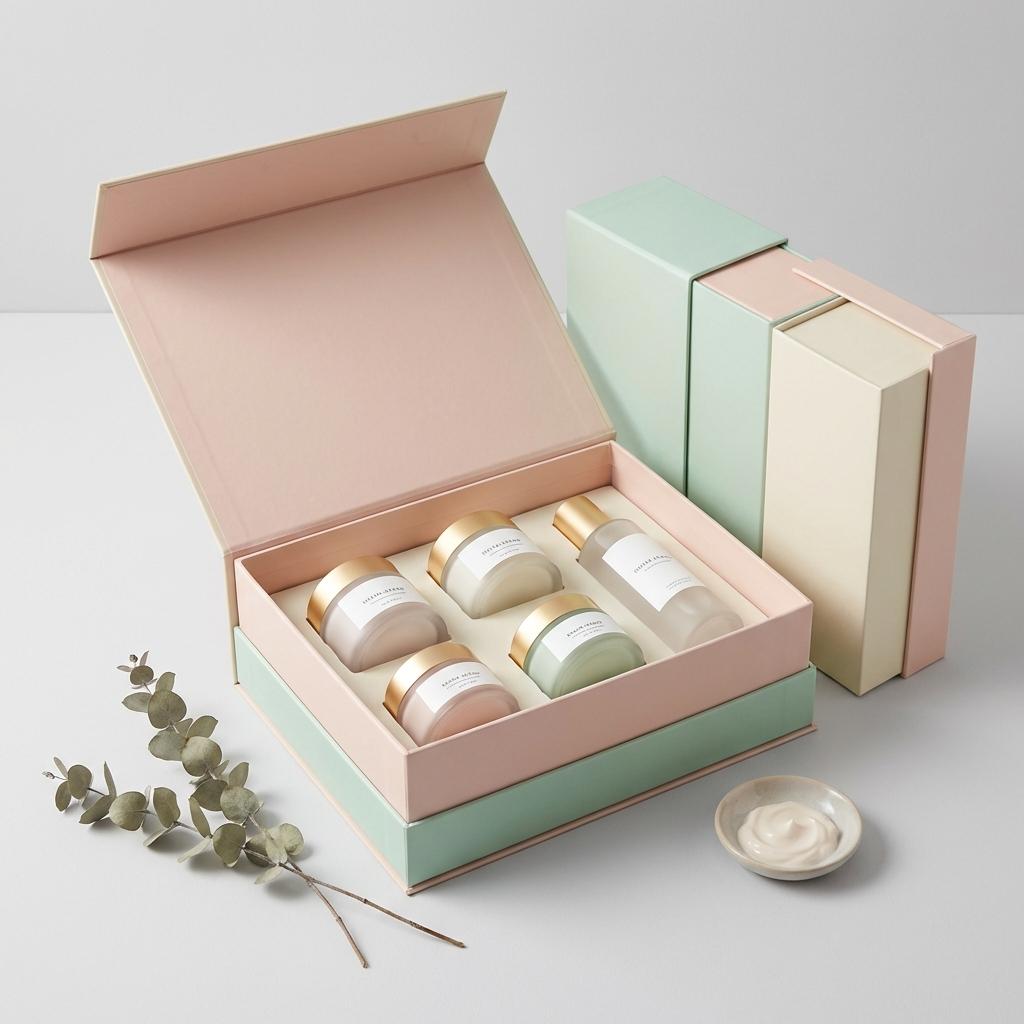
Different beauty products have different packaging requirements. A lightweight carton for a facial cream does not need the same structure as a rigid presentation box holding several glass serum bottles. Choosing the right packaging starts with understanding what the product needs and how the brand wants it to be presented.
Custom cosmetic boxes allow brands to coordinate the box structure, dimensions, materials, graphics, and internal layout instead of relying entirely on standard packaging formats. This flexibility is particularly useful when a product has unusual dimensions, belongs to a coordinated collection, or needs a distinctive retail presentation.
Custom skincare packaging
Skincare products often include bottles, jars, tubes, and multiple-item sets. Each format creates different requirements for internal space, product positioning, and protection.
For example, a serum bottle may need a fitted compartment to prevent excessive movement. A facial cream jar may require enough clearance for easy placement and removal. A skincare gift set containing several products may need separate compartments to keep the items organized.
When developing custom skincare packaging, consider:
The dimensions and weight of each product.
Whether the packaging holds one item or several products.
The desired retail or gift presentation.
The amount of internal support required.
The space needed for product information and branding.
The practical requirements for storage, handling, and shipping.
A coordinated range of custom skincare boxes can also help maintain a consistent visual identity across different product sizes. Using related colors, typography, and finishing choices can make separate products feel like part of the same collection.
Custom makeup packaging
Makeup products range from small lipsticks and compacts to palettes and coordinated collections. Packaging must accommodate the product’s shape while presenting the brand clearly.
A compact folding carton may suit an individual retail item, while a more elaborate structure may be appropriate for a makeup gift set or promotional collection. Custom dimensions can reduce unnecessary internal space, and a suitable insert can help organize multiple products.
For makeup packaging, consider the relationship between product visibility, shelf presentation, printed information, and protection during handling. The packaging should support the intended retail experience without introducing unnecessary complexity.
Custom perfume boxes
Perfume packaging often places greater emphasis on presentation. Bottle shape, glass weight, internal support, and the opening experience can all influence the box design.
A rigid presentation box may be suitable for a premium fragrance set, while other formats may work better for individual retail products. The appropriate solution depends on the bottle, the brand’s positioning, the desired finish, and the budget.
When developing custom perfume boxes, confirm the bottle dimensions and weight before finalizing the internal layout. A visually attractive box is not sufficient if the bottle shifts excessively or the insert makes removal difficult.
Custom beauty gift sets and private-label packaging
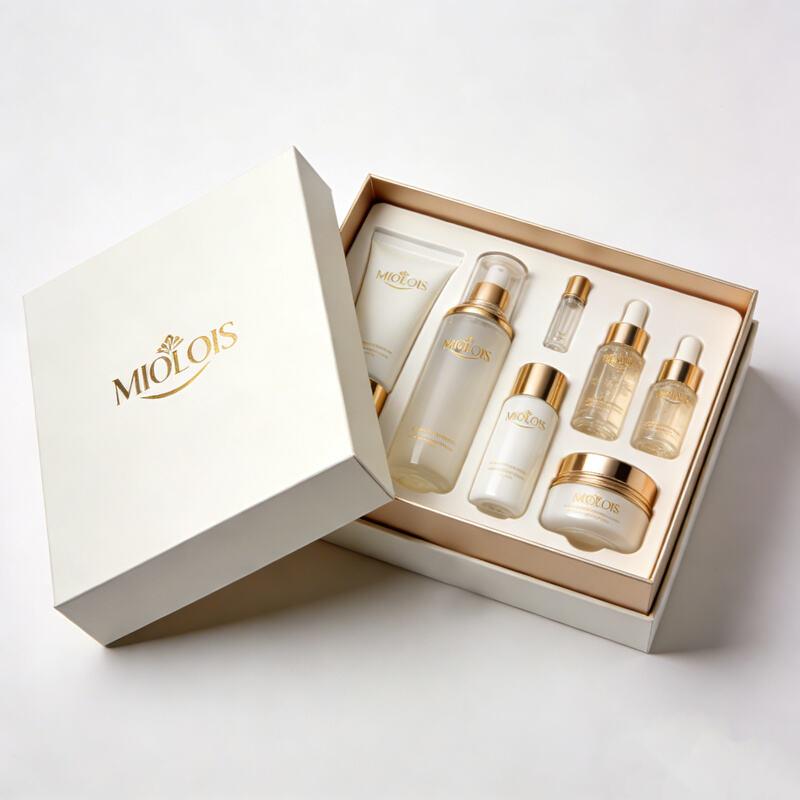
Gift sets bring additional challenges because multiple products must fit within a single package. The design may need separate compartments for bottles, jars, accessories, or printed inserts. The overall arrangement should look intentional while remaining practical to assemble.
Private-label beauty brands also benefit from consistent packaging specifications. A shared design language across different box sizes can make a product range look more organized and recognizable.
For brands developing several products at once, it is worth considering the entire packaging family before approving individual designs. This can help coordinate materials, colors, dimensions, and finishing choices across the collection.
2. Custom Cosmetic Box Packaging: Styles, Structures, and Applications
The structure of a cosmetic box affects its appearance, functionality, assembly, and cost. The best format is not necessarily the most elaborate one. It is the structure that meets the product’s requirements and supports the intended customer experience.
Magnetic closure boxes
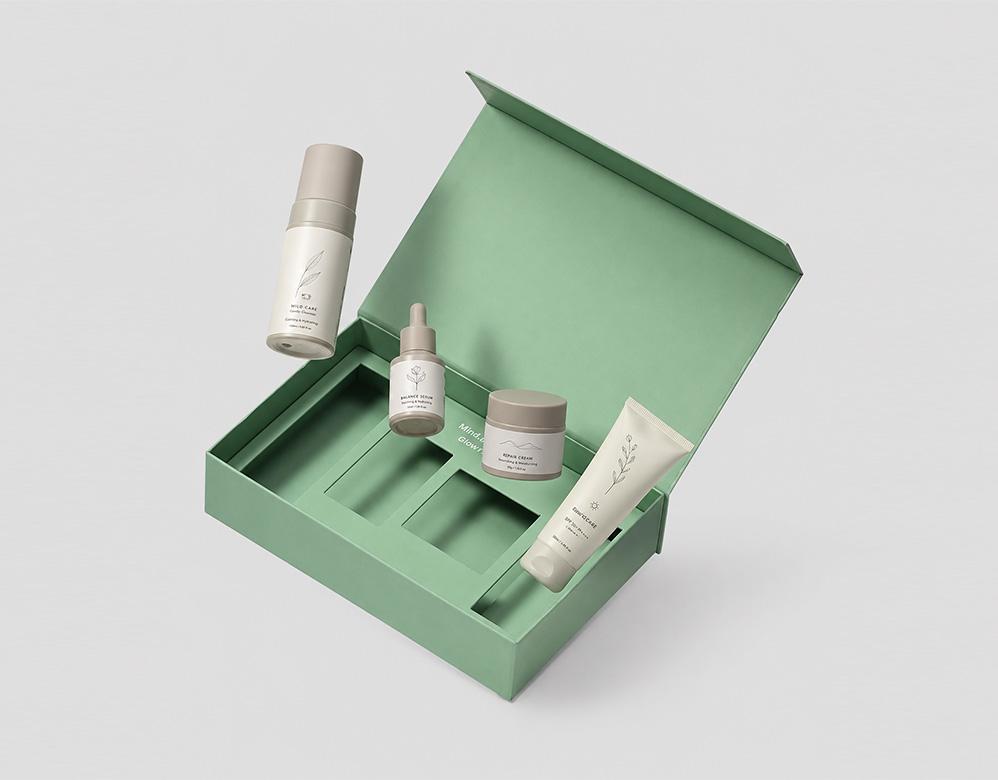
Magnetic closure boxes are commonly associated with premium presentation packaging. Their hinged construction and closing mechanism can create a refined opening experience for skincare sets, beauty gifts, and selected fragrance products.
They may be suitable when the packaging needs to feel substantial or present several products together. However, the structure and insert should be designed around the actual contents. A magnetic box that is unnecessarily large or complicated can increase material use and assembly requirements without improving the customer experience.
Drawer boxes
Drawer boxes use an inner tray that slides into an outer sleeve. They can work well for smaller beauty products, selected skincare sets, and gift packaging where a distinctive opening motion is desired.
The fit between the tray and sleeve is important. If the fit is too tight, opening may become difficult; if it is too loose, the drawer may slide out too easily. Product dimensions, board thickness, and the selected materials should be considered during development.
Lid-and-base boxes
Lid-and-base boxes use a separate lid and base. Their simple, familiar structure can suit skincare products, gift sets, and premium retail packaging.
This format may be appropriate when the brand wants a clean presentation without a more complex closing mechanism. The final design can be adjusted through dimensions, paper selection, printing, and suitable decorative finishes.
Folding cartons
Custom folding cartons can be useful for individual skincare products, makeup items, and other retail packaging applications. They can be designed to fold flat before assembly, which may help reduce storage volume compared with some rigid box formats.
The material and structure should be selected according to the product’s weight, handling requirements, and desired appearance. A folding carton should not automatically be treated as a replacement for a rigid box; the two formats serve different needs.
How to choose the right structure
Before selecting a box style, answer four questions:
What product will the box hold, and how heavy is it?
Will the box be sold individually, included in a set, or used as gift packaging?
How important are the opening experience and visual presentation?
What budget and production requirements must the design meet?
A simple structure can be the better choice when the packaging needs to be efficient and straightforward. A more elaborate box may be worthwhile when presentation is central to the product’s value.
The decision should be made using the actual product, not appearance alone. Where possible, compare suitable structures through samples before confirming the final design.
3. Custom Cosmetic Box Design: Dimensions, Inserts, and Product Protection
A successful cosmetic box should fit the product properly, present it neatly, and provide an appropriate level of support. Dimensions and internal inserts should therefore be considered early in the design process rather than added as an afterthought.
Getting the dimensions right
Start with the actual product measurements. For bottles and jars, record the height, width or diameter, and any unusual features that affect how the item sits inside the box. Include caps, pumps, closures, and other components that contribute to the overall dimensions.
The internal space must allow the product to fit without excessive movement. At the same time, the box should not be unnecessarily oversized, as extra space can affect material use, shipping volume, and the overall presentation.
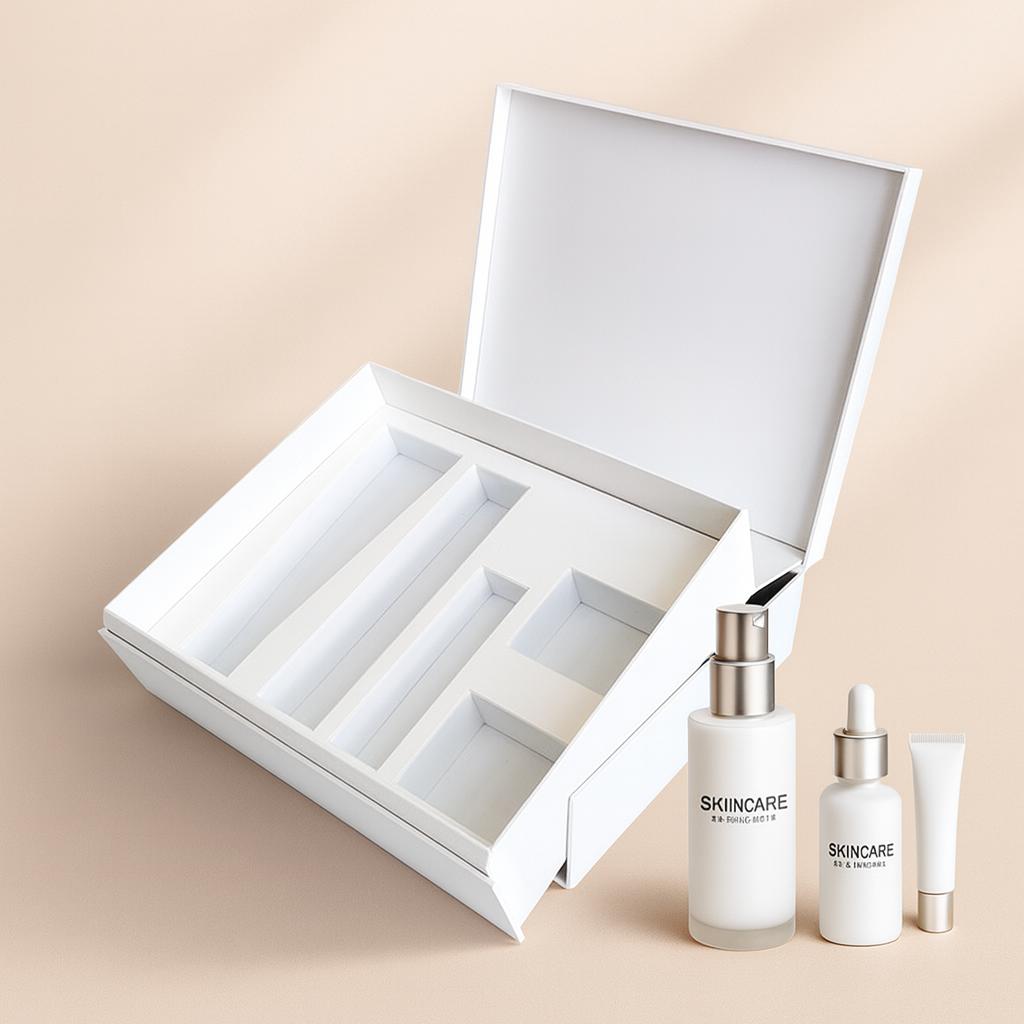
For a set containing several products, map the arrangement before finalizing the outer dimensions. The layout should account for each item’s size, the space between compartments, the insert thickness, and any accessories or printed materials.
Choosing the right insert
An insert can help position the product, separate individual items, and improve the presentation when the box is opened. The appropriate design depends on the product’s shape, weight, fragility, and the intended packaging experience.
Possible options may include paperboard inserts, foam inserts, or other suitable materials, depending on the project and the manufacturer’s confirmed capabilities.
When assessing custom cosmetic box inserts, consider:
Whether the product sits securely in its compartment.
Whether the product can be removed without excessive effort.
Whether the insert supports the product at suitable points.
Whether multiple items remain organized during normal handling.
Whether the insert material suits the desired appearance and packaging requirements.
An insert should be evaluated together with the box. A well-designed insert may still perform poorly if the outer structure is too loose, the internal dimensions are incorrect, or the product is supported at inappropriate points.
Balancing protection and presentation
Protection requirements vary according to the product and its distribution conditions. A lightweight carton for a small cosmetic item may need a different level of support from a gift box containing several glass bottles.
Consider how the package will be handled, stored, packed, and transported. If the product is fragile, testing the assembled packaging under relevant handling conditions can help identify areas that need improvement.
Packaging design should also account for the customer experience. An insert that holds the product securely but makes it difficult to remove may create frustration. The goal is to balance fit, protection, appearance, and ease of use.
Designing packaging for a product range
If your brand sells several related products, plan the packaging as a system. Standardizing selected design elements can help maintain consistency while allowing different box sizes and internal layouts.
For example, a skincare range may use a shared color palette and logo treatment across several cartons, while each product has dimensions appropriate to its container. A gift set can then use a coordinated outer box and custom insert to bring the products together.
This approach can support brand recognition and simplify future packaging development. Before approving the design, check that each product version has the correct specifications and that changes to one item do not create problems for the rest of the range.
4. How to Customize Cosmetic Boxes: From Design to Sample Approval
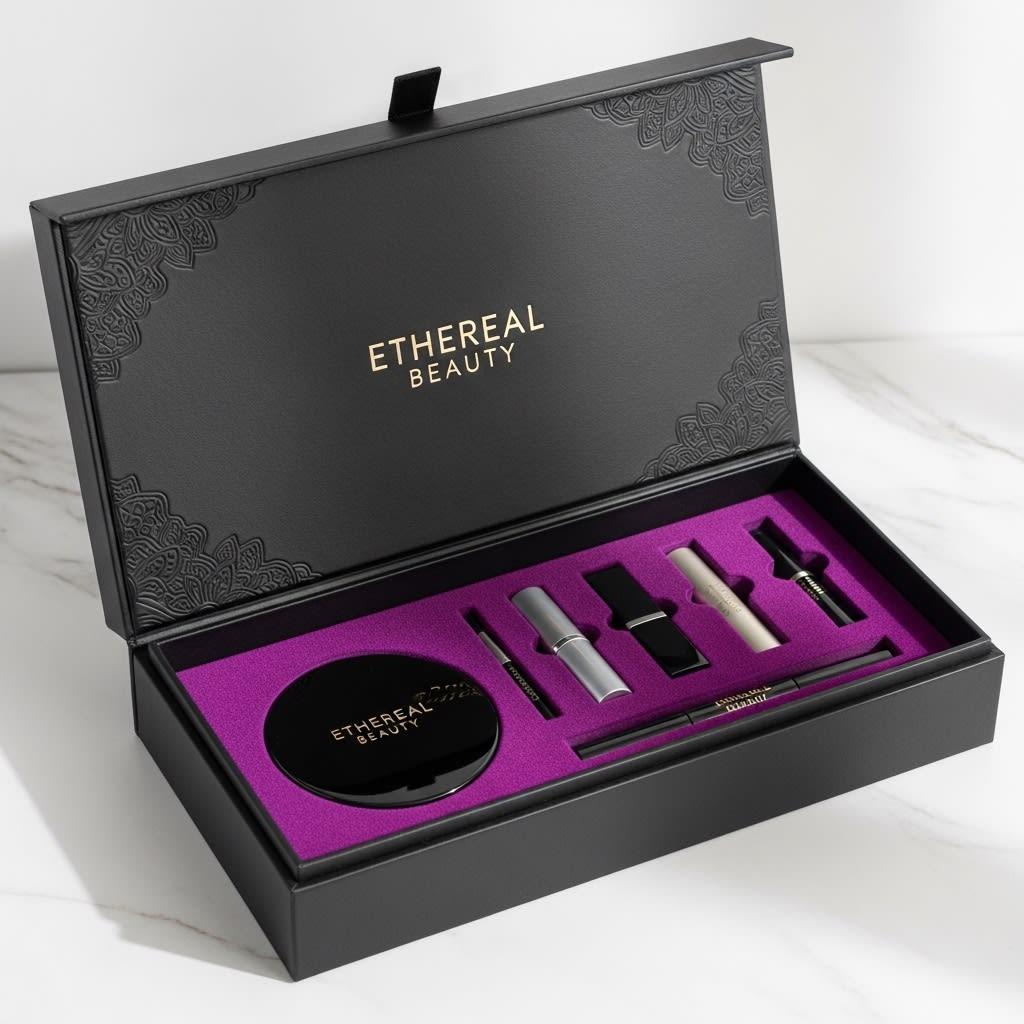
Custom packaging development works best when the product requirements, design expectations, and practical constraints are clear from the beginning. You do not need to have every technical detail finalized before contacting a packaging supplier, but the more relevant information you can provide, the easier it is to assess suitable options.
Step 1: Define your packaging requirements
Begin with the product itself. Share its dimensions, weight, quantity, and any special handling or presentation requirements. Explain whether the box is intended for retail sale, a gift set, promotional use, or another application.
It also helps to provide a target budget and desired delivery date. These details can influence the choice of structure, materials, finishing options, and production plan.
If you have reference packaging, photographs, or an existing sample, include them. A reference can communicate the desired look or opening style, although the final design still needs to be checked against your actual product and production requirements.
Step 2: Select the structure, materials, and finishes
Once the requirements are understood, compare suitable box formats. Consider the balance between appearance, product fit, assembly, storage, and cost.
Material selection should follow the same logic. The paper or board needs to suit the structure and intended use. The printing and decorative finishes should complement the brand design without creating unnecessary cost or complexity.
For example, a minimalist skincare package may rely on carefully chosen paper and clean printing rather than multiple decorative effects. A gift box may use a more substantial structure and selected finishes to create a different presentation.
The aim is not to use as many customization options as possible. It is to select the options that contribute meaningfully to the finished product.
Step 3: Prepare the design and technical details
Provide the available artwork, logo files, color references, product information, and any required text. If the structural design is still being developed, clarify which elements are fixed and which can be adjusted.
The technical review should cover the outer dimensions, internal layout, insert design, opening method, printing areas, and finishing requirements. Any unclear details should be resolved before the sample is approved.
Where color matching is important, establish the relevant color references and approval method in advance. The final appearance can be influenced by the selected material and finishing process, so screen previews alone may not be enough to judge the finished result.
Step 4: Review and approve the sample
A sample gives you the opportunity to assess the proposed packaging before committing to mass production. Check the structure, dimensions, opening and closing, material appearance, printing, finishing, and product fit.
For a gift set, place all the intended products in the box and review the complete arrangement. Confirm that the insert holds the products appropriately and that the package can be assembled as intended.
Record any changes clearly. If the dimensions, artwork, material, or finish are revised, ensure the final approved version reflects those changes.
Step 5: Confirm the production specification
Before mass production, make sure both sides are working from the same approved specification. It should identify the box structure, dimensions, materials, artwork, finishing requirements, insert details, quantity, packaging method, and agreed delivery terms.
Clear specifications help reduce misunderstandings and make quality checks more consistent. They also provide a reference when placing repeat orders or developing related packaging in the future.
A successful custom project is not simply a design that looks good in a sample. It is a design that meets the agreed requirements and can be produced consistently within the project’s practical constraints.
5. What Determines the Cost of Your Custom Cosmetic Boxes?
The price of custom cosmetic boxes depends on more than the size of the finished package. Structure, material, printing, decorative finishes, inserts, order quantity, assembly, and shipping can all affect the total cost.
The most useful way to compare quotations is to make sure every supplier is pricing the same specifications. Two boxes may look similar in a photograph but use different board thicknesses, inserts, finishing processes, or assembly methods. Those differences can affect both price and performance.
Box structure and dimensions
Structure influences material use and the number of manufacturing steps required. A simple folding carton and a rigid presentation box are different packaging products, even when they hold the same item.
Larger boxes generally require more material, while complex structures may require additional components or assembly. Unusual dimensions can also affect how materials are laid out and how efficiently the packaging can be produced.
When requesting a quotation, provide the intended dimensions and box style wherever possible. If you are open to alternative structures, ask the supplier to explain the differences in appearance, functionality, and cost.
Material selection
Paper and board choices affect appearance, rigidity, weight, and the overall feel of the packaging. Different materials may also respond differently to printing and finishing processes.
The most expensive material is not automatically the best choice. A suitable material should meet the project’s practical requirements while supporting the desired presentation.
When comparing material options, ask for clear specifications rather than relying on descriptions such as “premium paper” or “heavy board.” The exact material and construction should be confirmed in the quotation and approved sample.
Printing and decorative finishes
Printing requirements can influence the production process, especially when the design includes several colors, special finishes, or precise logo treatments.
Options such as foil stamping, embossing, debossing, and selected coatings may add extra production steps. Their cost depends on the design, coverage, material, and manufacturing method.
A restrained finish can sometimes create a more effective result than combining many effects. For example, a carefully positioned foil-stamped logo may provide a clear focal point without covering large areas of the box in decorative treatments.
Before selecting a finish, consider the visual effect you want, the material it will be applied to, and whether it suits the overall packaging design.
Inserts, assembly, and packaging
Internal inserts add components to the packaging and may require separate design or production work. Their cost depends on the selected material, shape, number of compartments, and level of customization.
Assembly requirements can also affect the quotation. A box containing several inserts or multiple products may require more handling than a simpler format.
Shipping and protective packing should be considered separately from the factory unit price. Depending on the order and destination, freight, import charges, insurance, and local delivery may contribute to the final landed cost.
Order quantity and MOQ
The minimum order quantity (MOQ) depends on the supplier, box structure, material, and production setup. There is no single MOQ that applies to every custom cosmetic box.
LVPACK’s previously provided company information indicates a typical MOQ of 500 pieces for custom rigid boxes. This should be reconfirmed for your specific design, as the required quantity may vary with the structure, materials, finishes, and production conditions.
When comparing quantities, request quotations for your initial order and a realistic repeat order. This can help you understand how the unit price may change as your business grows.
A smaller order may be useful for testing a new product, while a larger production run may distribute certain setup costs across more units. However, the lowest unit price is not always the best commercial decision if the order exceeds your likely demand or creates unnecessary inventory.
How to request an accurate quotation
To make quotations easier to compare, provide the same information to each supplier:
Box style and dimensions.
Product type, weight, and quantity.
Paper, board, and insert requirements.
Artwork, printing colors, and finishing details.
Packaging and assembly requirements.
Delivery destination and target date.
Any required documents or material specifications.
If some details are undecided, explain which elements are flexible. A supplier may be able to suggest alternatives, but those alternatives should be clearly described so you can compare like with like.
6. From Sample Approval to Delivery: What to Expect
A clear production plan helps you coordinate packaging with product manufacturing, marketing activities, and launch dates. Instead of relying on a single estimated delivery date, ask how the project will move from design confirmation through sampling, production, inspection, and dispatch.
How long does sampling take?
Sampling time depends on the design’s complexity, material availability, finishing requirements, and the number of revisions needed.
LVPACK’s previously provided company information lists a typical sample lead time of 7–10 working days. Treat this as a reference rather than a guaranteed timeline. Confirm the expected schedule for your specific design and clarify when the clock starts, such as after receiving the required artwork or confirming the specifications.
A simple design may be easier to sample than a complex box with multiple compartments and special finishes. If a change is requested after the initial sample, additional work may be necessary.
How long does mass production take?
Mass-production lead time depends on the confirmed specifications, order quantity, material availability, production schedule, and finishing processes.
LVPACK’s previously provided company information lists a typical production lead time of 20–25 working days for its relevant packaging projects. This estimate should be reconfirmed before placing an order and should not be treated as a universal commitment for every box type.
Ask whether the quoted lead time begins after sample approval, deposit receipt, artwork confirmation, or another agreed milestone. Also confirm whether the estimate covers manufacturing only or includes inspection, packing, and shipping.
What can delay a packaging project?
Common causes of delays include:
Incomplete or frequently revised artwork.
Changes to dimensions or structural design.
Materials or special finishes requiring additional preparation.
Slow sample feedback or approval.
Changes in order quantity or production priorities.
Inspection issues that require correction.
Shipping arrangements or customs procedures.
Not every delay can be eliminated, but many can be reduced through early planning. Provide complete product measurements, agree on the design approval process, and establish who is responsible for signing off on the final sample.
If the packaging is required for a product launch, build reasonable contingency time into the schedule. Avoid planning the entire launch around the most optimistic production estimate.
What should be confirmed before dispatch?
Before the finished packaging is shipped, confirm the agreed quantity, packaging method, delivery destination, shipping terms, and required documentation.
If the order requires inspection, establish the inspection criteria and timing in advance. This helps ensure that any issues are identified while there is still time to discuss corrective action.
A clear delivery plan should distinguish the factory production lead time from the total time required for the goods to reach their destination. International freight and import processing can add time beyond manufacturing.
7. Custom Cosmetic Box Manufacturing: Quality Control from Sample to Bulk Production
Packaging quality is not defined by appearance alone. The finished box should match the approved specifications, fit the intended product, and perform as expected during normal handling and use.
Quality requirements should be established before production begins. If the supplier and buyer interpret the specifications differently, even a well-made box may fail to meet expectations.
Check dimensions and structure
Dimensions should be checked against the approved specifications. The box should assemble correctly, close as intended, and provide suitable internal space for the product and insert.
For rigid boxes, pay attention to the overall shape, corners, wrapping, and alignment of the lid or closure. For folding cartons, check the folds, closure, assembly, and fit.
If the box contains multiple compartments, inspect the entire arrangement rather than checking each component in isolation.
Check printing and finishing
Printed packaging should be reviewed for the agreed artwork, text, logo placement, color expectations, and print alignment. Decorative finishes should be checked for consistency and for their position relative to the design.
The material can influence the final appearance, so color approval should account for the actual substrate and finish. Where exact color consistency is important, agree on the reference standard and approval method before mass production.
The goal is to establish clear acceptance criteria, not to rely on vague descriptions such as “good printing” or “premium finish.”
Check inserts and product fit
The insert should hold the intended product in the agreed position. Check that bottles and jars fit their compartments, that accessories remain organized, and that the product can be removed without unnecessary difficulty.
Where product protection is important, assess the assembled package under conditions relevant to its intended handling and distribution. The appropriate checks depend on the product and the risks involved.
A sample should be reviewed with the actual product whenever possible. A compartment that looks suitable on a drawing may need adjustment once the product is placed inside.
Keep an approved reference sample
The final approved sample provides a physical reference for the agreed appearance, structure, and finishing details. Keep the associated specifications and artwork version together so that the production team and buyer are working from the same information.
If the design changes after approval, document the revision and confirm whether another sample or additional approval is required.
This is particularly important for repeat orders. Even when the design remains unchanged, the buyer should confirm the current specifications, quantity, and schedule rather than assuming that every detail will automatically be identical.
Agree on inspection and corrective action
Before production, discuss how the order will be inspected, what defects are considered acceptable or unacceptable, and how discrepancies will be handled.
For larger or more critical orders, a third-party inspection may be worth considering. The inspection scope should be agreed in advance and should match the product’s actual risks and requirements.
Clear quality criteria help both parties make decisions based on documented expectations. They also make it easier to investigate a problem and determine an appropriate corrective action.
8. Work with LVPACK on Your Custom Cosmetic Packaging Project
Choosing custom packaging is a practical process. You may already have a finished design, or you may only have a product sample and a general idea of how the packaging should look. Both can be useful starting points for a project discussion.
LVPACK’s product offering includes custom paper packaging and box formats for beauty and gift applications. The appropriate solution depends on the product specifications, design requirements, quantity, and confirmed manufacturing capabilities for the project.
What information should you provide?
You can help the quotation process move forward by preparing the following details:
Product type, dimensions, and weight.
Preferred box style or reference image.
Required quantity and expected repeat-order volume.
Material and finishing preferences, if known.
Product insert or compartment requirements.
Artwork, logo files, and color references, if available.
Target sample date and required delivery date.
Delivery destination and any relevant packaging requirements.
You do not need to have every answer before making an inquiry. If you are still deciding between box styles or finishes, explain your goals and identify the elements that can be adjusted.
What happens after you make an inquiry?
The next steps depend on the information available and the complexity of the project. A typical discussion may cover product dimensions, box structure, material options, printing, finishing, quantity, sampling, and production timing.
Before confirming an order, make sure the quotation and approved specifications clearly identify the agreed product. Clarify the payment terms, lead time, shipping arrangements, and responsibilities for approval and inspection.
If the project requires a material, finish, certification, or manufacturing process that has not yet been confirmed, raise that requirement before making a commitment. The supplier should verify whether it can be supported rather than relying on assumptions.
Start with your product and packaging goals
If you already have a packaging design, share the artwork, dimensions, quantity, and reference images. If you are at an earlier stage, describe the product, the intended presentation, and your approximate order requirements.
This information can help establish which packaging options are worth exploring and what additional details are needed for a reliable quotation.
To discuss your project, visit Contact LVPACK and share your custom cosmetic box requirements.
9. Custom Cosmetic Boxes: Frequently Asked Questions
What is the MOQ for custom cosmetic boxes?
The minimum order quantity depends on the box structure, materials, finishes, and production setup. LVPACK‘s previously provided company information indicates a typical MOQ of 500 pieces for custom rigid boxes. Confirm the actual MOQ for your design before placing an order.
How much do custom cosmetic boxes cost?
Pricing depends on dimensions, structure, material, printing, decorative finishes, inserts, quantity, assembly, and shipping. For an accurate comparison, provide the same specifications to each supplier and confirm which services and costs are included in the quotation.
Can I customize the box size and insert?
Custom dimensions and inserts may be possible depending on the design and confirmed manufacturing capabilities. Provide the product measurements, weight, and required internal arrangement so the proposed box can be assessed against the actual product.
Can I use my own logo and artwork?
Custom packaging can generally incorporate brand logos and artwork when the required files and specifications are provided. Confirm the artwork format, print areas, colors, and any finishing requirements with the supplier before sampling.
Which is better: a rigid box or a folding carton?
Neither format is automatically better. Rigid boxes may suit premium presentation and gift packaging, while folding cartons may suit individual retail products and applications where compact storage is useful. The choice depends on product requirements, brand positioning, budget, and distribution needs.
How long does sampling and production take?
The timeline depends on the design, materials, quantity, revisions, and factory schedule. LVPACK’s previously provided company information lists typical sampling of 7–10 working days and mass production of 20–25 working days for relevant projects. Confirm the actual schedule and starting milestone for your order.
Can custom cosmetic boxes include special finishes?
Possible finishes depend on the supplier’s confirmed capabilities and the chosen materials. Options may include foil stamping, embossing, debossing, or selected coatings. Request samples or relevant examples before approving a finish for mass production.
How can I make sure the finished boxes match the approved sample?
Confirm the final specifications, artwork, materials, dimensions, inserts, and finishing requirements in writing. Keep an approved reference sample and agree on inspection criteria before production begins. Any later changes should be documented and approved.
What should I provide to request a quotation?
Provide the product dimensions, box style, quantity, reference images, artwork if available, material preferences, finishing requirements, and target delivery date. If some details are undecided, explain your goals and ask which information is needed to evaluate suitable options.
Can I start a project without a finished design?
Yes, you can begin by sharing your product details, packaging goals, reference images, and approximate quantity. The available options and development steps will depend on the project and the supplier’s confirmed design and sampling services.
How do I get started with LVPACK?
Prepare the information you already have about your product and packaging requirements, then contact LVPACK to discuss the project. Confirm the proposed structure, materials, pricing, MOQ, sampling process, production schedule, and delivery terms before placing an order.