Choosing Custom Jewelry Boxes for Your Brand

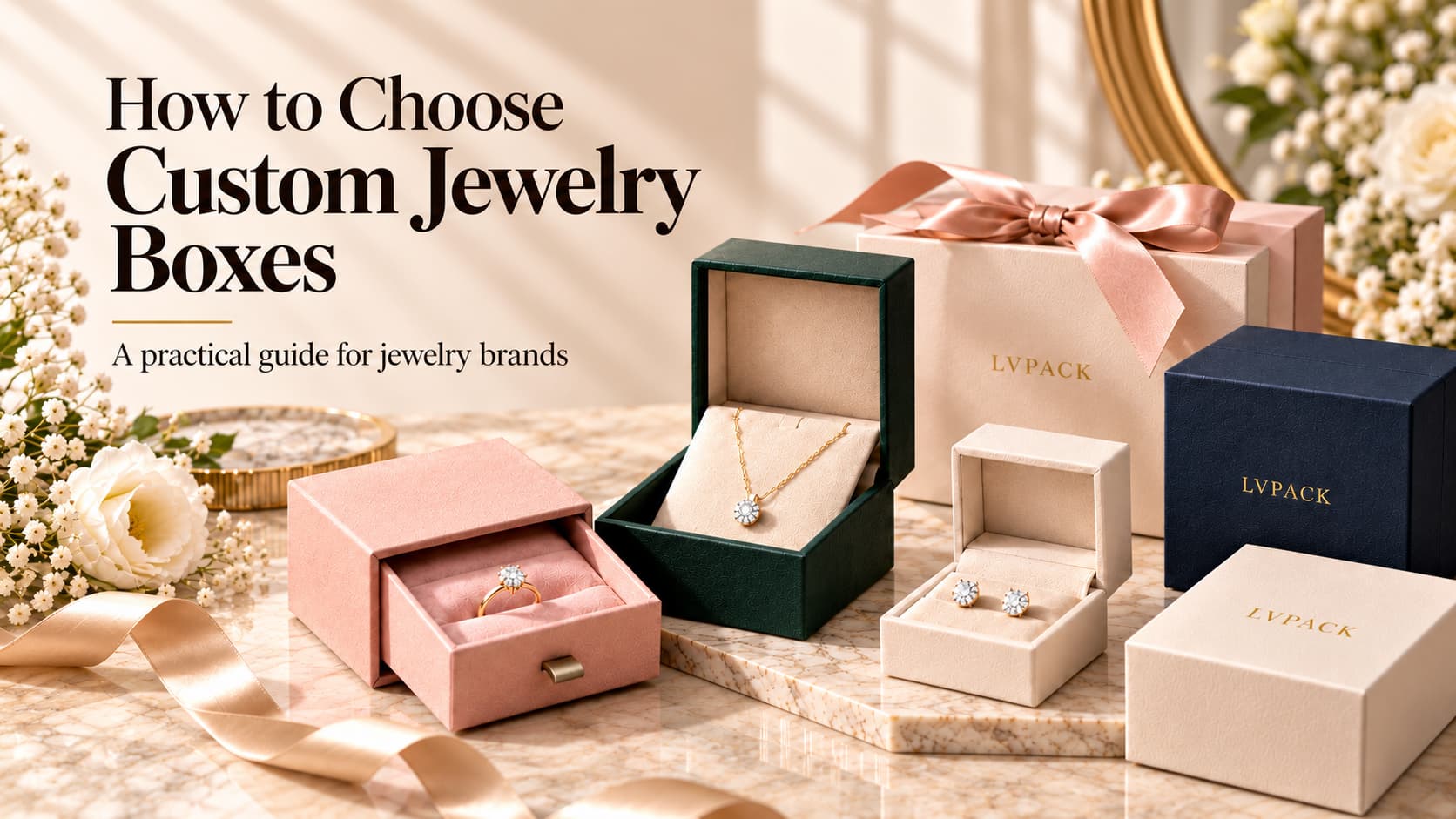
Choosing the right custom jewelry boxes starts with understanding the jewelry itself.
A beautiful box is not enough. The packaging should fit the product correctly, protect delicate jewelry, support your brand positioning, create a strong presentation, and remain practical for retail, gifting, ecommerce, and shipping.
A ring, necklace, bracelet, earrings, and jewelry set all have different packaging requirements. The most effective approach is to develop the box around the product rather than forcing the product into a standard box.
Start with the Jewelry Before Choosing the Box
The first question should not be which box style looks best.
The first question should be what the jewelry needs.
A professional jewelry box manufacturer will normally review the jewelry type, dimensions, weight, shape, number of pieces, presentation direction, and sales channel before recommending a structure.
For example, a ring needs a secure slot that keeps it upright.
A necklace needs enough space to display the chain clearly and may require hooks or additional fixing points.
Earrings need precise positioning so the pair remains visually balanced.
A jewelry set requires more careful spacing because several products must appear organized inside one presentation.
Starting with the product helps avoid oversized boxes, poor insert fit, and unnecessary packaging costs.
Match the Jewelry Box to Your Brand Positioning
Your packaging should communicate the same message as the jewelry inside.
A fine jewelry brand may prefer a rigid box with refined paper, a velvet interior, and a small foil stamped logo.
A modern fashion jewelry brand may choose a cleaner structure with simple colors and minimal decoration.
A handcrafted jewelry brand may prefer natural textures and paper based materials.
The goal is not to make every box look luxurious in the same way.
The goal is to make the packaging feel consistent with the brand.
Good custom jewelry packaging should help customers understand the product positioning before they even see the jewelry in detail.
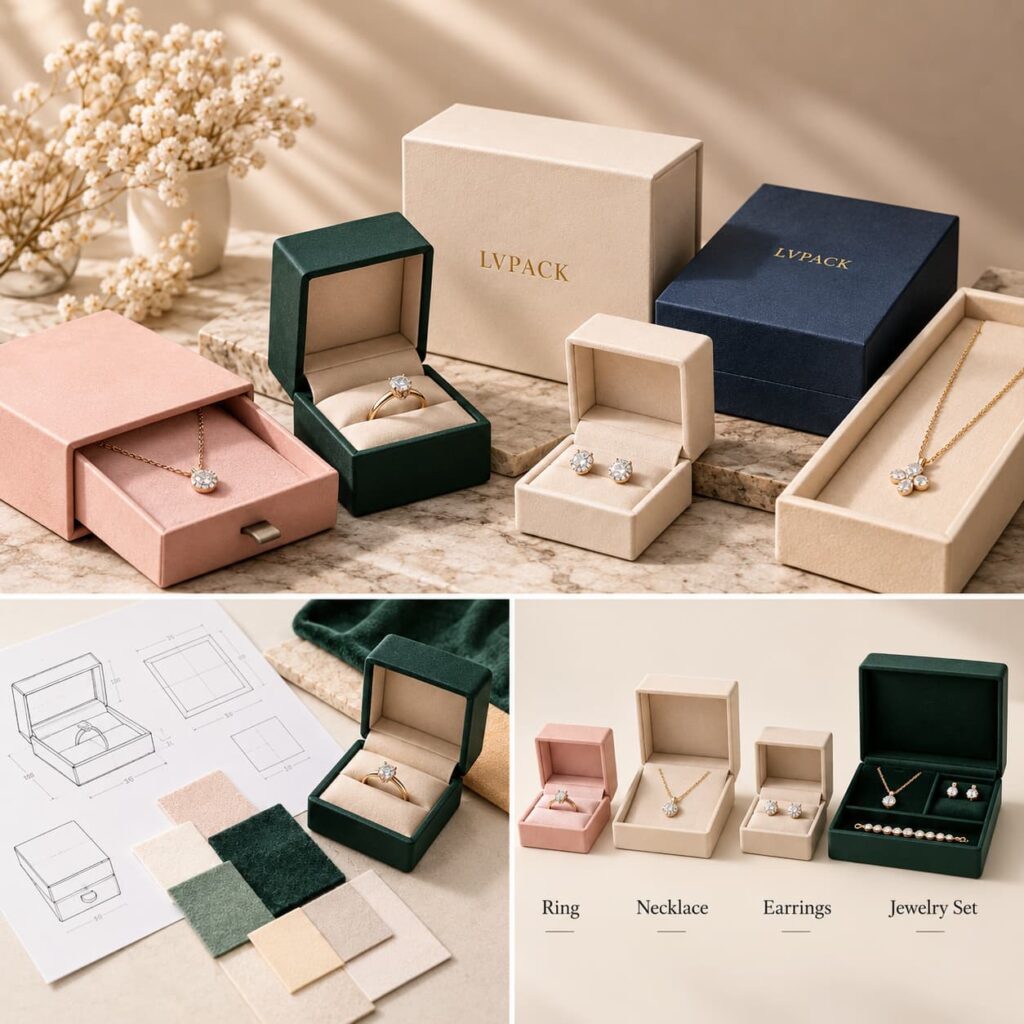
Choose the Right Size and Proportion
Jewelry packaging needs enough space to present the product clearly, but bigger is not always better.
An oversized box uses more paper, more board, a larger insert, more warehouse space, and more shipping volume.
A box that is too small creates a different problem. Jewelry can look crowded and may be difficult to remove.
The right size should consider the jewelry dimensions together with the insert and presentation space.
For premium jewelry packaging, proportion is especially important.
A small ring can look more valuable when it is centered correctly with controlled space around it.
A necklace should have enough room to remain straight without making the box unnecessarily large.
Good packaging creates visual balance.
Design the Interior Around the Jewelry
For jewelry packaging, the inside of the box is just as important as the outside.
The insert controls how the jewelry is presented and how securely it stays in position.
Different products require different solutions.
Rings usually need a fitted slot.
Necklaces may require hooks and fixing points.
Earrings need small holes or dedicated positions.
Bracelets may require a cushion or curved holder.
Jewelry sets often need a completely custom layout.
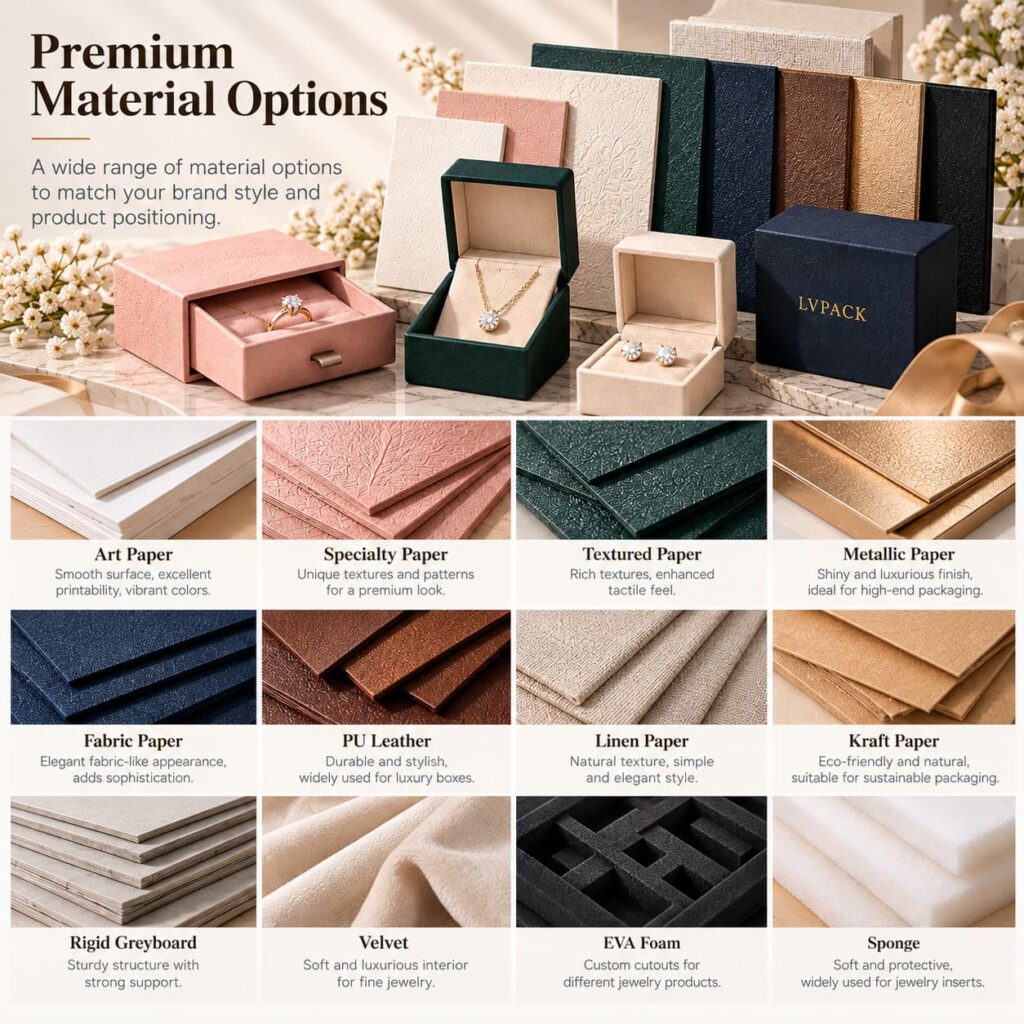
Materials such as velvet covered EVA, flocked foam, paper inserts, and other customized structures can be selected according to the product and brand.
A good insert should hold the jewelry securely without making it difficult for the customer to remove.
This balance between protection and presentation is one of the most important parts of jewelry box packaging.
Think About How the Customer Opens the Box
The opening experience can change how customers perceive the product.
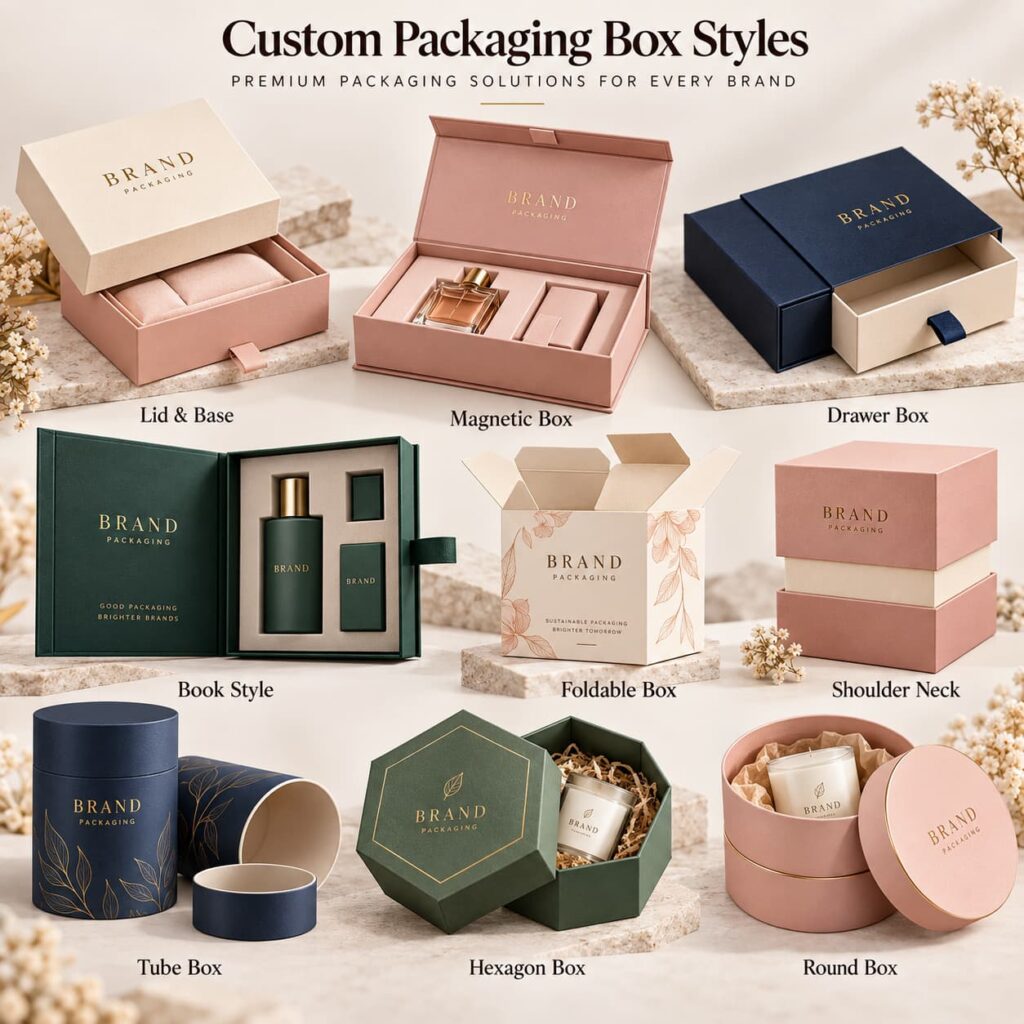
A hinged jewelry box creates a classic presentation.
A drawer box creates a slower reveal and works well for gifting.
A magnetic rigid box can provide a modern premium experience.
A lid and base box offers a clean and versatile presentation.
There is no single structure that works best for every jewelry brand.
The right choice depends on how the jewelry is sold and how you want the customer to discover the product.
A luxury gift collection may benefit from a stronger opening experience.
An ecommerce product may need a simpler structure that protects the jewelry while keeping shipping volume under control.
Consider Where the Jewelry Will Be Sold
Packaging should also match the sales channel.
Retail packaging may need to remain attractive after repeated handling.
Ecommerce packaging needs stronger protection during transportation.
Gift packaging should create a more memorable opening experience.
Wholesale packaging may need better space efficiency and consistent specifications across multiple products.
This means a successful jewelry box should work throughout the full product journey.
It should perform well during production, shipping, storage, retail presentation, and final customer use.
Keep Branding Refined and Consistent
Adding more decoration does not automatically make packaging look more premium.
For many jewelry brands, a simple logo application can create a stronger result.
Common branding options include foil stamping, embossing, debossing, printing, and other surface finishing methods.
The important factors are logo size, position, contrast, and consistency with the overall box design.
A small gold foil logo on textured paper may look more refined than a large logo combined with several decorative effects.
Premium packaging often works best when every element has a clear purpose.
Build the Packaging Around Real Product Requirements
A custom project does not always need to begin with a finished technical drawing.
You may only have a product photo, jewelry dimensions, a reference box, a logo, a sketch, or a general packaging idea.
From there, the packaging can be developed around the real product.
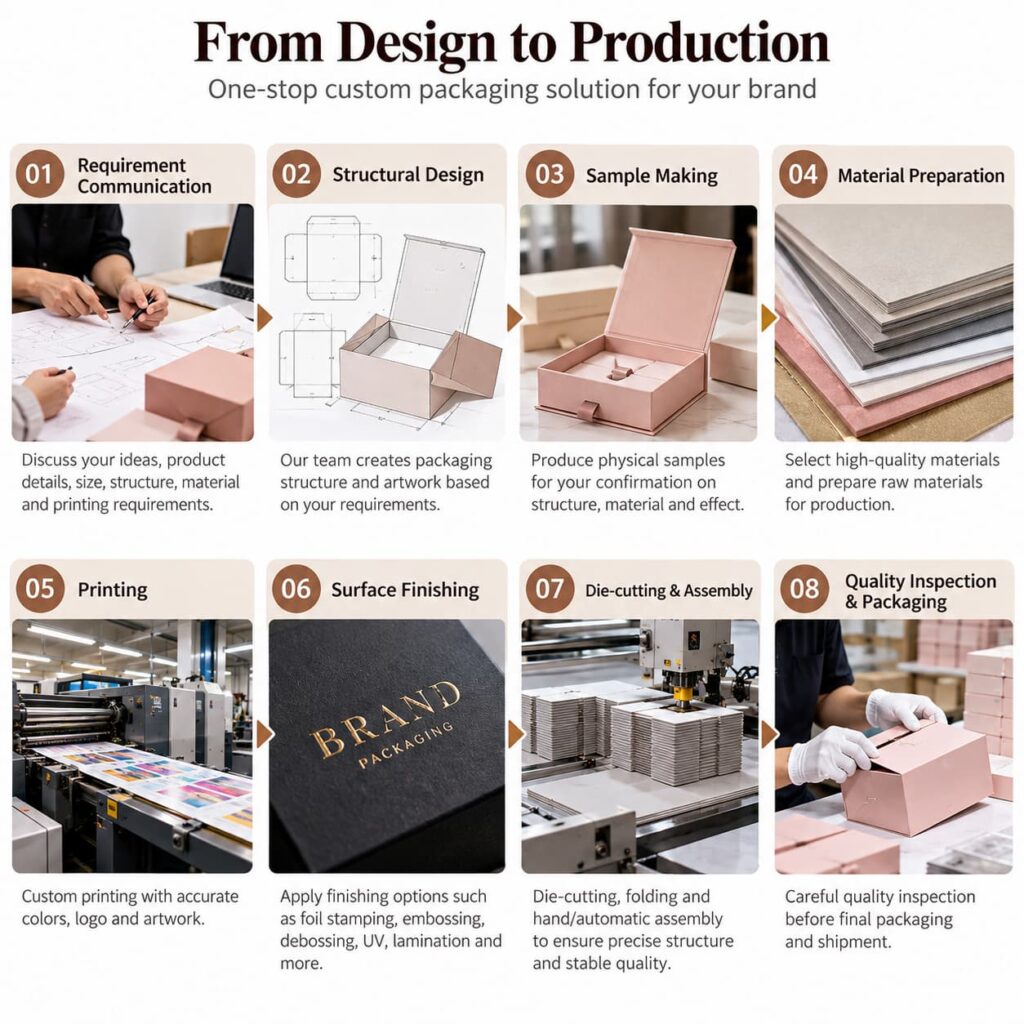
At LVPACK, the development process can begin by reviewing the jewelry and brand requirements, then determining the suitable structure, insert, materials, and finishing before creating a sample.
This approach helps identify production problems before mass production begins.
It also gives brands more flexibility when they have a clear visual idea but do not yet understand packaging structure or manufacturing details.
What Information Helps Start a Custom Jewelry Box Project
The most useful starting information includes the jewelry type, product dimensions, required quantity, preferred packaging style, brand logo, reference images, target market, and expected delivery schedule.
You do not need to know every technical detail before contacting a manufacturer.
A professional packaging partner should help turn product requirements into practical specifications.
The purpose of custom jewelry boxes is not simply to create another container.
The right packaging should make the jewelry easier to present, safer to transport, more consistent with the brand, and more valuable in the eyes of the customer.
When the structure, size, insert, materials, and branding are developed around the actual product, packaging becomes part of the jewelry experience rather than something added at the end.
How Can Luxury Jewelry Packaging Make Your Products Look More Valuable
Good luxury jewelry packaging can change how customers perceive the product before they even touch the jewelry.
The feeling of value does not come from using the most expensive material or adding as many decorative processes as possible. It comes from the way the box, insert, color, logo, texture, and opening experience work together.
The strongest luxury jewelry packaging usually feels controlled, balanced, and intentional.
Use Proportion to Make the Jewelry Stand Out
Jewelry is often small, so proportion becomes extremely important.
A ring placed inside a box that is too large may look lost.
A necklace placed inside a shallow box may feel crowded.
A jewelry set with poor spacing may look less organized, even if every product is valuable.
Premium packaging should create enough space around the jewelry without wasting unnecessary volume.
The goal is to guide the customer’s attention toward the product.
Good proportion creates visual focus.
Choose Materials That Match the Brand
Different materials create different impressions.
Textured paper can create a refined and tactile feeling.
Soft touch surfaces can support a modern luxury look.
Velvet and flocked materials can create a more traditional jewelry presentation.
Natural paper can work well for handcrafted or sustainability focused brands.
Leather like paper may suit watches or men’s jewelry collections.
The most expensive material is not always the best choice.
The right material is the one that supports the jewelry style, brand identity, and customer expectations.
Make the Interior Feel as Premium as the Exterior
The inside of the box has a major influence on perceived value.
When the customer opens the packaging, the jewelry should already be positioned correctly.
A ring should sit upright.
A necklace should remain centered.
Earrings should stay aligned.
A bracelet should hold its natural shape.
A loose or poorly fitted insert can make even expensive jewelry feel less refined.
For premium custom jewelry packaging, the insert should be developed around the exact product whenever possible.
This improves both presentation and protection.
Keep the Logo Simple and Well Positioned
Luxury branding does not need to be large.
A small, carefully positioned logo can often look more premium than a large logo covering most of the lid.
Common options include foil stamping, embossing, debossing, and printing.
The important factors are not only the finishing method, but also logo scale, position, contrast, and the amount of empty space around it.
For many luxury jewelry boxes, less decoration creates a stronger result.
Avoid Using Too Many Decorative Processes
More finishing does not always create more value.
A box can include gold foil, embossing, spot UV, metallic paper, ribbon, printing, and decorative accessories, but if everything is used at once, the result may feel busy.
A better approach is to select one or two details and execute them carefully.
For example, textured paper with a small foil logo can create a strong premium look.
A matte exterior with blind embossing can feel modern and understated.
A simple exterior combined with a soft velvet interior can create a strong contrast when the box is opened.
Luxury packaging often depends more on precision than complexity.
Pay Attention to the Way the Box Opens
The opening experience is another detail customers notice immediately.
A lid that is too loose can feel weak.
A drawer that does not slide smoothly can reduce the feeling of quality.
A magnetic closure that is too strong or too weak can make the box feel poorly engineered.
The opening movement should feel controlled and natural.
For jewelry packaging, this physical interaction becomes part of the brand experience.
Use Color Carefully
Color is one of the strongest signals in premium packaging.
Many jewelry brands rely on a small number of carefully controlled colors.
This makes consistency especially important.
Dark colors such as black, navy, burgundy, deep green, and brown can look very refined, but they may also show scratches, fingerprints, or rubbing more easily.
Material and color should therefore be tested together before production.
The goal is not simply to match the brand color.
The goal is to make sure that color still looks good after printing, wrapping, handling, packing, and shipping.
Spend the Budget Where Customers Notice It Most
If the packaging budget is limited, focus on the elements that have the strongest influence on perceived value.
A practical priority is:
Correct proportion
Strong box structure
Well fitted insert
Consistent color
Clean wrapping
Accurate logo finishing
Premium surface material when necessary
A well designed insert may create more value than adding another decorative finishing process.
A stronger board may improve the customer experience more than an expensive accessory.
The best packaging decisions are not based on how many features can be added.
They are based on which details actually improve the product presentation.
Build Value Through Consistency
Premium packaging should also remain consistent from sample to production.
The customer should not receive one batch with slightly different colors, loose inserts, uneven wrapping, or inconsistent logo positions.
For a jewelry brand, this consistency is part of brand credibility.
That is why luxury jewelry packaging should be developed with mass production in mind from the beginning.
The design needs to look good, but it also needs to be practical to manufacture repeatedly.
At LVPACK, custom jewelry box development can include structure review, material selection, insert design, surface finishing, sample development, and production optimization.
The objective is not to make the packaging look expensive for one photo.
The objective is to create a box that feels premium every time the customer opens it.
When proportion, material, insert, logo, color, and opening experience are all carefully controlled, luxury jewelry packaging becomes part of the product value itself.
What Custom Jewelry Packaging Works Best for Rings, Necklaces, Earrings and Sets
Different jewelry products need different packaging structures.
A ring, necklace, earring set, bracelet, and jewelry collection all have different shapes, movement risks, and presentation requirements. Using one standard box for every product may simplify purchasing, but it can weaken protection and reduce the visual impact of the jewelry.
The best custom jewelry packaging should be designed around the way each product needs to be displayed, fixed, removed, and protected.
Custom Ring Packaging
Rings usually require compact packaging with a secure holding position.
The insert should keep the ring upright and centered while making it easy for the customer to remove.
Common solutions include velvet covered ring slots, foam cuts, and soft fabric inserts.
For premium rings, the presentation should feel focused.
Too much empty space can make a small product look disconnected from the box.
A well fitted ring box keeps the attention on the jewelry, not on the packaging around it.
Custom Necklace Packaging
Necklaces need more internal control because chains can move and tangle during transportation.
A professional necklace box may include upper hooks, lower fixing points, elastic bands, or custom cut inserts.
The display area should keep the pendant centered while allowing the chain to remain straight.
The depth of the box also matters.
If the internal space is too shallow, the necklace may press against the lid.
If it is too deep, the product can lose visual focus.
Good necklace packaging should control the chain before the customer opens the box.
Custom Earring Packaging
Earrings require accurate positioning.
A pair should remain aligned and evenly spaced inside the box.
Depending on the product, the insert may use small holes, slots, foam cuts, or removable cards.
Stud earrings need a different holding system from long drop earrings.
Larger decorative earrings may also require additional depth to prevent pressure from the lid.
For high value products, the insert should support the earrings without scratching metal, stones, or delicate surfaces.
Clean alignment can make even a small earring box feel much more premium.
Custom Bracelet Packaging
Bracelets need enough space to maintain their natural shape.
Some designs work well with a soft cushion.
Others may require a curved holder, foam support, or custom recessed insert.
The packaging should prevent the bracelet from moving while still allowing the customer to remove it easily.
For heavier bracelets, watches, or metal jewelry, the box structure may also need stronger board and more stable internal support.
Jewelry Set Packaging
Jewelry sets are more complex because several products need to share one presentation.
A set may include a necklace, earrings, ring, and bracelet.
The challenge is not simply fitting everything inside the box.
The products need to look balanced.
Important considerations include spacing, hierarchy, product orientation, and the order in which the customer sees each item.
For example, the necklace may become the visual center while smaller products are positioned around it.
A well designed insert prevents the box from looking crowded.
Jewelry set packaging should make multiple products feel like one complete collection.
Fine Jewelry Packaging
Fine jewelry packaging usually requires more attention to material quality, interior softness, and presentation precision.
Common choices include rigid boxes, velvet interiors, flocked inserts, soft touch papers, and restrained foil branding.
For high value products, small details become especially important.
The insert should not rub against polished metal.
The lid should not press against raised stones.
The box should remain stable during storage and shipping.
The structure should also feel consistent with the price and positioning of the jewelry.
Fashion Jewelry Packaging
Fashion jewelry packaging often requires a different balance.
The packaging still needs to look attractive, but cost efficiency, flexibility, and faster product updates may become more important.
Brands may choose simpler rigid boxes, folding boxes, paper inserts, or printed cards depending on the product.
This can make it easier to support larger collections, seasonal colors, and frequent new product launches.
Premium presentation does not always require a complicated box structure.
The packaging should match the commercial model of the brand.
Choose the Insert Based on Product Movement
One of the most important questions is how much the jewelry can move inside the packaging.
Small movement may be acceptable for some products.
For delicate chains, polished surfaces, stones, or multi piece sets, movement should be controlled more carefully.
Common insert options include:
Velvet covered EVA
Suitable for premium jewelry presentation and precise product positioning.
Flocked foam
Provides a soft surface and works well for rings, earrings, and smaller jewelry.
Paper inserts
Suitable for lighter products and brands that want a more paper based packaging solution.
Custom cushions
Often used for bracelets, watches, and circular products.
Die cut cards
Useful for fashion jewelry and lighter products where cost efficiency is important.
The correct insert should be selected based on the product rather than appearance alone.
One Jewelry Collection Does Not Always Need One Box Structure
Brands often want all packaging to look consistent.
That does not mean every product must use exactly the same box.
A better approach is to build a packaging family.
For example:
Ring box
Earring box
Necklace box
Bracelet box
Jewelry set box
All of them can use the same brand color, paper, logo position, and finishing while changing size and internal structure.
This creates visual consistency without forcing every product into the same packaging format.
A strong jewelry packaging system keeps the brand consistent while allowing each product to use the structure it actually needs.
How LVPACK Develops Packaging for Different Jewelry Products
For custom projects, packaging development can begin with the actual jewelry dimensions and product photographs.
The structure and insert can then be adjusted according to the product type, presentation needs, and brand positioning.
For example, the same jewelry collection may require several different internal layouts while keeping the outer visual style consistent.
This helps brands build a complete packaging system instead of developing unrelated boxes one by one.
The final objective is simple.
Each jewelry product should sit securely, look intentional, and feel consistent with the brand from the moment the box is opened.