Top 10 Food Box Manufacturers in China | 2026 Guide

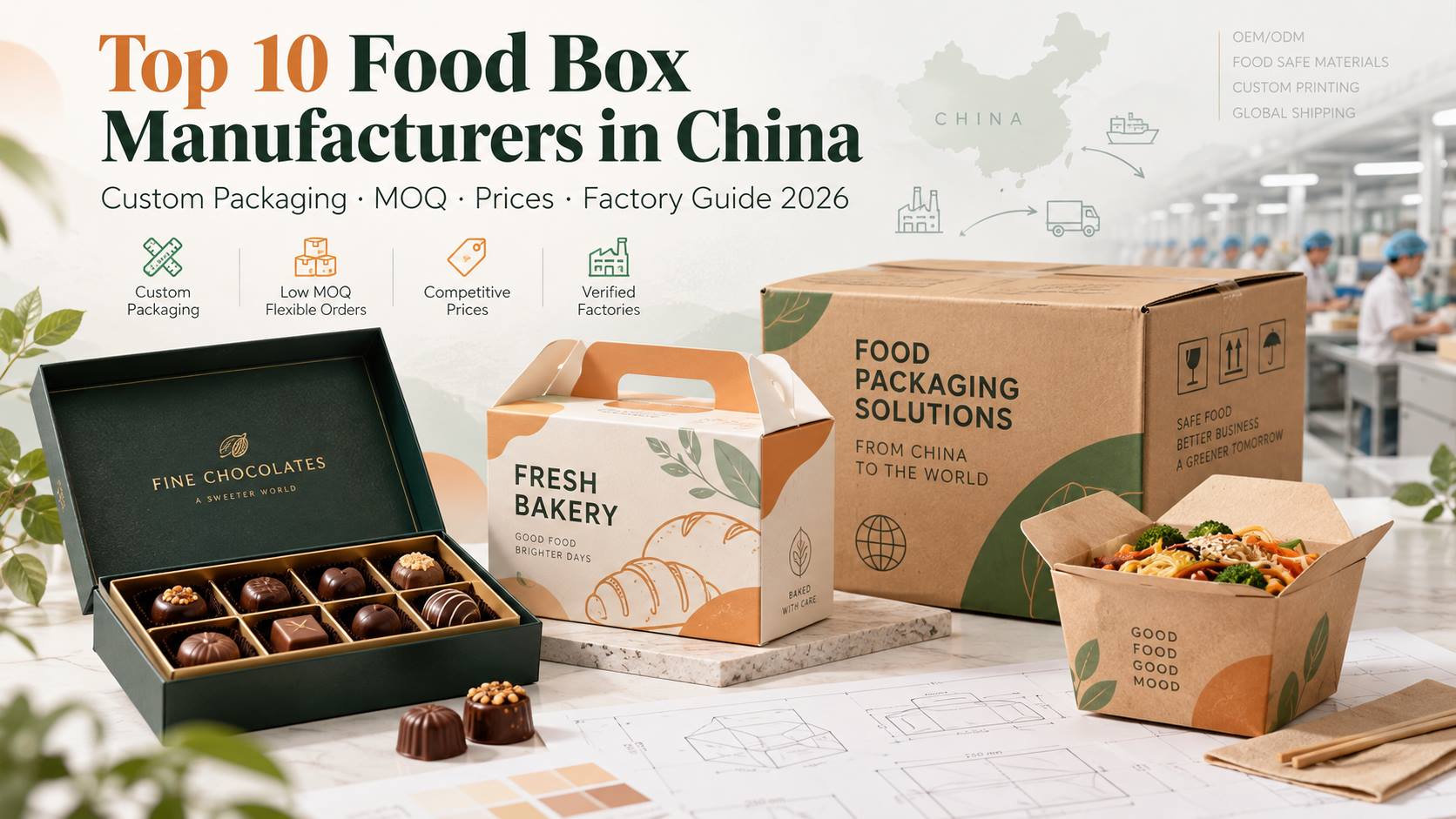
Top 10 Food Box Manufacturers in China: Custom Packaging, MOQ, Prices & Factory Guide 2026
A food box can look attractive in a product photograph and still fail in everyday use. Chocolates may shift during transportation, bakery cartons can develop grease stains, and printed boxes may arrive with colors that differ from the approved sample. These problems are not always caused by poor workmanship. Often, they begin with choosing a manufacturer whose production capabilities do not match the packaging requirements.
A premium chocolate gift box and a disposable takeaway container require different materials, machinery, and quality controls. The same applies to printed retail cartons, corrugated shipping boxes, and specialty food packaging.
China offers an extensive packaging supply chain, with manufacturers specializing in rigid paperboard boxes, printed folding cartons, corrugated packaging, foodservice containers, and alternative packaging materials. This gives overseas buyers access to numerous customization options, but identifying the right factory requires more than comparing unit prices.
Ten Chinese food packaging suppliers worth considering in 2026 include LVPACK, Uchampak, Packoi, Xiamen Yixin Printing, Ningbo Hexing Packaging, GoodCarton, HolidayPAC, Singreen Packaging, Dashan, and Dongguan Xiaolong Packaging. Their capabilities range from luxury food gift packaging and bakery cartons to takeaway containers and paperboard materials.
The best choice depends on your product, required packaging structure, minimum order quantity, printing and finishing requirements, food-contact conditions, and delivery expectations.
This guide compares manufacturers and explains how to evaluate custom packaging options, wholesale pricing, samples, quality control, compliance documentation, and factory quotations. It is intended for international food brands, retailers, importers, wholesalers, and procurement teams sourcing packaging from China.
1. Top 10 Food Box Manufacturers in China: Who Makes What?
Food box manufacturers in China serve several different markets. Some specialize in rigid gift boxes for premium chocolate and specialty food collections. Others manufacture printed retail cartons, corrugated shipping packaging, paper takeaway containers, or plastic food trays. Understanding these specializations is the first step toward building a useful supplier shortlist. A factory’s relevant production experience is generally more important than the number of packaging products displayed in its catalog.
Top 10 Food Box Manufacturers in China — Comparison
| Manufacturer | Location | Main Specialization | Published MOQ |
| LVPACK | China | Premium rigid food gift boxes | 1,000 pcs |
| Uchampak | Hefei, Anhui | Paper takeaway containers and cups | Usually 10,000 pcs |
| Packoi | Guangzhou, Guangdong | Bakery boxes and printed cartons | From 300 pcs for selected bakery boxes |
| Xiamen Yixin Printing | Xiamen, Fujian | Printed cartons and corrugated boxes | By quotation |
| Ningbo Hexing Packaging | Ningbo, Zhejiang | Corrugated and printed packaging | By quotation |
| GoodCarton | Zhangzhou, Fujian | Food paper boxes and takeaway packaging | Product-dependent |
| HolidayPAC | Multiple operations | Food boxes and retail displays | Product-dependent |
| Singreen Packaging | Hangzhou, Zhejiang | Coated paper food containers | 20,000 pcs for listed paper food boxes |
| Dashan | Xiamen, Fujian | Thermoformed and alternative-material containers | Product-dependent |
| Dongguan Xiaolong Packaging | Dongguan, Guangdong | Paperboard and packaging materials | By quotation |
Published quantities are product-specific and should not be interpreted as fixed minimums for every custom order.
1.1 LVPACK — Premium Rigid Food Gift Boxes
| Company Information | Details |
| Company | Luxury Vision Packaging Co., Ltd. |
| Established | 2013 |
| Employees | 80 |
| Production Lines | 5 |
| Design and Development Team | 8 people |
| Quality Control Team | 10 people |
| Standard MOQ | 1,000 pieces |
| Main Products | Chocolate boxes, tea gift boxes, rigid paperboard packaging |
LVPACK focuses on custom rigid paperboard packaging for brands that require tailored box structures, decorative printing, and product-specific inserts.
Its services cover structural development, material selection, sampling, printing, finishing, assembly, and quality inspection.
For a premium confectionery brand, packaging is part of the retail experience. Customers notice how the box opens, how the products are arranged, and whether the structure feels appropriate for the price.
A chocolate collection may require a rigid lid-and-base box with accurately sized compartments and a foil-stamped logo. If the insert is too loose, products can move during handling. If the lid fit is inconsistent, the finished packaging may look less refined than the approved sample.
These issues need to be considered during structural development, not just during final inspection.
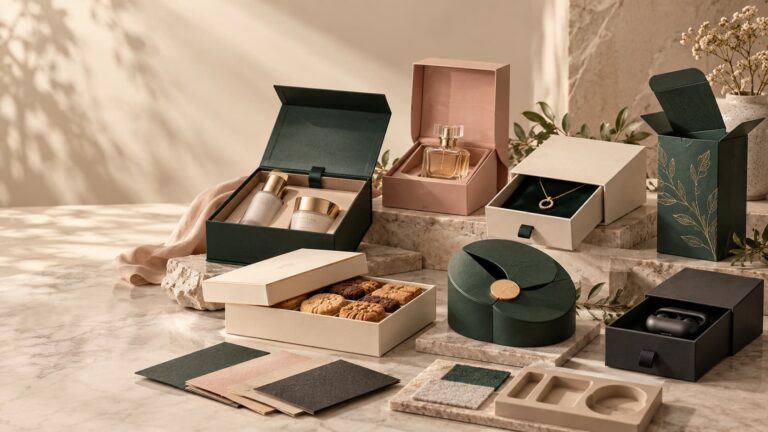
LVPACK supports magnetic closure boxes, drawer-style boxes, lid-and-base structures, folding gift boxes, and other customized designs.
Brands developing custom chocolate boxes can specify dimensions, product compartments, paper finishes, and printing according to the collection’s intended presentation.
Its custom rigid boxes are particularly relevant to premium food brands that want a more distinctive opening experience than a conventional folding carton provides.
Available decorative options include Pantone color matching, foil stamping, embossing, debossing, specialty paper, and customized inserts.
LVPACK is suitable for premium chocolate brands, specialty tea businesses, seasonal food gift collections, and retail packaging projects. Its standard MOQ of 1,000 pieces makes it more appropriate for commercial production than very small trial orders.
When a package will come into contact with unwrapped food, the material and relevant compliance documentation must be evaluated separately. Decorative rigid gift boxes should not automatically be assumed to meet direct-food-contact requirements.
1.2 Uchampak — Paper Foodservice Containers
| Company Information | Details |
| Location | Hefei, Anhui, China |
| Established | 2007 |
| Products | Takeaway boxes, paper bowls, cups and other foodservice packaging |
| MOQ | Usually 10,000 pieces |
| Typical Lead Time | 15–35 days |
| Website | uchampak.com |
Uchampak focuses on paper-based foodservice packaging for restaurants, catering operators, takeaway businesses, and distributors.
Its product range includes paper bowls, cups, takeaway boxes, and related containers.
For these products, functional performance is a major purchasing consideration. Materials may need to resist grease or moisture, maintain their shape under food weight, and remain suitable for the intended serving conditions.
Uchampak states that most product categories have a minimum order quantity of approximately 10,000 pieces. Its published production guidance indicates a general lead time of 15–35 days, depending on customization complexity and order size.
This makes the company relevant to buyers with recurring foodservice requirements, particularly those ordering standardized or branded paper containers in substantial quantities.
Before ordering, buyers should confirm the coating, intended food-contact conditions, packaging dimensions, and current certification documents for the exact product.
1.3 Packoi — Bakery Boxes and Printed Food Packaging
| Company Information | Details |
| Location | Guangzhou, Guangdong |
| Products | Cake boxes, cupcake cartons, bakery packaging and printed paper boxes |
| Published MOQ | 300 pieces for selected bakery boxes |
| Website | packoi.com |
Packoi offers custom printed packaging for bakery businesses and retail brands.
The company provides bakery cartons in different sizes and structures, with options for printed artwork and custom dimensions.
Packoi publicly advertises a minimum order quantity of 300 pieces for its wholesale bakery-box category. It also offers samples and artwork development.
A lower MOQ can help growing food brands avoid holding large amounts of packaging inventory when introducing a new product.
However, buyers should confirm whether the published minimum applies to the desired dimensions, materials, printing method, and box structure.
A standard folding cake carton may be relatively straightforward to customize. A rigid presentation box with a fitted insert and specialty finishes involves different tooling and production processes.
Packoi is worth considering for boutique bakeries and emerging food brands, especially where moderate quantities and printed retail packaging are priorities.
1.4 Xiamen Yixin Printing — Printed Paperboard and Corrugated Cartons
| Company Information | Details |
| Location | Xiamen, Fujian |
| Established | 2004 |
| Employees | Approximately 200 |
| Factory Area | Approximately 9,000 m² |
| Products | Printed cartons, cardboard boxes and corrugated packaging |
| Website | xmyixin.com |
Xiamen Yixin Printing specializes in printed paper packaging.
According to its company profile, the manufacturer operates offset printing presses, lamination machinery, corrugating equipment, die-cutting systems, and automated box-gluing equipment.
These capabilities are particularly relevant to packaged-food businesses that need consistent retail cartons.
A snack manufacturer selling multiple flavors, for example, may require identical carton dimensions with different printed designs. Accurate printing, controlled die-cutting, and dependable folding dimensions help support efficient filling and shelf presentation.
Xiamen Yixin Printing is a relevant option for food brands, importers, and packaging distributors seeking printed folding cartons or corrugated boxes.
Buyers should confirm paper grades, color references, print tolerances, sample approval standards, and whether the selected materials are appropriate for the intended food application.
1.5 Ningbo Hexing Packaging — Corrugated and Printed Cartons
Ningbo Hexing Packaging focuses on corrugated packaging, printed paper cartons, and related packaging conversion.
Its offering is relevant to businesses requiring transport packaging, protective cartons, and printed shipping boxes.
Corrugated packaging needs to perform under different conditions from a decorative rigid gift box. Box strength, flute construction, dimensions, stacking arrangements, and distribution conditions all influence suitability.
For example, a wholesale food company shipping retail snack cartons may need outer cases that withstand pallet stacking without adding unnecessary weight.
Using heavier board than necessary increases material and transportation costs. Using insufficient board can result in crushed cartons and damaged products.
Ningbo Hexing Packaging is therefore worth considering for bulk transport cartons and corrugated applications, subject to verification of its current production facility, technical specifications, and order conditions.
1.6 GoodCarton — Custom Paper Food Boxes
GoodCarton, associated with Zhangzhou Good Packaging in Fujian, offers customized paper and cardboard packaging for food retailers, bakeries, and takeaway businesses.
Its product range includes food boxes, bakery cartons, and various paperboard structures.
For restaurant and bakery projects, the choice of material depends on product weight, moisture exposure, grease resistance, and handling needs.
The purchasing requirements for a bakery carton also differ from those of a branded shipping box, even when both use paperboard.
GoodCarton may suit businesses sourcing customized printed food cartons, particularly where several common structures are needed.
Buyers should request a written quotation specifying the MOQ for each size and design, any separate die-cutting charges, printing setup requirements, and the estimated production schedule. This is especially important for orders containing several box variations.
1.7 HolidayPAC — Food Boxes and Retail Display Packaging
HolidayPAC supplies customized paper packaging alongside retail display products.
Its offering includes bakery boxes, food cartons, printed packaging, and cardboard retail displays.
This combination can be useful for brands preparing supermarket launches or seasonal promotional programs.
A confectionery company introducing a holiday collection, for example, may require individual printed retail boxes and matching display trays. Coordinating both items can help preserve a consistent visual identity and reduce communication across separate suppliers.
HolidayPAC may be relevant to retail food businesses that need packaging and point-of-sale displays within the same project.
Buyers should confirm the production location, legal contracting entity, MOQ, sample arrangements, and whether the required components will be manufactured at the same facility.
1.8 Singreen Packaging — Coated Paper Food Containers
| Company Information | Details |
| Location | Hangzhou, Zhejiang |
| Products | Paper food boxes and takeaway containers |
| Standard MOQ | 20,000 pieces for listed paper food boxes |
| Coating Options | PE, PLA and water-based systems |
| Website | singreenpackage.com |
Singreen Packaging supplies paper foodservice containers for restaurants, takeaway businesses, and wholesale distributors.
Its published paper food-box category lists a standard MOQ of 20,000 pieces and several coating options, including PE-coated, PLA-coated, and water-based-coated paper.
Coating selection should reflect the intended use rather than marketing terminology alone.
A box used for hot, greasy food may need different performance characteristics from a container intended for dry products or refrigerated desserts.
Material claims about recyclability or compostability also need to be evaluated against the complete package and the destination market’s processing systems.
Singreen is a relevant supplier for larger foodservice orders, although its listed minimum quantities may be unsuitable for small trial projects.
1.9 Dashan — Thermoformed Food Containers
| Company Information | Details |
| Location | Xiamen, Fujian |
| Products | PET cups, PP trays, PLA containers and bagasse tableware |
| Processes | Sheet extrusion, thermoforming and printing |
| Website | dashanpacking.com |
Dashan specializes in functional food containers produced from plastic and alternative materials.
Its company profile describes production capabilities involving sheet extrusion, thermoforming, and printing, with products such as PET cups, PP trays, PLA containers, and sugarcane bagasse tableware.
Thermoforming is especially relevant where packaging dimensions, lid fit, wall thickness, and stacking performance affect the finished container.
A supermarket purchasing salad containers may prioritize transparency and closure reliability. A catering operator purchasing compartment trays may focus on food separation and suitability for the intended serving temperature.
Dashan is worth evaluating for these functional applications, but its manufacturing specialty differs from the decorative paperboard structures used for premium chocolate and food gift boxes.
1.10 Dongguan Xiaolong Packaging — Paperboard Materials
Dongguan Xiaolong Packaging primarily serves the paperboard and packaging-material market.
Its product categories include greyboard, duplex board, kraft board, and other cardboard materials used in packaging conversion.
These substrates can form part of rigid gift boxes, folding cartons, or other paper packaging structures.
For a packaging converter, consistent board thickness, moisture content, flatness, and cutting specifications are important because they influence how the finished box is wrapped, folded, or assembled.
However, buying paperboard is different from buying a finished printed box.
Companies purchasing complete food packaging should confirm whether the supplier offers printing, die-cutting, wrapping, assembly, and finished-box quality inspection—or primarily supplies materials.
What Does This Manufacturer Comparison Tell Buyers?
There is no single manufacturer that is the best fit for every food packaging project.
A premium chocolate brand may benefit from a supplier experienced in rigid-box structures, decorative finishing, and fitted compartments. A restaurant distributor may need a factory specializing in coated paper containers. A packaged-food manufacturer may prioritize offset printing and automated folding-carton production.
The most useful supplier shortlist is built around product compatibility, order requirements, and manufacturing expertise.
For premium food gift collections, custom food packaging boxes should be evaluated according to product fit, presentation requirements, and production consistency.
For takeaway packaging, material suitability and intended food-contact conditions deserve greater attention.
These differences provide the foundation for matching a food packaging project to the right Chinese factory.
2. Which Food Box Factory in China Fits Your Product, Order Size and Custom Packaging Needs?
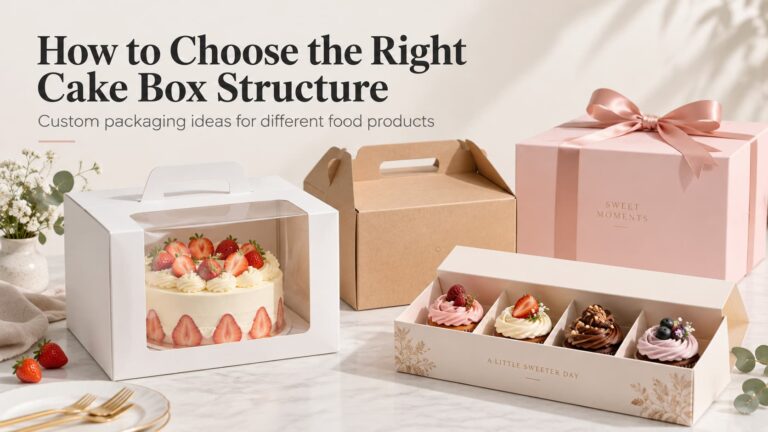
The most suitable food box factory in China depends on what the packaging must do. Product weight, fragility, moisture exposure, retail positioning, and order volume all affect the manufacturing process. A rigid chocolate gift box may require custom inserts and decorative finishes, while a bakery carton prioritizes practical folding, suitable dimensions, and convenient handling. Buyers should identify these requirements before comparing quotations or selecting a factory.
Match the Packaging Structure to the Food Product
Different food products introduce different packaging challenges.
| Food Product | Common Packaging Requirement | Suitable Structure | Main Purchasing Concern |
| Premium chocolates | Product separation and presentation | Rigid lid-and-base or drawer box | Insert accuracy and finish consistency |
| Cookies and biscuits | Protection from handling damage | Folding carton or rigid box | Product fit and transport protection |
| Cakes and pastries | Easy loading and handling | Folding bakery box | Dimensions, grease resistance and stability |
| Specialty tea | Retail appearance and organization | Folding carton or rigid gift box | Structure, printing and product arrangement |
| Ready meals | Suitable food-contact performance | Paper or thermoformed container | Temperature, moisture and closure |
| Wholesale snack products | Distribution efficiency | Printed retail carton plus corrugated shipper | Printing accuracy and stacking |
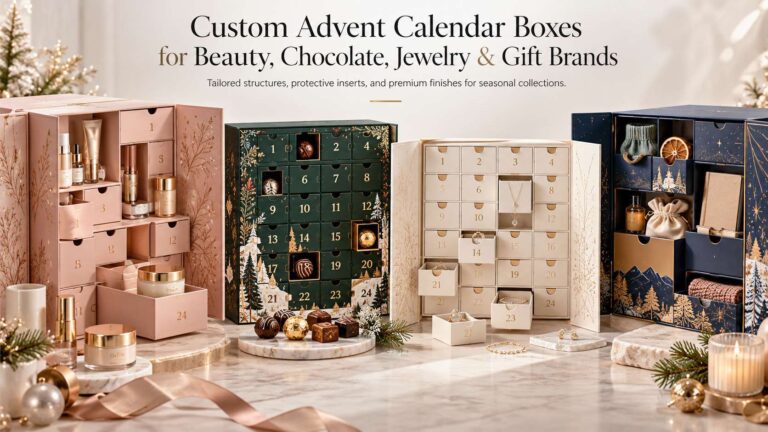
| Seasonal food gifts | Distinctive opening and presentation | Magnetic, drawer or lid-and-base box | Assembly, finishing and internal arrangement |
A premium chocolate box should not be chosen purely because a particular opening style looks attractive.
The inner dimensions must account for the actual products, including their shape, wrapping, spacing, and expected movement during handling.
For example, a collection of individually wrapped chocolates may need compartments sized around the finished wrapped products rather than the chocolates alone.
A bakery box introduces different priorities. Staff should be able to place the product inside without damaging the decoration, and the structure should provide sufficient clearance when the lid closes.
These practical requirements should be evaluated before decorative finishes are approved.
Match the MOQ to Your Sales Plan
MOQ is one of the most important differences between packaging suppliers.
A factory producing 20,000 takeaway containers may be well suited to a distributor supplying restaurant chains. The same order quantity may be excessive for a premium food brand launching a limited seasonal collection.
A low MOQ is not automatically the cheapest option, however.
A smaller order may carry higher unit costs because printing setup, die-cutting tools, sampling, and material preparation are distributed across fewer boxes.
Buyers should estimate realistic demand before choosing a quantity.
A practical calculation begins with expected monthly usage, launch quantities, product variations, and the frequency of future orders.
If a business needs several packaging sizes, it should also establish whether the manufacturer applies its minimum separately to each design.
Consider the Number of Product Variations
Order complexity often increases when a brand uses multiple SKUs.
A confectionery company may require:
One box size with three printed designs.
Two different insert arrangements.
A special sleeve for seasonal promotions.
Separate artwork for different international markets.
Even when the external structure is identical, variations can affect printing setup and order minimums.
The manufacturer should explain which components can be shared and which require separate production arrangements.
For instance, using one rigid-box structure with interchangeable printed sleeves may reduce the need for several completely different constructions, provided the presentation and assembly requirements remain suitable.
Evaluate Whether the Factory Can Develop the Structure
Some suppliers manufacture primarily from existing box templates. Others support more extensive structural development.
Neither model is universally better.
A standard template can be efficient for a bakery that needs a familiar carton with custom printing.
A premium confectionery company may require engineering support to develop the opening mechanism, compartment arrangement, box depth, and insert retention.
Brands developing custom packaging inserts should provide product dimensions, weights, photographs, and information about how products will be packed.
This helps the factory assess whether the proposed insert is practical for assembly and transportation.
The strongest manufacturing fit is achieved when the supplier’s production methods match both the product and the complexity of the proposed packaging.
3. What Custom Food Box Printing, Materials and Finishing Options Are Worth Paying For?
Custom food box printing and finishing should support the product’s retail position, not simply increase decoration. For everyday foodservice packaging, material performance, cost, and practical handling may matter more than premium finishes. For chocolate gift boxes and specialty food collections, paper texture, accurate colors, foil stamping, and opening mechanisms can influence perceived value. The right combination balances appearance, production complexity, functionality, and unit cost.
Choose the Material Before the Decorative Finish
Material selection determines much of a box’s structure, appearance, and performance.
Common options include folding boxboard, kraft paperboard, corrugated board, and greyboard-based rigid constructions.
| Material | Typical Application | Main Advantage | Main Limitation |
| Folding boxboard | Printed retail cartons | Efficient folding and printing | Less rigid than mounted gift-box construction |
| Kraft paperboard | Bakery and takeaway cartons | Natural appearance and functional construction | Surface and coating performance vary |
| Corrugated board | Shipping cartons and protective packaging | Strength with relatively efficient material use | May be too bulky for premium small-format presentation |
| Greyboard with printed wrap | Luxury rigid gift boxes | Strong structure and decorative flexibility | More material and assembly operations |
| Coated food-contact paperboard | Appropriate foodservice applications | Can provide specific moisture or grease performance | Requires verification for intended food conditions |
The stated board thickness or paper grade is only one part of the specification.
A rigid gift box may require a combination of core board, outer wrapping paper, adhesive, internal lining, and insert materials.
Each component affects appearance, assembly, and cost.
A supplier should therefore explain the complete structure rather than quoting an undefined material description such as “premium cardboard.”
CMYK Printing or Pantone Matching?
CMYK printing uses combinations of cyan, magenta, yellow, and black to reproduce artwork.
It is commonly used for detailed graphics, photographs, and multicolor packaging designs.
Pantone spot colors may be useful when a brand has a specific signature color that must be reproduced consistently.
However, color appearance also depends on the substrate, coating, finish, and lighting.
The same printed specification may look different on uncoated textured paper and smooth coated paper.
For a premium gift-box project, a physical printed sample is usually more useful than approving a digital image alone.
When Is Foil Stamping Worth the Cost?
Foil stamping is commonly used to add metallic or decorative details to packaging.
On premium chocolate boxes, a foil-stamped logo can establish visual emphasis without requiring elaborate artwork across the entire surface.
Its value depends on how it is used.
A small, carefully positioned foil detail may create a more controlled appearance than covering large areas of the box.
Foil stamping can also introduce tooling, alignment, and production considerations.
Buyers should ask whether the finish will remain consistent on the selected paper and whether the proposed design can be reproduced at the required order quantity.
Embossing, Debossing and Spot UV
Embossing raises a design element above the surrounding surface. Debossing creates a recessed effect. Spot UV provides a contrasting surface treatment in selected areas.
These processes can make packaging feel more distinctive, but they should not be added automatically.
For example, embossing on a heavily textured paper may appear differently from embossing on a smooth coated sheet.
A spot UV design may be effective on a matte surface, but the contrast will depend on the substrate and coating.
The correct process should be selected through physical samples rather than digital illustrations alone.
Which Box Structure Delivers the Best Value?
| Structure | Relevant Application | Main Consideration |
| Lid-and-base | Chocolate collections and premium gifts | Familiar opening style and structural simplicity |
| Magnetic closure | Premium presentation packaging | Closure components and assembly accuracy |
| Drawer box | Confectionery and specialty gift sets | Drawer fit and sliding performance |
| Folding rigid box | Premium packaging requiring efficient shipping | Assembly time and folding accuracy |
| Folding carton | Bakery and general retail packaging | Efficient production and flat storage |
| Corrugated carton | Shipping and bulk distribution | Strength, board construction and packing efficiency |
The opening mechanism should support the intended use.
A magnetic box may provide an attractive retail presentation, but it introduces components and assembly operations that a simple lid-and-base structure does not require.
A drawer box may improve product reveal, but the fit must be controlled so that the drawer moves smoothly without becoming loose.
For brands comparing different structures, custom rigid gift boxes can provide considerable design flexibility, but their cost should be evaluated against the product’s retail price and expected order quantity.
Use Inserts to Solve Practical Problems
Inserts are often treated as decorative accessories. In reality, they can be essential structural components.
An insert may keep chocolates separated, hold a jar securely, prevent products from moving, or organize several items within one gift set.
Common insert options include paperboard partitions, molded pulp, and selected foam or other materials where appropriate.
Material choice depends on product dimensions, fragility, food-contact conditions, presentation requirements, and disposal considerations.
For example, a rigid chocolate box may need a removable paperboard insert that maintains the product arrangement during transportation.
Before approving the design, buyers should test the actual product inside the complete package rather than reviewing the empty box alone.
The most effective customization does not necessarily involve the greatest number of finishing processes. It is the combination that protects the product, supports the brand, and can be manufactured consistently.
4. Why Choose Food Packaging Manufacturers in China for Custom and Wholesale Orders?
Food packaging manufacturers in China offer access to a broad network of paper suppliers, printers, packaging converters, finishing specialists, and export service providers. This can make it easier to develop customized boxes involving several materials or manufacturing processes. However, sourcing from China is not automatically cheaper for every project. Order volume, freight costs, delivery schedules, import requirements, and production complexity determine whether overseas manufacturing provides a practical advantage.
Access to Multiple Manufacturing Processes
A custom paperboard gift box may involve structural engineering, board cutting, offset printing, lamination, foil stamping, wrapping, insert assembly, and quality inspection.
These processes may be handled within one factory or coordinated across specialized suppliers.
China’s packaging manufacturing ecosystem can make such coordination more accessible, particularly in regions with established printing and paperboard conversion industries.
For international buyers, the advantage lies in being able to develop a relatively complex packaging specification without sourcing every manufacturing component separately.
However, buyers should still verify which processes are performed in-house and which are subcontracted.
A factory that coordinates outside finishing or material suppliers can still deliver reliable packaging, provided responsibilities and quality controls are clear.
Customization at Commercial Scale
Custom packaging generally becomes more cost-efficient as production quantities increase.
The reason is straightforward: costs associated with design preparation, samples, printing setup, and tooling can be distributed across more finished units.
For products with predictable sales volumes, commercial-scale production can make a fully customized box more practical than repeatedly ordering small batches.
However, high-volume production should follow successful sample approval.
Ordering a larger quantity before the structure has been tested can multiply the consequences of a design mistake.
Material and Finishing Options
Chinese packaging suppliers offer access to a wide selection of board grades, specialty papers, printing techniques, and decorative processes.
This can be useful for brands creating packaging at different price points.
A food company might use a standard folding carton for its everyday collection and a rigid box with specialty finishes for seasonal gifts.
By defining both products clearly, the business can compare manufacturing methods while maintaining consistent brand elements.
When Local Manufacturing May Be Better
Importing packaging from China is not always the right approach.
A local supplier may be preferable when the business needs very small quantities, unusually short replenishment cycles, or immediate correction of packaging issues.
Shipping and customs costs can also reduce the apparent savings from a lower factory unit price.
For bulky, low-value packaging, freight can represent a significant portion of the total landed cost.
Buyers should therefore compare the complete purchasing cost rather than the factory quotation alone.
Plan for International Delivery
A production schedule is not the same as a delivery schedule.
After boxes leave the factory, the shipment may still require export handling, transport, customs clearance, and inland delivery.
Different shipping methods involve different costs and timelines.
Buyers should establish which Incoterm applies, who arranges freight, who handles import procedures, and whether delivery is to a port, warehouse, or final business address.
Good international sourcing begins with clear commercial terms, not simply a low unit price.
5. How Much Do Custom Food Boxes Cost in China? MOQ, Wholesale Prices and Hidden Charges
The cost of custom food boxes in China depends on structure, dimensions, materials, printing, finishing, inserts, order quantity, and shipping requirements. A standard folding carton is generally less labor-intensive than a rigid gift box with wrapping paper, decorative finishes, and fitted compartments. Factory quotations are therefore most useful when suppliers are comparing the same specifications. Buyers should examine tooling, samples, freight, and other charges instead of relying on unit price alone.
What Determines the Unit Price?
A packaging quotation is built from several components.
Material cost is often influenced by board grade, thickness, sheet utilization, coating, and waste during converting.
Printing cost depends on the artwork, process, colors, print run, and substrate.
Finishing may introduce separate tooling or machinery setup requirements.
Assembly costs depend on whether the box is folded automatically, glued by machine, hand-wrapped, or fitted with additional components.
A box with several inserts and decorative elements may require considerably more handling than a standard folding carton.
How Does MOQ Affect Cost?
Minimum order quantity is not simply a factory’s preferred sales volume. It often reflects the economics of purchasing materials, preparing equipment, producing printing runs, and setting up tooling.
The effect is particularly noticeable when the packaging includes custom dimensions or specialty finishing.
For example, a manufacturer may need to prepare the same printing plates and cutting dies whether the final order contains 1,000 or 3,000 pieces.
The setup expenditure remains relatively similar, but the cost allocated to each finished box changes.
This is why larger quantities often receive lower unit quotations.
Nevertheless, ordering excess packaging only to obtain a lower unit price can increase storage costs and create obsolete inventory when designs or product information change.
The best quantity balances unit cost with realistic sales demand.
Example: Comparing the Same Packaging at Different Quantities
The following is an illustrative cost model, not a market quotation.
Assume a custom project has a one-time setup cost of $300 and a production cost of $1.20 per box.
| Quantity | Setup Cost | Production Cost | Total | Effective Cost per Box |
| 1,000 | $300 | $1,200 | $1,500 | $1.50 |
| 2,000 | $300 | $2,400 | $2,700 | $1.35 |
| 5,000 | $300 | $6,000 | $6,300 | $1.26 |
This model demonstrates how fixed setup costs affect the effective unit price.
Actual quotations will also depend on material consumption, purchasing tiers, production efficiency, finishing requirements, and other order-specific factors. Freight, taxes, and duties are excluded from the example.
A buyer should not assume that an actual factory will follow this exact pricing pattern.
Understand Tooling and Sample Charges
Custom packaging may require die-cutting tools, printing plates, embossing dies, foil stamping dies, or structural prototypes.
Some factories include these costs in the unit price. Others quote them separately.
Neither method is inherently preferable, but the quotation should clearly state what is included.
Buyers should ask whether tooling is retained for future orders, whether repeat orders require new setup charges, and whether samples are credited against subsequent production.
Watch for Costs Outside the Box Price
Common additional costs include:
Structural design or artwork preparation.
Pre-production samples and revisions.
Printing setup and cutting dies.
Specialty finishing tools.
Inserts and manual assembly.
Export packing and palletization.
Freight, insurance, customs clearance, duties, and taxes.
Storage and inland delivery.
These costs can affect the real economics of the project.
For example, two manufacturers may offer similar unit prices, but one quotation includes assembled inserts while the other excludes them.
Without matching specifications, a direct price comparison is misleading.
Request a Comparable Factory Quotation
An effective quotation request should specify the same basic details to every supplier.
The most important elements are the internal box dimensions, materials, printing requirements, finishing, inserts, quantity, packing method, and delivery terms.
When these conditions are consistent, buyers can compare unit prices and the total project cost more reliably.
For premium projects, the price comparison should also consider quality consistency and the likelihood of needing repeated samples.
A slightly higher quotation may offer better overall value if it reduces production errors and delays, although that conclusion should be supported by actual supplier performance rather than sales claims.
6. How Can Food Box Samples and Factory Quality Control Prevent Bulk Production Problems?
Food box samples and factory quality control help identify packaging problems before they affect an entire production order. Samples should verify dimensions, material feel, printing, finishing, inserts, and the interaction between the box and its contents. Quality inspections should then check whether mass-produced packaging remains consistent with the approved reference. This matters especially for custom rigid boxes, where small dimensional or assembly differences can affect the finished appearance and product fit.
Evaluate the Sample with the Actual Product
A packaging sample should be tested under conditions that resemble its intended use.
An empty chocolate gift box may look acceptable on a desk, but its insert may not hold wrapped chocolates securely.
A bakery carton may appear structurally sound until a full-weight product is placed inside.
A drawer box may open smoothly before the insert and products are added, then become difficult to operate under load.
For this reason, sample assessment should include actual or dimensionally representative products whenever possible.
The goal is not merely to approve the appearance. It is to confirm that the package works.
Check the Critical Dimensions
Packaging dimensions should be documented in a way that avoids ambiguity.
Internal dimensions are particularly important because they determine whether the product fits.
Board thickness, wrapping paper, inserts, and structural tolerances can affect the usable internal space.
For a rigid gift box, the factory may need to adjust the original structure to account for the actual wrapped-board construction.
Buyers should confirm whether dimensions refer to the interior, exterior, or dieline.
Small differences can matter when a box contains glass jars, formed trays, or multiple products with limited clearance.
Common Packaging Problems and Their Causes
| Problem | Possible Cause | Prevention |
| Lid does not fit correctly | Dimension or assembly variation | Confirmed sample and tolerance checks |
| Insert moves inside the box | Poor insert retention or sizing | Product-fit testing before approval |
| Logo foil appears misaligned | Tooling or registration variation | Approved positioning reference and in-process checks |
| Brand colors vary | Substrate, ink or process differences | Physical color standard and production controls |
| Box corners look uneven | Wrapping or gluing inconsistency | Assembly checks and defined acceptance standards |
| Cartons crush during shipping | Inadequate board or structure | Performance testing appropriate to distribution |
| Production differs from sample | Incomplete specifications or process changes | Controlled sample approval and production records |
Approve a Physical Reference Sample
A digital rendering can help communicate a packaging concept, but it cannot fully represent material texture, folding resistance, lid fit, embossing depth, or foil appearance.
For custom packaging, a physical sample should be evaluated whenever possible.
The approved sample should be linked to a written specification containing materials, dimensions, printing references, finishing, insert construction, and packing requirements.
If important details change after approval, those changes should be documented and accepted before mass production.
This reduces the risk of disagreements about what the factory was expected to deliver.
What Should Happen During Production Inspection?
Quality control should take place at relevant production stages rather than only after boxes are packed.
Depending on the packaging type, inspections may cover incoming materials, printing, surface finishing, die-cutting, assembly, inserts, and final packing.
For example, printing checks may focus on color and registration, while assembly checks may focus on lid fit, glue quality, and corner appearance.
For a foodservice container, quality requirements may include dimensions, closure performance, and suitable material properties.
The inspection plan should reflect the actual risks of the product.
Define Acceptance Criteria Before Mass Production
Terms such as “excellent quality” or “premium finish” are not sufficiently precise for production control.
Buyers and suppliers should agree on measurable or visually defined requirements.
These may include dimension tolerances, acceptable surface defects, color references, closure performance, insert fit, packing quantities, and the inspection method.
For larger orders, an agreed sampling or inspection plan can help determine how finished products will be checked.
Quality expectations are easier to manage when they are documented before manufacturing begins.
Plan for Repeat Orders
A successful first order should establish references for future production.
Retaining the approved sample, artwork files, structural drawings, material specifications, and finishing references can improve repeat-order consistency.
However, buyers should still confirm whether raw materials, printing processes, or production locations have changed.
Repeat orders are most predictable when the manufacturing specifications remain controlled and traceable.
For premium custom gift packaging, sample approval and consistent assembly are central to maintaining the intended retail presentation.
7. How Do You Verify Food-Grade Packaging Materials, Certifications and Factory Reliability in China?
Food-grade packaging claims should be verified against the intended product and market, not accepted as general marketing statements. A material suitable for direct contact with dry food may not be appropriate for hot, fatty, or acidic products. Buyers should establish whether the packaging touches food directly, request relevant material and testing documentation, and confirm that any certificates apply to the actual product, manufacturer, and intended conditions of use.
First, Determine Whether the Packaging Contacts Food
The distinction between primary and secondary packaging is essential.
Primary packaging directly contains or contacts the food. Examples may include certain trays, wrappers, cups, and containers.
Secondary packaging surrounds a food product that is already protected by another suitable packaging layer.
A premium rigid chocolate gift box, for example, may contain individually wrapped chocolates or products placed in a separate food-contact tray.
In that case, the decorative outer rigid box may perform a secondary packaging function.
However, the actual packaging design determines whether components are exposed to food. Buyers should not assume that an inner tray, decorative paper, adhesive, or printed surface is suitable for direct contact without appropriate evidence.
What Does FDA Compliance Mean?
For packaging intended for the United States, food-contact substances must meet the applicable regulatory requirements for their intended use.
The U.S. Food and Drug Administration explains that the regulatory status of food-contact materials depends on their components and relevant authorizations, including applicable regulations and food-contact notifications.
A general claim that a packaging factory is “FDA certified” should not replace product-specific verification.
Buyers should ask for documentation identifying the material, its relevant regulatory basis, and the conditions under which it is intended to contact food.
This is particularly important when packaging will contact fatty foods, hot foods, or products stored for extended periods.
What Are the EU Food-Contact Requirements?
In the European Union, food-contact materials are subject to Regulation (EC) No 1935/2004 and other applicable requirements.
The European Commission explains that food-contact materials must not transfer constituents to food in amounts that endanger human health or cause unacceptable changes to the food. Applicable good manufacturing practice requirements and additional material-specific rules must also be considered.
The appropriate compliance documents depend on the material, intended use, and applicable legislation.
A generic supplier certificate is not necessarily sufficient for a finished product.
How Should Buyers Interpret Common Certifications?
Different certifications address different subjects.
| Certification or Document | What It May Help Demonstrate | What It Does Not Automatically Prove |
| ISO 9001 | Quality management system requirements | Food-contact suitability of every product |
| FSC chain-of-custody certification | Certified sourcing and traceability claims within scope | Food-contact safety |
| BRCGS Packaging Materials certification | Relevant packaging safety and quality management requirements within certification scope | Universal suitability for all materials and applications |
| Material test report | Specific tested properties under stated conditions | Compliance under all possible use conditions |
| Declaration of Compliance | Declared conformity for relevant materials and regulations, where applicable | Compliance beyond its stated scope |
| Factory audit report | Observations about facility operations and systems | Guaranteed quality of every future order |
Buyers should check certificate holders, validity periods, facility addresses, product categories, and the scope of certification.
Where a supplier’s website lists several certifications, it is reasonable to request copies relevant to the proposed order.
Verify Material Claims Carefully
Terms such as biodegradable, compostable, recyclable, and plastic-free have different meanings.
A material may be technically recyclable yet difficult to process through local collection systems.
Compostability may depend on industrial conditions and the complete material construction, including coatings, inks, adhesives, and other components.
Environmental claims should therefore be supported by relevant documents and interpreted in the context of the destination market.
The same principle applies to food-contact coatings. Material suitability must be confirmed for the actual food and conditions of use.
Verify the Factory, Not Just the Product Catalog
Supplier reliability also involves operational questions.
Buyers should establish which legal entity signs the contract, where production occurs, whether important processes are outsourced, and how quality issues are handled.
A well-presented website is useful for initial research but is not a substitute for checking company information and production capabilities.
When the order value or product risk justifies it, additional measures may include a facility audit, third-party inspection, reference checks, or testing by an appropriate laboratory.
For complex packaging, the buyer should also confirm who owns tooling and how approved specifications will be maintained during repeat orders.
These steps do not eliminate procurement risk, but they provide a more reliable basis for choosing a manufacturing partner.
8. How to Choose a Custom Food Box Manufacturer in China and Get an Accurate Factory Quote
Choosing a custom food box manufacturer in China starts with a clear packaging specification. Factories cannot quote accurately when they only receive a product photograph or a general request for “premium packaging.” Dimensions, materials, box structures, printing, finishes, inserts, quantities, and delivery requirements all affect cost and production feasibility. A detailed quotation request allows buyers to compare suppliers on equivalent terms and identify potential problems before sampling begins.
Prepare Your Packaging Requirements
Before contacting manufacturers, document the packaging’s main requirements.
| Requirement | Information to Provide |
| Food product | Product type, dimensions and approximate weight |
| Packaging purpose | Direct-food-contact container or secondary packaging |
| Box size | Required internal length, width and height |
| Structure | Lid-and-base, drawer, magnetic, folding carton or other design |
| Material | Preferred paperboard, board thickness or performance requirements |
| Printing | Artwork, color references and print coverage |
| Finishing | Foil stamping, embossing, lamination or other treatments |
| Inserts | Material, compartments, dimensions and product arrangement |
| Order quantity | Initial quantity and anticipated repeat orders |
| Destination | Country, delivery location and required commercial terms |
| Schedule | Target sample approval and delivery dates |
Not every buyer needs to know all technical specifications before making an inquiry.
A developing food brand may have a product, dimensions, logo, and reference image but need help choosing the structure and materials.
A manufacturer offering custom packaging design services can review these requirements and recommend practical alternatives before a final quotation is prepared.
The key is to distinguish what has already been decided from what still requires development.
Ask for a Breakdown of the Quotation
An effective quotation should identify the scope of supply rather than state only a price per box.
The buyer should understand whether the price includes inserts, manual assembly, printed wrapping paper, decorative finishes, export packing, and tooling.
If the supplier offers several material or structural options, compare each against the same functional requirements.
For example, a brand may request quotations for both a rigid lid-and-base box and a magnetic closure box.
The decision should consider retail presentation, unit cost, packing requirements, and the intended selling price—not just the difference between the two quotations.
Review the Manufacturer’s Samples
Samples provide information that cannot be obtained from a price list.
A sample allows buyers to assess board stiffness, paper texture, lid fit, printed colors, finishing quality, and product placement.
Where possible, test the actual product inside the proposed packaging.
For brands ordering multiple components, review the complete assembled package rather than inspecting the outer box, insert, and sleeve separately.
The assembled package is what employees will pack and customers will receive.
Confirm Production and Delivery Terms
Before placing an order, clarify the commercial arrangements.
These include payment terms, sample approval procedures, production lead time, packing quantities, shipping terms, and the method for resolving quality concerns.
The factory should also explain when the production schedule begins.
For example, a quotation describing a production period of several weeks may assume that artwork, sample approval, materials, and deposits have already been confirmed.
Confusing the quotation date with the actual production start date can cause unnecessary scheduling problems.
Work with a Manufacturer That Understands the Project
For premium chocolate, tea, confectionery, and specialty food gift packaging, the development process often begins with the structure.
The box must fit the product, accommodate the inserts, deliver the intended opening experience, and support the selected decorative finishes.
LVPACK provides these services for custom food gift boxes, including material selection, sample development, printed wrapping paper, surface finishing, and insert design.
Its standard MOQ is 1,000 pieces, making it relevant to food brands preparing customized commercial packaging projects.
Businesses developing a new food gift collection can share product dimensions, artwork, reference images, estimated quantities, and packaging preferences to discuss suitable structures and quotation requirements.
A useful factory partnership begins with accurate project information and a clear understanding of the finished packaging’s intended use.
9. FAQs About Custom Food Boxes Wholesale, MOQ, Samples and Shipping from China
Custom food box wholesale orders raise practical questions about minimum quantities, sample development, food-contact materials, printing, repeat orders, and international delivery. The answers depend on the manufacturer and the selected packaging structure. The following questions address common purchasing decisions and clarify what buyers should confirm before ordering custom food packaging from China.
What is the minimum order quantity for custom food boxes in China?
MOQ varies by manufacturer and product type.
Some suppliers publish minimums of a few hundred pieces for selected printed bakery boxes, while others require thousands or tens of thousands of foodservice containers.
For LVPACK’s customized rigid packaging, the standard MOQ is 1,000 pieces.
Custom structures, specialty materials, and additional finishing processes may affect order requirements.
Buyers should confirm whether the minimum applies to each size, artwork variation, or complete order.
Can I order several food box designs in one production run?
Many factories can produce multiple designs, but this does not mean every variation can share the same setup or MOQ.
Different dimensions often require separate cutting tools. Different printed designs may require additional preparation.
When the structure is identical and only the artwork changes, some production elements may be shared.
Buyers should provide a list of all sizes, structures, and artwork variations to obtain an accurate quotation.
Can food box manufacturers produce samples before bulk orders?
Many custom packaging manufacturers offer sampling services.
The sample may be a structural prototype, a digitally printed version, or a more complete pre-production sample using the intended materials and finishes.
The most appropriate sample depends on what needs to be tested.
A basic structural prototype may be enough to check fit, while a premium gift box usually benefits from a more complete sample that demonstrates color, texture, finish, and insert arrangement.
How long does custom food box production take?
Lead time depends on the factory, structure, quantity, materials, and customization processes.
It may also depend on the availability of specialty papers, tooling, and additional components.
For example, Uchampak publishes a general lead-time range of 15–35 days for its product categories, but that should not be treated as a standard for every food packaging manufacturer.
Always request a schedule that separates sampling, production, and shipping.
Are all paper food boxes food-grade?
No.
Paper or cardboard alone does not establish suitability for direct food contact.
Food-contact compliance depends on the material composition, coatings, inks, adhesives, intended food, exposure conditions, and applicable regulations.
A decorative rigid box may be suitable as secondary packaging while requiring a separate compliant tray or wrapper for direct food contact.
Buyers should request appropriate documentation for the final intended application.
Can I use my own logo and artwork?
Most custom packaging suppliers offer branded printing.
Common options include CMYK printing, Pantone color matching, foil stamping, embossing, and other finishing processes.
The available methods depend on the materials and manufacturing equipment.
Provide artwork in an appropriate editable format whenever possible, along with the desired colors and a clear indication of any special finishes.
A physical sample helps confirm how the design will look on the actual packaging material.
What information should I send to get a quotation?
The most useful starting information includes product type, box dimensions, estimated quantity, preferred structure, printing requirements, inserts, and destination country.
Reference photographs can be helpful, especially when the structure is difficult to describe.
For complex designs, a structural drawing or dieline can improve accuracy.
If you do not have a finalized design, explain the intended use and identify which specifications still need development.
How can I reduce the cost of custom food gift boxes?
Start by reviewing structural complexity and order quantity.
A lid-and-base box may be simpler to produce than a structure requiring additional closure components and assembly.
Reducing unnecessary decorative processes can also lower production complexity.
Using a common box size across several product collections may improve purchasing efficiency if it does not compromise product fit.
However, reducing material thickness or removing protective inserts without adequate testing can introduce costs through damaged products.
Cost optimization should preserve the packaging’s essential function.
How should I compare quotations from different Chinese packaging factories?
Ensure every manufacturer is quoting the same specifications.
Compare materials, structure, size, printing, finishes, inserts, quantity, tooling, sample charges, and delivery terms.
A lower quotation may exclude components included by another supplier.
Ask for clarification wherever descriptions are incomplete.
The total landed cost is often more useful than the factory unit price alone.
Can I reorder the same custom packaging later?
In many cases, yes.
Repeat orders are easier when the manufacturer retains approved artwork, dielines, material specifications, and reference samples.
However, the buyer should still reconfirm price, production schedule, material availability, and any relevant changes.
For branded packaging, retaining a physical approved sample can help reduce differences between production runs.
Can custom food boxes be shipped internationally?
Chinese packaging manufacturers commonly arrange or coordinate international shipping.
Depending on the supplier and commercial agreement, shipments may travel by sea, air, or courier.
Shipping method affects freight cost, delivery time, and the practical economics of the order.
Buyers should confirm carton dimensions, total shipment volume, export packing, Incoterms, and destination requirements.
For bulky packaging, optimizing shipment volume may significantly affect total cost.
Should I choose a packaging manufacturer or a trading company?
Both can serve legitimate sourcing needs.
A direct manufacturer may offer closer access to production information and technical decisions.
A trading company may coordinate several factories or packaging categories.
The more important issue is transparency.
Buyers should understand who produces the goods, who manages quality control, who signs the contract, and who takes responsibility for resolving problems.
For complex custom packaging, direct communication with the people responsible for structural development and manufacturing can be particularly useful.
Start Your Custom Food Packaging Project with LVPACK
Choosing the right food box manufacturer requires a clear understanding of the product, packaging structure, materials, order quantity, and quality expectations.
For premium food brands, presentation and functionality need to work together. A well-developed box should protect the contents, support the desired customer experience, and remain consistent through commercial production.
LVPACK provides custom rigid paperboard packaging for chocolate, tea, confectionery, and specialty food gift collections.
Its services include structural development, printing, finishing, insert customization, sample production, and manufacturing support.
Whether you are launching a new collection or updating existing packaging, the first step is to define the requirements clearly.
Share your product dimensions, reference images, preferred structure, estimated quantity, and intended market to discuss suitable packaging options and request a project quotation.
A carefully developed sample and an agreed production specification provide a stronger foundation for a successful custom packaging order.