Custom Cake Boxes | Professional Bakery Packaging Manufacturer

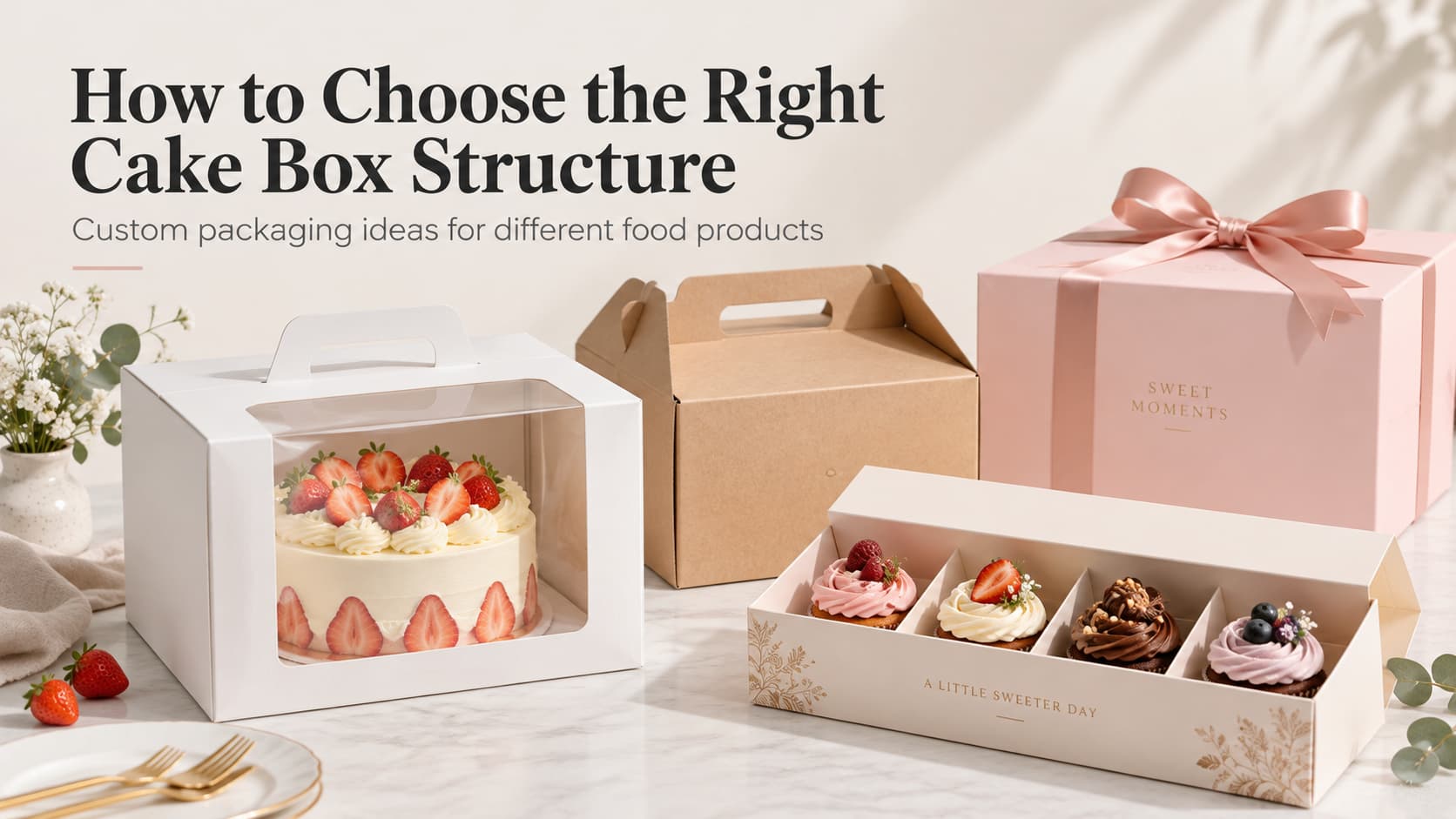
In the food industry, packaging is often the first physical interaction between a customer and a brand.
A beautifully decorated cake may attract attention inside a store, but the packaging determines how customers perceive the product before they even taste it. A well-designed cake box does more than protect desserts during transportation. It helps maintain product quality, improves presentation, supports brand recognition, and creates a memorable gifting experience.
Many bakery brands make the mistake of choosing packaging based only on appearance or price. However, the right cake box structure should be selected according to several practical factors, including cake size, product weight, delivery conditions, storage requirements, and brand positioning.
A small bakery selling daily cupcakes may need a lightweight folding cake box that is efficient for high-volume orders. A premium dessert brand creating wedding cakes or luxury gift collections may require a stronger rigid structure with customized inserts and premium finishing.
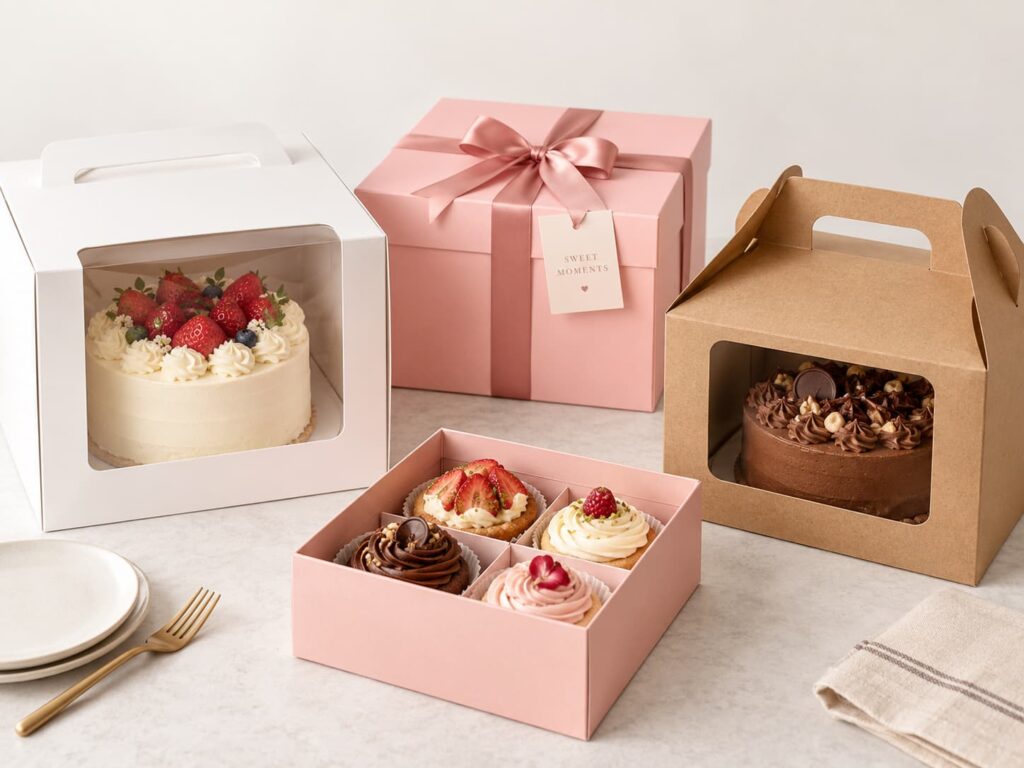
Choosing the right cake box structure depends on the product type, size, weight, transportation method, and brand positioning. Folding cake boxes are suitable for everyday bakery products, while rigid cake gift boxes provide a more premium presentation for luxury desserts. Window cake boxes improve product visibility, and customized inserts offer additional protection for delicate products.
For brands looking for reliable custom cake boxes, the goal is not simply to find a container for food products. The goal is to create packaging that protects the product, communicates brand value, and supports long-term business growth.
At LVPACK, we help bakeries, dessert brands, and food companies develop customized cake packaging solutions from structure design and material selection to sampling and mass production. By understanding each product requirement, we create packaging that balances appearance, functionality, and manufacturing feasibility.
How to Choose the Right Cake Box Structure for Different Food Products
Choosing the right cake box structure is one of the most important decisions when developing custom bakery packaging.
Different food products have different requirements. A delicate decorated cake needs stronger protection, while everyday bakery products may require packaging that is easy to assemble, cost-efficient, and suitable for large quantities.
The best structure should consider product protection, customer experience, transportation requirements, and brand presentation.
Folding Cake Boxes for Everyday Bakery Products
Folding cake boxes are one of the most commonly used packaging solutions for bakeries, cafés, dessert shops, and food retailers.
They are designed for practical daily use and are suitable for products such as cupcakes, pastries, small cakes, cookies, and takeaway desserts.
Compared with rigid packaging, folding cake boxes usually require less storage space because they can be supplied flat and assembled when needed. This makes them a practical choice for businesses handling frequent orders or seasonal sales peaks.
Why Choose Folding Cake Boxes?
The main advantages include:
- Efficient storage and transportation
- Lower packaging cost
- Easy assembly
- Suitable for high-volume production
- Flexible printing options
For bakeries that sell hundreds or thousands of products every month, packaging efficiency becomes an important factor. A well-designed folding structure can reduce warehouse requirements while maintaining a professional appearance.
Modern folding cake boxes are not limited to simple white cartons. Brands can customize them with:
- Brand colors
- Product illustrations
- Logo printing
- Window designs
- Special patterns
- Food-safe coatings
This allows small and medium bakeries to create branded packaging without requiring the higher investment associated with premium rigid packaging.
However, folding boxes are not always suitable for every product.
Large celebration cakes, fragile desserts, or premium gift products may require stronger structures because transportation pressure and product weight can affect packaging performance.
For these applications, brands often consider custom rigid cake boxes or reinforced structures.
Rigid Cake Gift Boxes for Premium Dessert Brands
For luxury desserts, wedding cakes, premium gift collections, and high-value food products, rigid cake boxes provide a stronger and more premium packaging experience.
Unlike folding cartons, rigid boxes use thicker paperboard construction, creating better stability and a more substantial feel.
They are often selected by brands that want customers to feel the value of the product before opening the package.
Why Premium Brands Choose Rigid Cake Boxes
Rigid cake packaging provides several advantages:
- Stronger structural support
- Higher perceived value
- Better presentation experience
- Suitable for premium gifting
- More customization possibilities
For example, a luxury bakery launching seasonal dessert collections may use a rigid gift box with specialty paper, foil stamping, and customized inserts to create a more memorable customer experience.
The packaging itself becomes part of the product.
A premium cake is not only judged by taste. Customers also evaluate:
- How the gift looks when presented
- How easy it is to carry
- How the packaging feels when opened
- Whether the brand appears professional
A carefully designed luxury cake packaging solution can help brands differentiate themselves in competitive markets.
However, rigid boxes may not always be the most practical option for daily bakery operations because they usually involve higher material costs and more complex manufacturing.
The right choice depends on whether the priority is efficiency or premium presentation.
Window Cake Boxes for Better Product Display
Food products are highly visual, and customers often make purchasing decisions based on appearance.
Window cake boxes are designed to showcase the product while still providing protection.
They are especially popular for:
- Cupcakes
- Pastries
- Dessert collections
- Retail bakery products
- Gift desserts
A transparent window allows customers to see the product design, decoration, and quality before purchase.
This is particularly valuable for bakeries where visual presentation directly influences buying decisions.
Benefits of Window Cake Packaging
Window cake boxes can help brands:
- Increase product visibility
- Improve shelf presentation
- Build customer confidence
- Encourage impulse purchases
For example, a customer choosing between several dessert options in a bakery display may naturally prefer the product with clearer visibility and more attractive presentation.
The window design itself can also be customized.
Options include:
- Different window shapes
- PET transparent windows
- Partial display areas
- Full top-view designs
However, the window structure should be carefully designed according to transportation requirements. The packaging must still provide enough strength to protect the product during handling and delivery.
A professional cake packaging manufacturer should balance visibility and protection instead of focusing only on appearance.
How to Choose the Right Cake Box Structure for Different Food Products
Multi-Compartment Cake Boxes for Gift Collections and Combination Products
As food brands continue to develop premium gift sets, traditional single-product cake boxes are no longer enough for many applications.
Multi-compartment cake boxes are designed to hold different products together while maintaining an organized and attractive presentation. They are commonly used for dessert combinations, seasonal gift collections, bakery sets, and promotional food packages.
Typical applications include:
- Cake and beverage combinations
- Cupcake gift sets
- Dessert collections
- Cake and cookie combinations
- Holiday bakery gifts
- Corporate food gifts
The biggest advantage of a multi-compartment structure is that it allows brands to create a complete gifting experience instead of selling individual products separately.
For example, a premium bakery may combine a small cake, cookies, chocolates, and drinks into one customized gift package. Without proper internal organization, products may move during transportation or appear messy when customers open the box.
A well-designed multi-compartment cake box solves this problem by using customized dividers and internal supports.
Benefits of Multi-Compartment Cake Packaging
A professional multi-section structure can provide:
- Better product organization
- Improved visual presentation
- Reduced product movement
- More opportunities for product combinations
- Higher perceived gift value
The internal layout can be customized according to the product size and brand requirements.
Possible interior solutions include:
- Paperboard dividers
- Food-grade trays
- Cupcake holders
- Customized compartments
- Protective inserts
For food brands, the packaging structure should not only protect products but also guide customers through the unboxing experience.
A well-designed gift box creates a sense of discovery. When customers open the package and see each product positioned carefully, the packaging itself becomes part of the brand experience.
However, multi-compartment packaging requires more structural planning than standard cake boxes. The internal spacing, product weight distribution, and transportation conditions should be evaluated before production.
Working with an experienced custom bakery packaging manufacturer can help brands avoid problems such as unstable dividers, insufficient protection, or inefficient material usage.
What Factors Should You Consider Before Choosing a Cake Box Structure?
Choosing a cake box structure should never be based only on appearance.
The right packaging solution depends on the relationship between the product, transportation conditions, customer experience, and production requirements.
A structure that looks attractive but fails to protect the product can negatively affect customer satisfaction and brand reputation.
The most important factors when choosing a cake box structure include product size, weight, protection requirements, delivery conditions, brand positioning, and budget. A suitable structure should balance functionality and appearance while supporting efficient production and consistent quality.
Product Size and Shape: The Foundation of Packaging Design
The first step in selecting a cake box structure is understanding the actual product dimensions.
Different bakery products have different packaging requirements.
A small cupcake, a tall celebration cake, and a multi-layer wedding cake cannot use the same packaging design.
Important measurements include:
- Product diameter
- Product height
- Decoration height
- Weight
- Additional accessories
For example, cakes with tall decorations, flowers, candles, or special toppings require additional internal space to prevent damage.
A common mistake among brands is selecting packaging based only on the cake base size while ignoring the height of decorations.
This can cause:
- Product damage
- Difficult opening experience
- Unstable transportation
- Poor customer presentation
A professional packaging supplier should evaluate the complete product profile before recommending a structure.
For custom projects, the box dimensions, internal support, and opening method should be developed together rather than separately.
Product Weight and Protection Requirements
Different food products create different levels of pressure on packaging.
A lightweight cupcake requires very different support compared with a heavy cream cake or a large dessert collection.
Product weight affects:
- Paperboard thickness
- Bottom support
- Divider strength
- Handle design
- Transportation safety
For heavier products, the packaging may require reinforced structures or stronger materials.
For delicate desserts, protection is even more important because appearance directly affects customer satisfaction.
A cake may taste excellent, but if the decoration is damaged during delivery, customers may perceive the overall product experience negatively.
This is why many professional brands invest in custom cake packaging solutions instead of using standard packaging sizes.
The goal is not simply to make the box stronger. It is to create the right level of protection without increasing unnecessary costs.
Transportation and Delivery Conditions
The growth of online food delivery has changed how brands think about cake packaging.
A cake box that works perfectly inside a bakery store may not perform well during transportation.
Delivery packaging needs to consider:
- Movement during driving
- Stacking pressure
- Temperature changes
- Handling by delivery personnel
- Long-distance shipping
For local bakery sales, a simple folding cake box may be enough.
For delivery businesses and online food brands, additional support may be required.
Examples include:
- Stronger bottom structures
- Anti-slip inserts
- Secure closures
- Reinforced corners
The packaging should protect the product from the moment it leaves the bakery until the customer opens it.
This is especially important for brands selling premium cakes where replacement costs and customer complaints can significantly affect profitability.
Brand Positioning and Customer Experience
Packaging structure should also match how a brand wants customers to perceive the product.
A local bakery selling affordable daily desserts may prioritize:
- Cost efficiency
- Easy assembly
- Storage convenience
A luxury dessert brand may focus on:
- Premium appearance
- Unique opening experience
- High-quality materials
- Gift value
For premium products, packaging is not just protection. It becomes part of the marketing strategy.
A customized rigid cake box with elegant finishing can communicate quality before customers taste the product.
Meanwhile, an environmentally focused brand may prefer kraft paper packaging or recyclable structures to support its brand message.
The best packaging choice is therefore not always the most expensive option. It is the option that matches the product value and customer expectations.
Production Efficiency and Budget Considerations
While creative packaging can help brands stand out, production practicality should also be considered.
A highly complicated structure may require:
- More materials
- More assembly steps
- Higher production costs
- Longer manufacturing time
For businesses ordering large quantities, production efficiency becomes especially important.
A professional cake box manufacturer can help optimize the structure by balancing:
- Appearance
- Functionality
- Material usage
- Manufacturing difficulty
- Target price
The best packaging design is one that can be produced consistently at scale while maintaining the intended brand image.
Which Materials Are Best for Custom Cake Packaging?
Choosing the right cake packaging materials is an important step in developing packaging that balances food safety, product protection, visual appeal, and cost.
Many brands focus mainly on the outside design of packaging, but the material selection directly affects the overall customer experience. A premium-looking cake box should not only attract attention but also provide enough strength, stability, and practicality for real-world use.
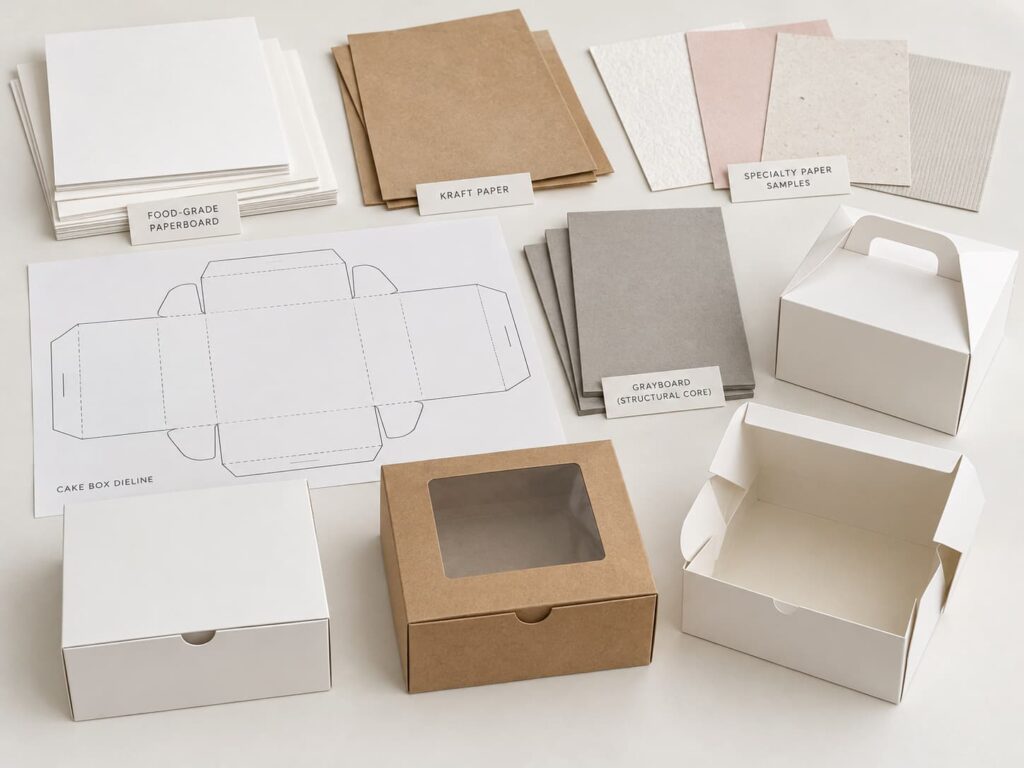
The best materials for custom cake packaging depend on the product requirements, brand positioning, budget, and usage environment. Food-grade paperboard is suitable for daily bakery packaging, kraft paper supports eco-friendly brands, and specialty papers help premium dessert brands create a more luxurious presentation.
A professional packaging solution should consider both the external appearance and the internal performance of the material.
Food Grade Paperboard for Safe and Practical Cake Packaging
Food-grade paperboard is one of the most widely used materials for bakery and dessert packaging.
It is commonly selected for:
- Birthday cake boxes
- Cupcake packaging
- Pastry boxes
- Bakery takeaway packaging
- Dessert gift boxes
The main advantage of paperboard packaging is its balance between functionality and cost efficiency.
It provides:
- Reliable structural support
- Lightweight transportation
- Easy customization
- Suitable printing performance
- Convenient assembly
For bakeries handling daily orders, paperboard cake boxes are often the most practical choice because they can support high-volume production while maintaining a professional appearance.
Modern food packaging paperboard can also be customized with different surface treatments, including:
- CMYK printing
- Pantone color printing
- Logo printing
- Window cut-out design
- Matte or gloss coating
This allows brands to create packaging that reflects their identity without significantly increasing production complexity.
For example, a bakery specializing in handmade desserts may use custom printed paperboard boxes featuring brand illustrations and seasonal designs. The structure remains practical while the packaging becomes a marketing tool.
However, paperboard selection should not be based only on appearance.
Different cake sizes and weights require different paper thicknesses and structural designs. A lightweight cupcake box and a large celebration cake box may require completely different material specifications.
A professional cake box manufacturer should evaluate:
- Product weight
- Transportation requirements
- Storage conditions
- Expected usage environment
before recommending the right paperboard solution.
Kraft Paper Packaging for Eco-Friendly Food Brands
As sustainability becomes increasingly important, many food brands are exploring kraft paper packaging as an alternative option.
Kraft paper is especially popular among:
- Organic bakeries
- Handmade dessert brands
- Natural food companies
- Eco-conscious businesses
Its natural appearance creates a warm and authentic feeling that matches brands focused on simplicity and environmental responsibility.
Advantages of Kraft Paper Cake Boxes
Kraft paper packaging provides:
- Natural visual appeal
- Recyclable characteristics
- Simple and clean appearance
- Strong brand storytelling opportunities
Many customers associate kraft packaging with handmade, fresh, and environmentally responsible products.
For example, a small artisan bakery may use kraft cake boxes with a simple logo stamp to communicate a handcrafted brand image.
However, kraft paper is not suitable for every product.
Premium luxury desserts that require metallic effects, bright colors, or highly decorative finishes may need different materials.
The right choice depends on what the brand wants customers to feel.
A sustainable bakery may prefer kraft because it supports the brand message, while a luxury dessert company may choose specialty paper to create a premium experience.
Specialty Paper for Premium Cake Gift Packaging
For high-end desserts, seasonal collections, and luxury food gifts, specialty paper can create a stronger visual and tactile experience.
Specialty papers include:
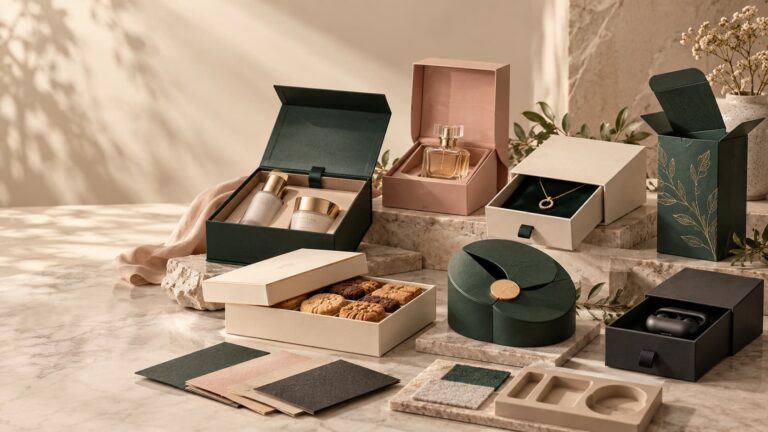
- Textured paper
- Pearlescent paper
- Metallic paper
- Embossed paper
- Fabric-like paper
- Premium coated paper
These materials are often used in luxury cake packaging because they provide unique surface characteristics that standard paper cannot achieve.
Why Premium Brands Choose Specialty Paper
Specialty paper helps brands create:
- More memorable packaging
- Stronger shelf presence
- Better tactile experience
- Higher perceived product value
For example, a premium wedding cake brand may choose textured paper with foil stamping to create elegant gift packaging.
A seasonal dessert collection may use metallic paper to create a festive appearance for holidays or special events.
The key advantage of specialty paper is that it can create a premium feeling without requiring excessive decorative processes.
A simple logo combined with a beautiful paper texture can sometimes create a stronger result than adding multiple finishing techniques.
However, specialty materials usually require more careful production control.
Factors such as:
- Paper texture
- Printing compatibility
- Surface finishing
- Folding performance
should be reviewed before production.
How to Balance Material Quality and Packaging Cost
One common mistake brands make is assuming that more expensive materials always create better packaging.
In reality, the best packaging material is the one that matches the product requirements and customer expectations.
A successful custom cake packaging solution usually combines different materials strategically.
For example:
A premium rigid cake box may use:
- Strong greyboard structure
- Specialty wrapping paper
- Customized food-safe insert
A daily bakery box may use:
- Food-grade paperboard
- Simple printing
- Efficient folding structure
Both solutions can be effective depending on the business model.
When selecting materials, brands should consider:
Product Requirements
Does the cake need extra protection?
Is the product heavy or fragile?
Does it require temperature-sensitive transportation?
Brand Positioning
Is the product affordable daily food?
Or is it a premium gift item?
Production Volume
Large orders may benefit from cost-efficient materials, while limited-edition products may justify premium materials.
A professional packaging partner can help brands find the right balance between appearance, performance, and budget.
How Can Custom Cake Boxes Improve Brand Presentation and Customer Experience?
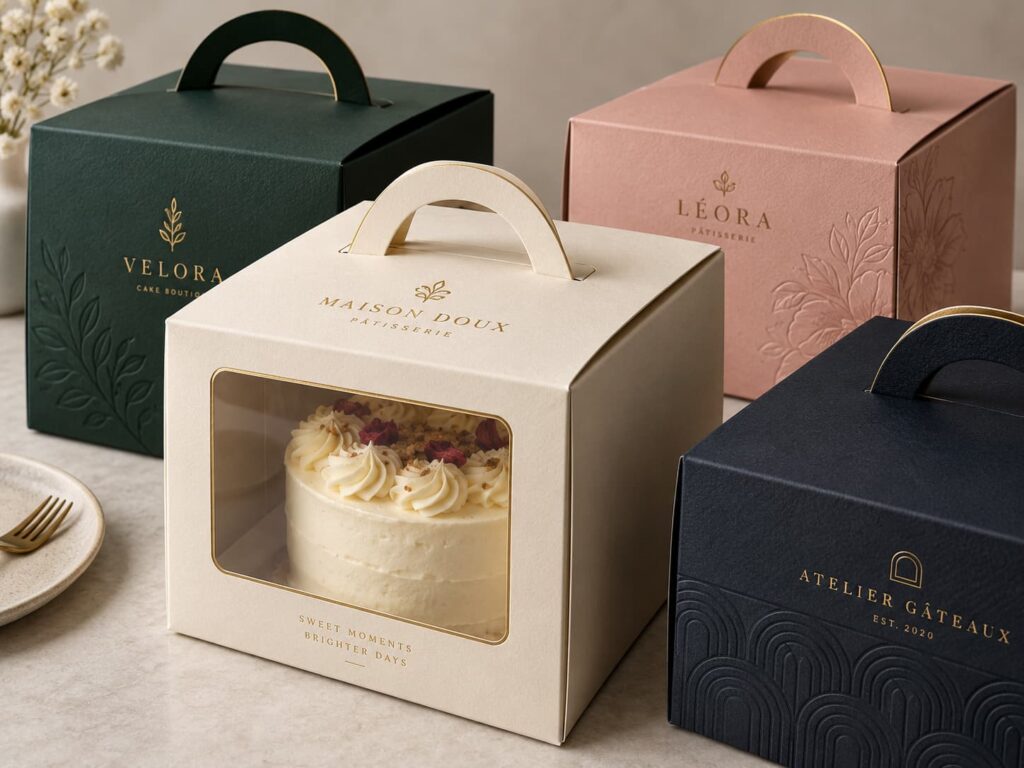
Packaging has become an important part of the food buying experience.
Customers often interact with the packaging before they taste the product. The quality, appearance, and opening experience can influence how they perceive the brand.
A thoughtfully designed custom cake box does more than hold a product. It communicates brand personality and creates emotional value.
Custom cake boxes improve brand presentation by combining personalized printing, creative structures, product visibility, and premium details. The right packaging helps food brands create stronger recognition, improve customer experience, and turn ordinary purchases into memorable moments.
Custom Printing Builds Strong Brand Recognition
One of the simplest ways to create branded cake packaging is through customized printing.
Instead of using generic boxes, brands can add:
- Company logos
- Brand colors
- Product illustrations
- Seasonal graphics
- Storytelling elements
For bakeries, packaging is often a mobile advertisement.
A customer carrying a beautifully designed cake box naturally increases brand visibility.
Custom printing also helps customers recognize the product immediately.
For example, a dessert brand with a consistent color system across all packaging can create stronger visual memory among customers.
This is especially valuable for businesses operating in competitive markets where many products look similar.
Window Designs Improve Product Visibility
Food products rely heavily on visual appeal.
A beautifully decorated cake deserves packaging that allows customers to appreciate the design.
Window cake boxes provide an opportunity to showcase:
- Cake decoration
- Product quality
- Color details
- Creative designs
For retail bakeries, visibility can directly influence purchasing decisions.
Customers are more likely to trust and choose products they can clearly see.
However, window design should be carefully balanced with protection requirements.
The packaging must maintain enough strength while providing the desired display effect.
How Can Custom Cake Boxes Improve Brand Presentation and Customer Experience?
Creative Opening Experience Creates Stronger Customer Connection
For premium food brands, packaging is no longer only about transportation and protection.
The way customers open a package can influence how they remember the product.
A standard cake box may complete its basic function, but a creatively designed structure can transform the opening process into a more memorable experience.
This is especially important for:
- Wedding cake brands
- Premium dessert companies
- Holiday gift collections
- Corporate food gifts
- Luxury bakery products
Creative structures such as:
- Flip lid cake boxes
- Drawer-style cake boxes
- Magnetic closure boxes
- Layered gift boxes
can create a stronger sense of value when customers receive the product.
For example, a premium dessert collection presented inside a rigid flip lid box feels different from a regular takeaway carton. The packaging communicates that the product is special before the customer even tries it.
A successful custom cake packaging design should consider the complete customer journey:
- Seeing the package
- Carrying the package
- Opening the package
- Discovering the product
- Sharing the experience
This emotional connection can help brands improve customer satisfaction and encourage repeat purchases.
Which Cake Box Finishing Options Create a Premium Look?
Surface finishing plays an important role in improving the visual and tactile quality of cake packaging.
For food brands, the right finishing can help products stand out on shelves, improve gift value, and create stronger brand recognition.
However, finishing should not be selected only because it looks attractive. It should match the material, structure, product positioning, and production requirements.
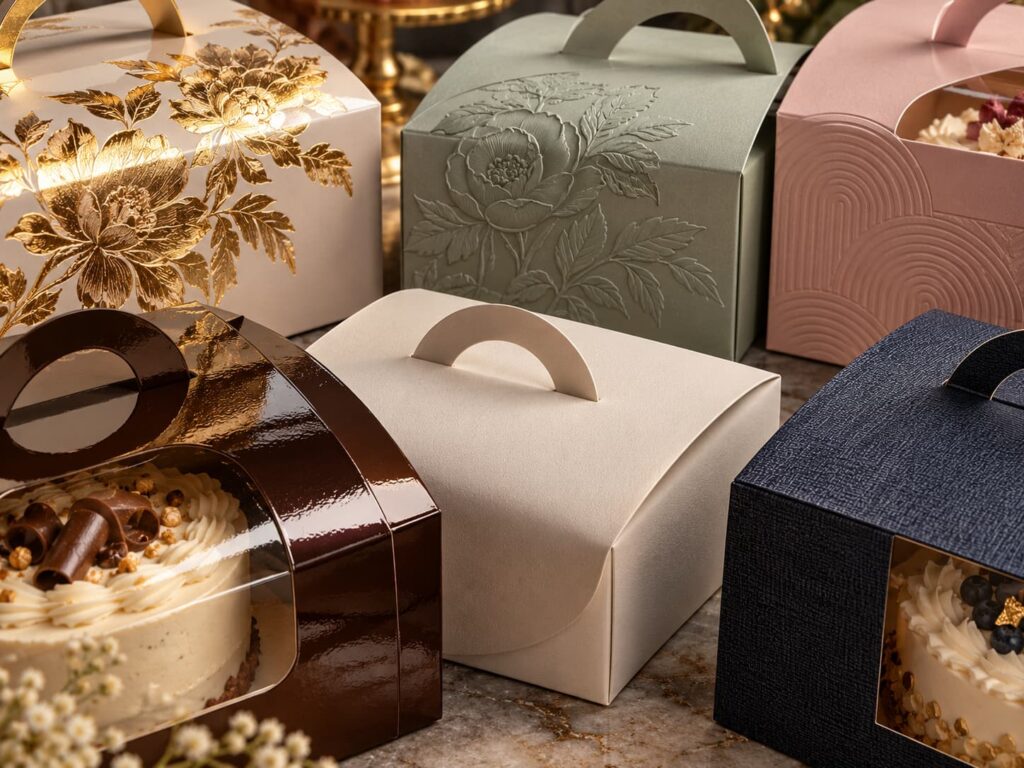
Premium cake packaging often uses finishing techniques such as foil stamping, embossing, debossing, spot UV, matte lamination, and texture effects. These processes help highlight brand elements, improve surface quality, and create a more memorable packaging experience for customers.
A professional cake box manufacturer should help brands select finishing options that provide real value rather than adding unnecessary cost.
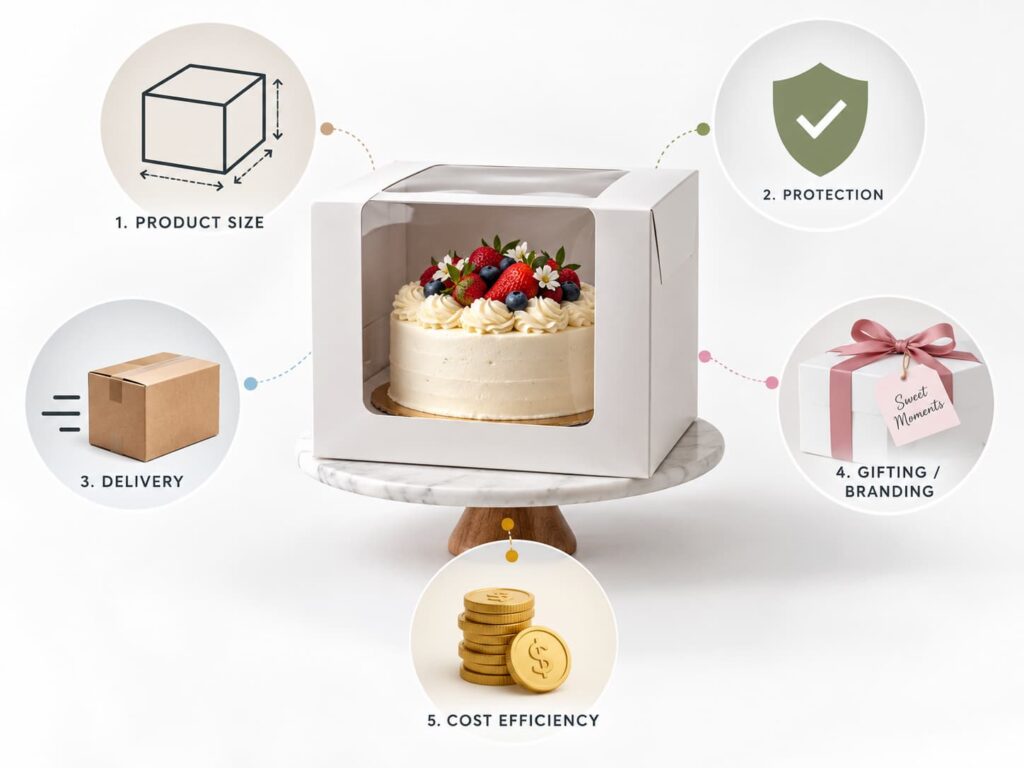
Foil Stamping for Elegant Brand Details
Foil stamping is one of the most popular finishing options for premium packaging.
It uses metallic foil to create a bright and decorative effect on selected areas of the box.
Common applications include:
- Brand logos
- Company names
- Product labels
- Decorative patterns
- Special edition packaging
Popular foil colors include:
- Gold
- Silver
- Rose gold
- Metallic effects
For luxury bakeries, foil stamping can create a premium impression without requiring complex graphics.
For example, a simple white cake box with a gold foil logo can communicate elegance and quality.
Foil stamping works especially well with:
- Matte paper
- Textured paper
- Dark-colored packaging
- Specialty paper materials
However, the placement of foil should be carefully considered.
Too much metallic decoration may reduce the premium feeling and make the design appear crowded.
The most effective approach is usually highlighting important brand elements rather than covering the entire package.
Embossing and Debossing for Tactile Branding
Embossing and debossing create a three-dimensional effect by changing the surface structure of the packaging.
Embossing
Raises the design above the surface.
Debossing
Presses the design into the material.
These techniques are often used for:
- Logos
- Brand names
- Decorative patterns
- Premium packaging details
The biggest advantage is that they create a physical experience.
Customers do not only see the packaging; they feel it.
This tactile interaction can make the product appear more carefully designed and higher value.
Embossing and debossing are particularly suitable for:
- Luxury cake gift boxes
- Wedding dessert packaging
- Premium food collections
They also work well with specialty paper because the texture effect becomes more noticeable.
Matte, Gloss and Special Surface Finishes
Surface coating can significantly change how customers perceive packaging.
Matte Lamination
Matte finishing creates a smooth, elegant appearance.
It is often used for:
- Luxury dessert packaging
- Minimalist brands
- Premium gift boxes
It reduces reflection and creates a more sophisticated visual style.
Gloss Lamination
Gloss finishing creates a brighter appearance.
It works well for:
- Colorful designs
- Promotional packaging
- Retail products
The stronger reflection can make printed colors appear more vibrant.
Texture Finishing
Texture effects add a unique surface feeling.
They can simulate:
- Fabric texture
- Natural paper texture
- Premium materials
For brands looking to differentiate their packaging, texture finishing can create a stronger connection between visual design and physical experience.
How Does LVPACK Develop Custom Cake Boxes From Design to Production?
Developing a successful cake box requires more than simply printing a design on paper.
A professional packaging manufacturer needs to consider structure, materials, product protection, production efficiency, and final customer experience.
From the first idea to finished products, each stage influences the quality of the final packaging.
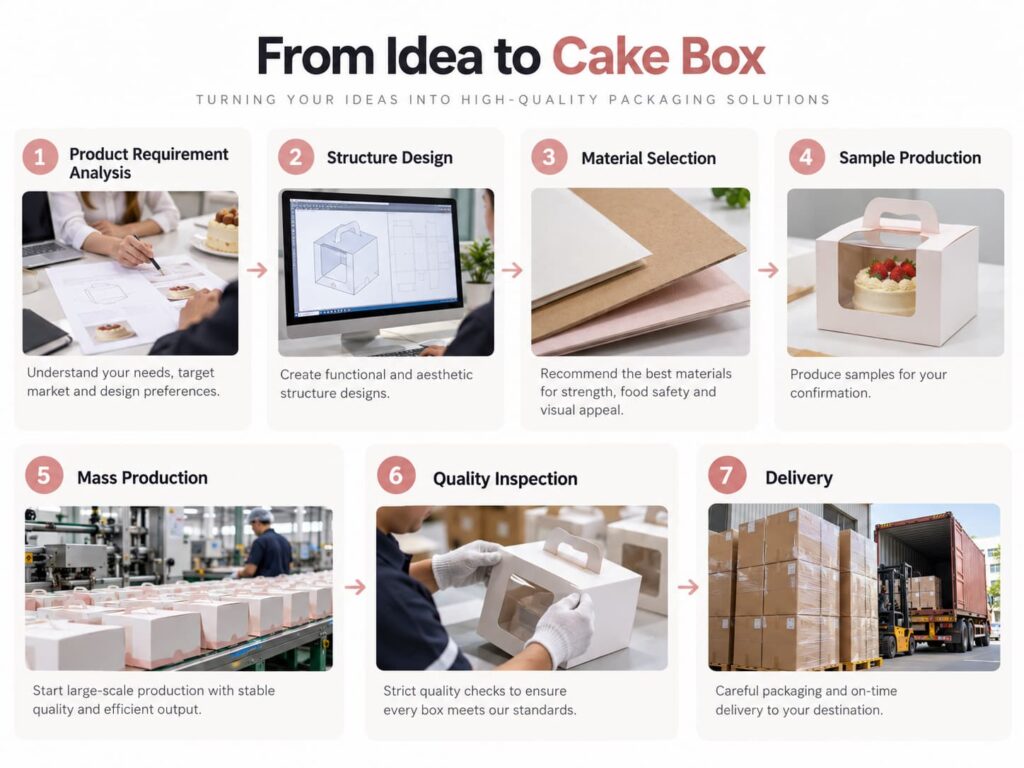
LVPACK develops custom cake boxes through a complete process including product requirement analysis, structural design, material selection, sample production, mass manufacturing, and quality inspection. This process helps brands create packaging solutions that are practical, visually attractive, and ready for market use.
Step 1: Product Requirement Analysis
Every successful packaging project begins with understanding the product.
Before developing a cake box, important information should be confirmed:
- Cake size
- Product weight
- Product shape
- Transportation method
- Storage requirements
- Target customer
- Brand positioning
- Expected quantity
For example, a bakery delivering cakes locally may need a different solution from a premium dessert company shipping gift collections internationally.
Understanding these requirements helps determine:
- Box structure
- Material selection
- Insert design
- Closure method
- Production approach
This step prevents problems later because packaging decisions are based on actual product needs rather than assumptions.
Step 2: Structure Design and Development
After understanding the product requirements, the next step is developing the packaging structure.
The design team evaluates:
- Box dimensions
- Opening method
- Internal support
- Assembly process
- Transportation stability
Possible structures include:
- Folding cake boxes
- Rigid cake boxes
- Drawer boxes
- Magnetic boxes
- Window boxes
- Multi-compartment packaging
For special products, customized structures can be developed according to the cake shape and customer requirements.
A professional custom packaging manufacturer focuses not only on making the design attractive but also ensuring it can be produced consistently.
A good structure should balance:
- Appearance
- Function
- Cost
- Manufacturing efficiency
Step 3: Material Selection and Prototype Sampling
After structure confirmation, suitable materials are selected.
Factors considered include:
- Product protection
- Brand image
- Printing requirements
- Budget
- Sustainability goals
Materials may include:
- Food-grade paperboard
- Kraft paper
- Specialty paper
- Rigid greyboard
Before mass production, a physical sample is created.
The sample allows brands to check:
- Size accuracy
- Product fitting
- Material quality
- Printing results
- Finishing effects
- Opening experience
Sampling is an important step because digital designs cannot always show the real performance of physical packaging.
Step 4: Mass Production and Quality Control
After sample approval, the project moves into production.
A complete manufacturing process may include:
- Material preparation
- Printing
- Surface finishing
- Die cutting
- Paper mounting
- Box forming
- Insert production
- Assembly
- Quality inspection
- Packing
Quality control should be performed throughout production.
Important inspection points include:
- Material consistency
- Printing accuracy
- Structural dimensions
- Surface quality
- Glue quality
- Final appearance
For brands, consistent production quality is essential because packaging represents the company directly in front of customers.
A reliable supplier should ensure that mass-produced boxes match the approved sample as closely as possible.
How Can Custom Cake Boxes Improve Brand Presentation and Customer Experience?
Creative Opening Experience Creates Stronger Customer Connection
For premium food brands, packaging is no longer only about transportation and protection.
The way customers open a package can influence how they remember the product.
A standard cake box may complete its basic function, but a creatively designed structure can transform the opening process into a more memorable experience.
This is especially important for:
- Wedding cake brands
- Premium dessert companies
- Holiday gift collections
- Corporate food gifts
- Luxury bakery products
Creative structures such as:
- Flip lid cake boxes
- Drawer-style cake boxes
- Magnetic closure boxes
- Layered gift boxes
can create a stronger sense of value when customers receive the product.
For example, a premium dessert collection presented inside a rigid flip lid box feels different from a regular takeaway carton. The packaging communicates that the product is special before the customer even tries it.
A successful custom cake packaging design should consider the complete customer journey:
- Seeing the package
- Carrying the package
- Opening the package
- Discovering the product
- Sharing the experience
This emotional connection can help brands improve customer satisfaction and encourage repeat purchases.
Which Cake Box Finishing Options Create a Premium Look?
Surface finishing plays an important role in improving the visual and tactile quality of cake packaging.
For food brands, the right finishing can help products stand out on shelves, improve gift value, and create stronger brand recognition.
However, finishing should not be selected only because it looks attractive. It should match the material, structure, product positioning, and production requirements.
Premium cake packaging often uses finishing techniques such as foil stamping, embossing, debossing, spot UV, matte lamination, and texture effects. These processes help highlight brand elements, improve surface quality, and create a more memorable packaging experience for customers.
A professional cake box manufacturer should help brands select finishing options that provide real value rather than adding unnecessary cost.
Foil Stamping for Elegant Brand Details
Foil stamping is one of the most popular finishing options for premium packaging.
It uses metallic foil to create a bright and decorative effect on selected areas of the box.
Common applications include:
- Brand logos
- Company names
- Product labels
- Decorative patterns
- Special edition packaging
Popular foil colors include:
- Gold
- Silver
- Rose gold
- Metallic effects
For luxury bakeries, foil stamping can create a premium impression without requiring complex graphics.
For example, a simple white cake box with a gold foil logo can communicate elegance and quality.
Foil stamping works especially well with:
- Matte paper
- Textured paper
- Dark-colored packaging
- Specialty paper materials
However, the placement of foil should be carefully considered.
Too much metallic decoration may reduce the premium feeling and make the design appear crowded.
The most effective approach is usually highlighting important brand elements rather than covering the entire package.
Embossing and Debossing for Tactile Branding
Embossing and debossing create a three-dimensional effect by changing the surface structure of the packaging.
Embossing
Raises the design above the surface.
Debossing
Presses the design into the material.
These techniques are often used for:
- Logos
- Brand names
- Decorative patterns
- Premium packaging details
The biggest advantage is that they create a physical experience.
Customers do not only see the packaging; they feel it.
This tactile interaction can make the product appear more carefully designed and higher value.
Embossing and debossing are particularly suitable for:
- Luxury cake gift boxes
- Wedding dessert packaging
- Premium food collections
They also work well with specialty paper because the texture effect becomes more noticeable.
Matte, Gloss and Special Surface Finishes
Surface coating can significantly change how customers perceive packaging.
Matte Lamination
Matte finishing creates a smooth, elegant appearance.
It is often used for:
- Luxury dessert packaging
- Minimalist brands
- Premium gift boxes
It reduces reflection and creates a more sophisticated visual style.
Gloss Lamination
Gloss finishing creates a brighter appearance.
It works well for:
- Colorful designs
- Promotional packaging
- Retail products
The stronger reflection can make printed colors appear more vibrant.
Texture Finishing
Texture effects add a unique surface feeling.
They can simulate:
- Fabric texture
- Natural paper texture
- Premium materials
For brands looking to differentiate their packaging, texture finishing can create a stronger connection between visual design and physical experience.
How Does LVPACK Develop Custom Cake Boxes From Design to Production?
Developing a successful cake box requires more than simply printing a design on paper.
A professional packaging manufacturer needs to consider structure, materials, product protection, production efficiency, and final customer experience.
From the first idea to finished products, each stage influences the quality of the final packaging.
LVPACK develops custom cake boxes through a complete process including product requirement analysis, structural design, material selection, sample production, mass manufacturing, and quality inspection. This process helps brands create packaging solutions that are practical, visually attractive, and ready for market use.
Step 1: Product Requirement Analysis
Every successful packaging project begins with understanding the product.
Before developing a cake box, important information should be confirmed:
- Cake size
- Product weight
- Product shape
- Transportation method
- Storage requirements
- Target customer
- Brand positioning
- Expected quantity
For example, a bakery delivering cakes locally may need a different solution from a premium dessert company shipping gift collections internationally.
Understanding these requirements helps determine:
- Box structure
- Material selection
- Insert design
- Closure method
- Production approach
This step prevents problems later because packaging decisions are based on actual product needs rather than assumptions.
Step 2: Structure Design and Development
After understanding the product requirements, the next step is developing the packaging structure.
The design team evaluates:
- Box dimensions
- Opening method
- Internal support
- Assembly process
- Transportation stability
Possible structures include:
- Folding cake boxes
- Rigid cake boxes
- Drawer boxes
- Magnetic boxes
- Window boxes
- Multi-compartment packaging
For special products, customized structures can be developed according to the cake shape and customer requirements.
A professional custom packaging manufacturer focuses not only on making the design attractive but also ensuring it can be produced consistently.
A good structure should balance:
- Appearance
- Function
- Cost
- Manufacturing efficiency
Step 3: Material Selection and Prototype Sampling
After structure confirmation, suitable materials are selected.
Factors considered include:
- Product protection
- Brand image
- Printing requirements
- Budget
- Sustainability goals
Materials may include:
- Food-grade paperboard
- Kraft paper
- Specialty paper
- Rigid greyboard
Before mass production, a physical sample is created.
The sample allows brands to check:
- Size accuracy
- Product fitting
- Material quality
- Printing results
- Finishing effects
- Opening experience
Sampling is an important step because digital designs cannot always show the real performance of physical packaging.
Step 4: Mass Production and Quality Control
After sample approval, the project moves into production.
A complete manufacturing process may include:
- Material preparation
- Printing
- Surface finishing
- Die cutting
- Paper mounting
- Box forming
- Insert production
- Assembly
- Quality inspection
- Packing
Quality control should be performed throughout production.
Important inspection points include:
- Material consistency
- Printing accuracy
- Structural dimensions
- Surface quality
- Glue quality
- Final appearance
For brands, consistent production quality is essential because packaging represents the company directly in front of customers.
A reliable supplier should ensure that mass-produced boxes match the approved sample as closely as possible.