How to Choose the Right Custom Packaging for Your Product

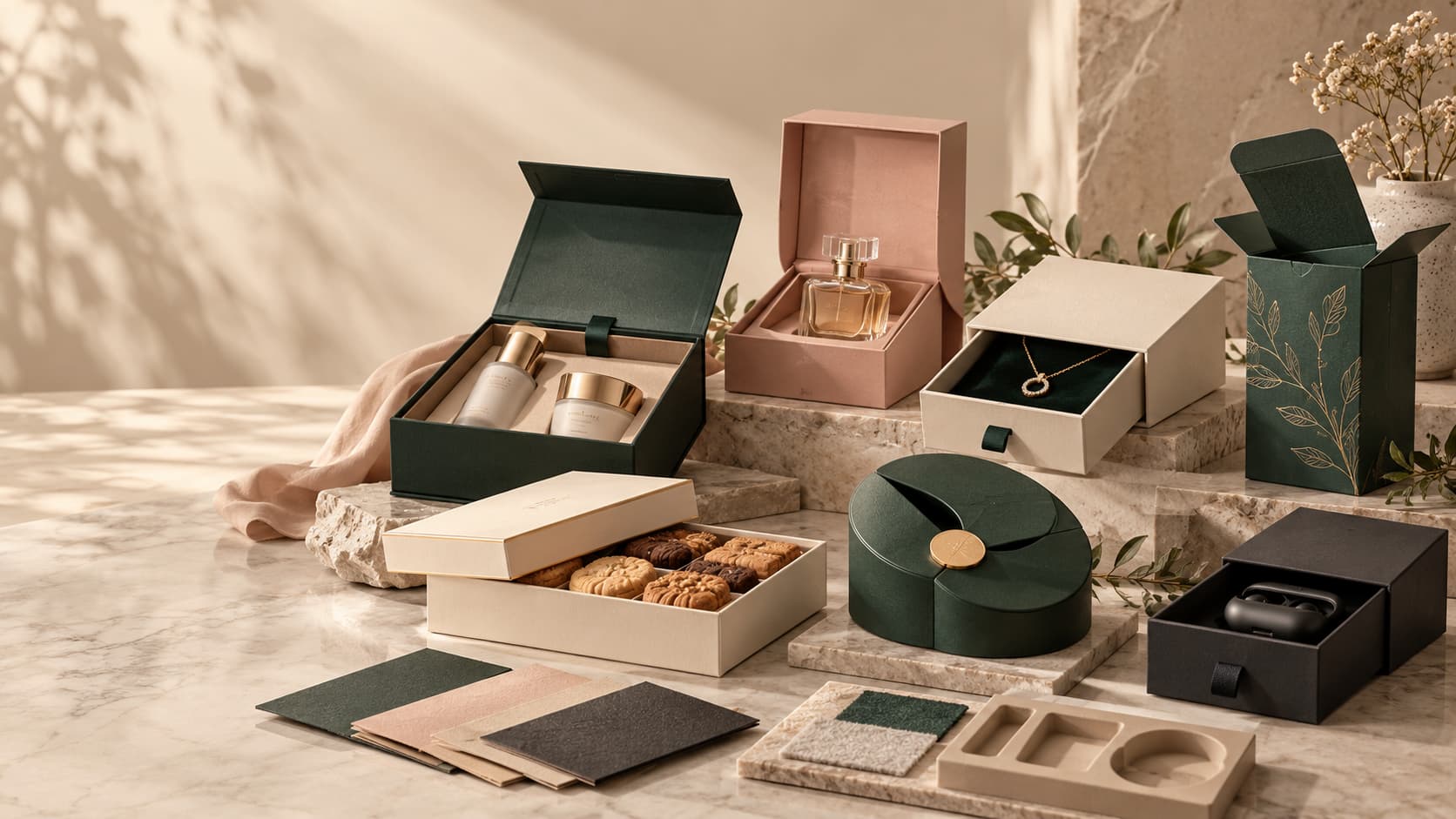
Choosing the right custom packaging should begin with the product rather than a box style or visual trend.
A packaging design needs to do more than look attractive. It should fit the product correctly, provide suitable protection, support transportation, match the brand position, and remain practical for production.
Before selecting materials, inserts, or finishing, brands should first understand what the packaging needs to achieve.
Start With Product Size and Shape
Product dimensions have a direct impact on packaging structure.
Small items such as jewelry, accessories, and compact cosmetics may need precise internal positioning, while larger skincare sets, electronics, or gift collections may require more space and stronger support.
Packaging that is too large creates unnecessary empty space and may increase shipping volume. Packaging that is too tight can make assembly difficult or place pressure on the product.
For irregular products, a custom shape box or specially developed insert can often provide a better fit than standard packaging.
Consider Product Weight and Protection
Product weight influences board thickness, structural strength, and internal support.
Lightweight products may work with relatively simple paperboard packaging, while heavier products such as glass bottles, candles, electronics, and multi-product sets may need stronger board, reinforced bases, or more secure inserts.
Fragile products also require movement control. A strong outer box alone may not prevent damage if the product can move freely inside.
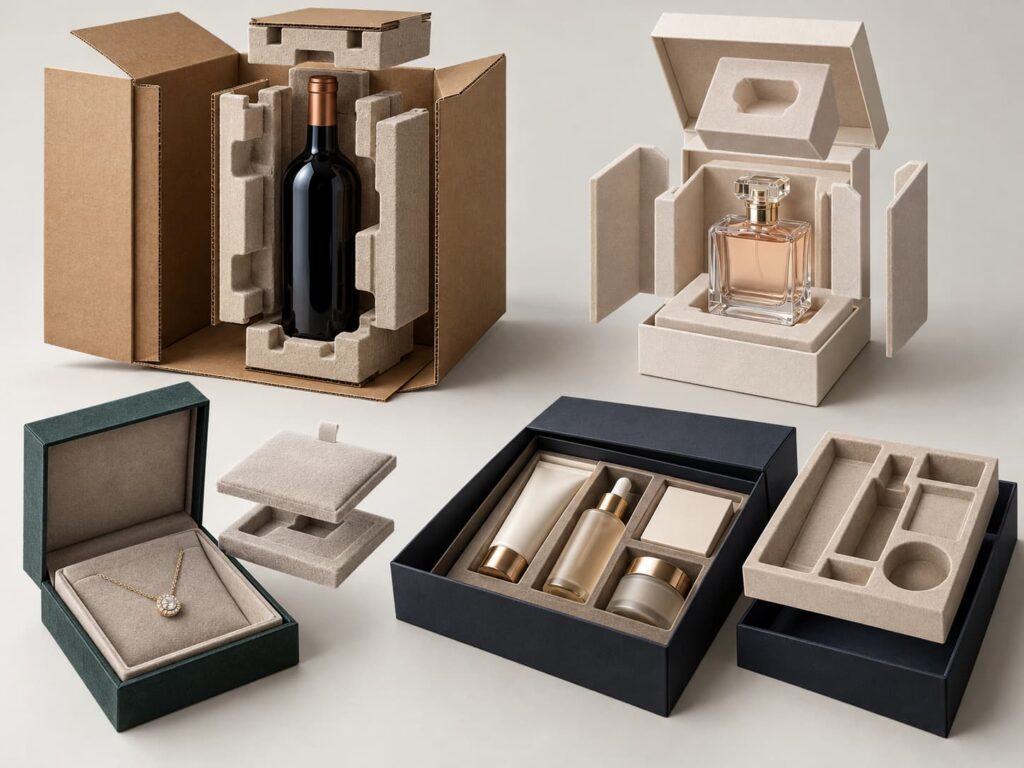
This is where custom packaging inserts become important.
Match Packaging With the Sales Channel
Retail, e-commerce, gifting, and international distribution can require different packaging priorities.
Retail packaging may focus on shelf presentation and brand recognition.
E-commerce packaging often needs stronger transportation protection and efficient dimensions.
Premium gift packaging may place more emphasis on material texture, opening experience, and presentation.
Brands selling through several channels should balance visual appeal with practical shipping requirements.
Match Packaging With Brand Positioning
The most expensive packaging is not always the best option.
Luxury fragrance and jewelry brands may benefit from a custom rigid box, specialty paper, and subtle finishing.
Natural beauty and lifestyle brands may prefer kraft paper, recycled materials, or simpler visual treatments.
Modern beauty brands may rely on clean colors and minimal decoration.
The right custom packaging should feel consistent with the value and personality of the product.
Define the Budget Early
Box size, materials, board thickness, inserts, printing, finishing, accessories, assembly, quantity, and shipping volume can all affect cost.
Setting a realistic budget before sampling makes it easier to decide where premium features add value and where the design can be simplified.
A professional custom packaging manufacturer should help brands balance product protection, presentation, production practicality, and cost.
Which Packaging Box Type Is Best for Different Products
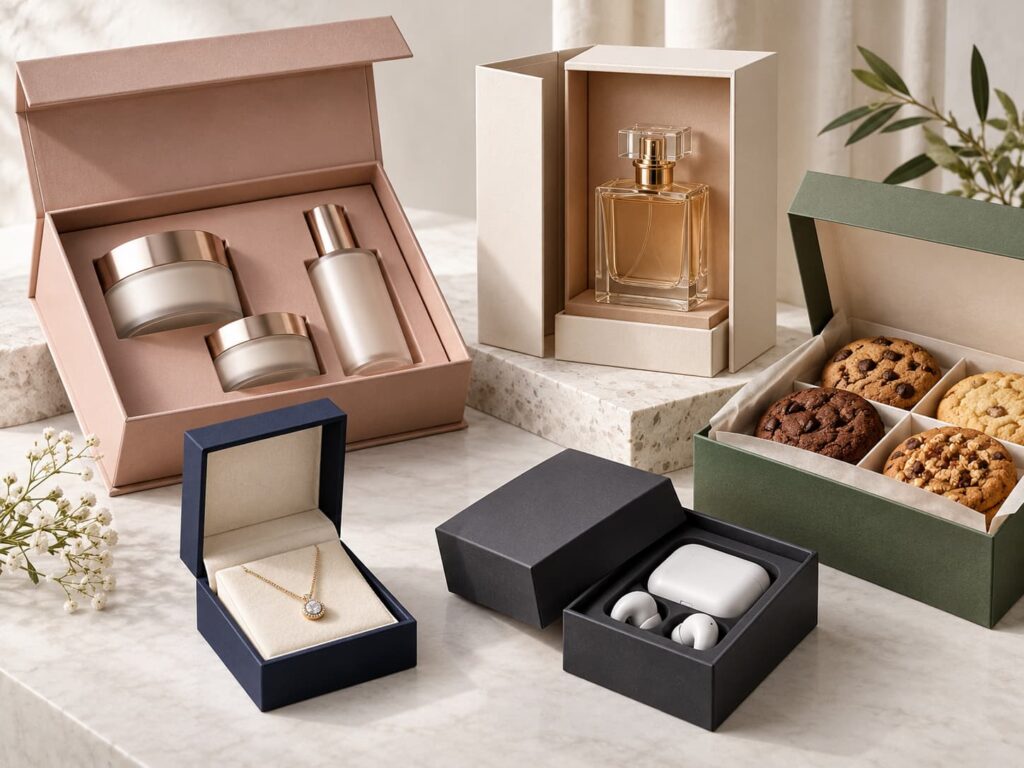
There is no single packaging box type that works for every product.
The best structure depends on product size, weight, presentation, protection requirements, opening experience, shipping method, and brand position.
Rigid Boxes for Premium Products
Rigid boxes are commonly used for cosmetics, perfume, jewelry, electronics, luxury accessories, and gift sets.
Their stronger paperboard construction creates better shape stability and a more substantial feel.
A custom rigid box can also be combined with specialty paper, foil, embossing, and customized inserts for a more premium presentation.
They work particularly well when the packaging is intended to remain part of the customer experience after purchase.
Magnetic Boxes for Gift Packaging
A magnetic gift box provides a clean closing system and controlled opening experience.
It is often suitable for beauty collections, jewelry, premium accessories, corporate gifts, and luxury products.
For brands concerned about freight and warehouse space, folding magnetic structures can provide similar presentation while reducing shipping volume.
Drawer Boxes for Product Reveal
A drawer box reveals the product gradually as the inner tray is pulled out.
This makes it suitable for jewelry, cosmetics, confectionery, accessories, and smaller electronics.
The drawer also creates a natural space for an insert that keeps the product organized and centered.
Lid and Base Boxes for Flexible Applications
Lid and base structures can be used for cosmetics, apparel, food gifts, candles, jewelry, and gift sets.
They can range from simple structures to premium rigid packaging depending on material and board thickness.
They are also suitable for custom forms such as round, heart-shaped, and star-shaped packaging.
Folding Boxes for Shipping Efficiency
Folding gift boxes are useful when warehouse space and international freight costs matter.
Some structures can be shipped flat and assembled before use, reducing volume compared with fully assembled rigid boxes.
They are often suitable for beauty products, apparel, seasonal packaging, and promotional gifts.
Custom Shape Boxes for Brand Differentiation
A custom shape box can include round, heart, star, hexagon, oval, house-shaped, or other customized structures.
These designs are particularly useful for limited editions, holiday collections, product launches, and brands that need stronger visual recognition.
The structure should still be developed carefully to ensure stable opening, accurate wrapping, and reliable production.
The best custom packaging box is therefore not necessarily the most complex one. It is the box that supports the product and the intended brand experience.
How Should Packaging Structure Match Product Size, Weight and Protection Needs
The right packaging structure should be developed around the physical requirements of the product.
A visually attractive box can still fail if it is too weak, oversized, too tight, or unable to control product movement.
Product Size Defines Internal Space
Accurate product measurements help determine box dimensions, internal clearance, insert size, product orientation, and overall proportions.
The structure should provide enough room for the product and the custom packaging insert without creating unnecessary empty space.
For irregular items, customized supports or a custom shape box may be required.
Product Weight Influences Structural Strength
Heavy products create more pressure on the base, walls, inserts, and closure system.
Glass bottles, candles, electronics, and larger gift sets may require thicker greyboard, reinforced bottoms, stronger walls, or more stable internal support.
A custom rigid box can use different board thicknesses according to the size and weight of the product.
The goal is not to make the box as heavy as possible. It is to provide enough strength without adding unnecessary cost and material.
Fragile Products Need Movement Control
Perfume bottles, glass skincare products, ceramics, and electronics can still be damaged inside a strong box if they move during transportation.
A properly designed packaging insert should control movement and reduce contact with sensitive areas.
Depending on the product, this may involve EVA inserts, foam inserts, paperboard inserts, or velvet inserts.
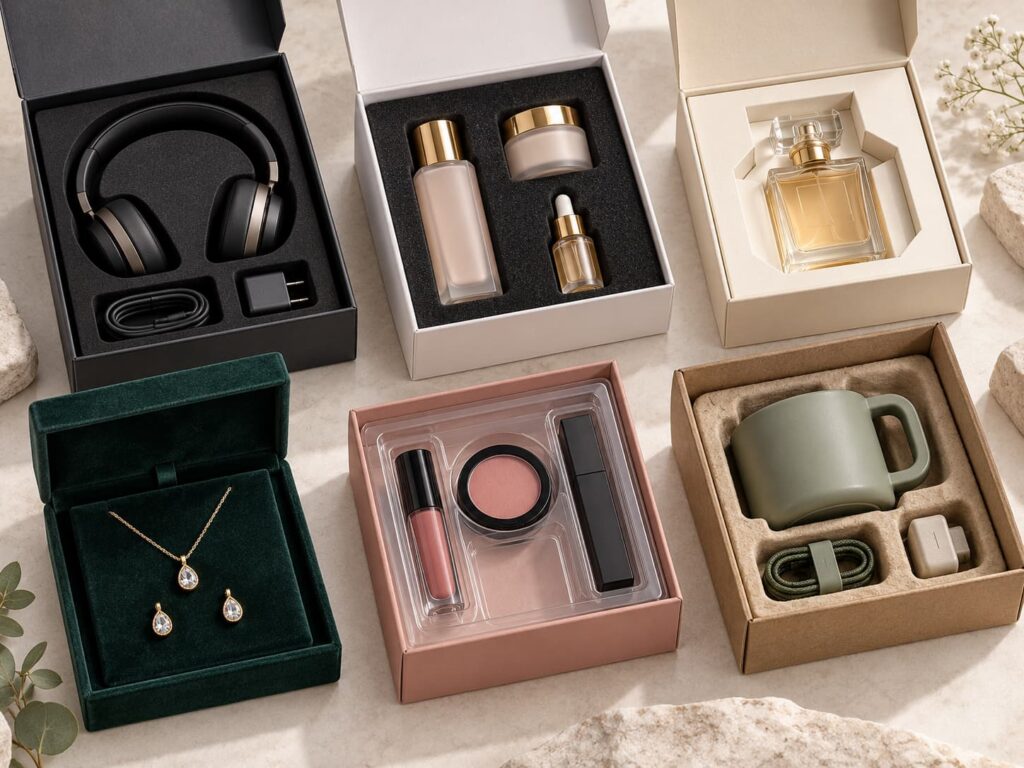
Multi-Product Sets Need Organization
Cosmetic sets, skincare collections, food gifts, and promotional kits often contain products of different shapes and sizes.
Compartments and inserts can keep individual items separated while improving overall presentation.
The internal layout should make the products easy to understand, remove, and replace.
Consider Transportation Conditions
Long-distance transportation can expose packaging to vibration, compression, stacking, and repeated handling.
E-commerce and export packaging should therefore consider box strength, insert stability, closure security, shipping cartons, and overall volume.
A good custom packaging solution balances protection, material use, assembly, transportation efficiency, appearance, and cost.
Which Packaging Materials Are Best for Different Brand Positions and Budgets
The best packaging materials are not always the most expensive materials.
They should match the product value, brand position, structural requirements, finishing effects, and target budget.
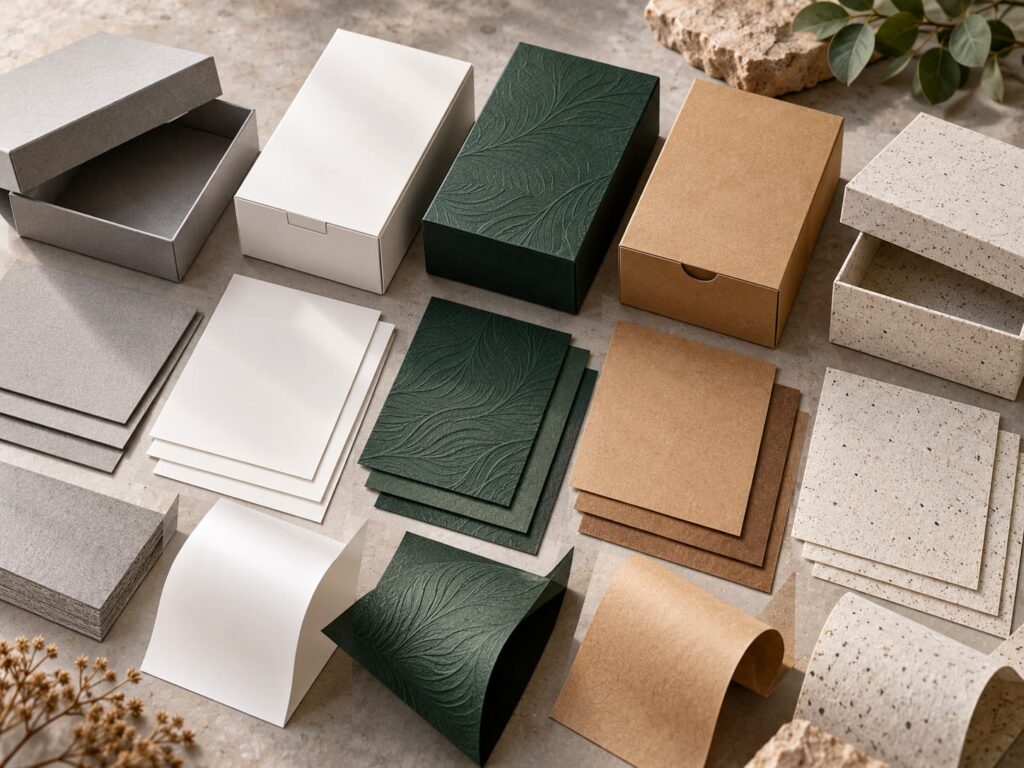
Greyboard for Rigid Packaging
Greyboard is widely used as the structural core of premium rigid boxes.
It provides strength and shape stability and can be produced in different thicknesses depending on product size and weight.
The surface is usually wrapped with printed paper, textured paper, or specialty paper.
Art Paper for Printed Designs
Art paper works well when packaging relies heavily on color, graphics, illustrations, or photography.
It supports CMYK, Pantone printing, and many surface treatments.
Art paper can also be combined with foil stamping, spot UV, matte lamination, or gloss lamination.
It is frequently used for beauty, food, retail, and promotional packaging.
Specialty Paper for Premium Presentation
Specialty paper packaging creates value through material texture and surface character.
Options may include textured, pearlescent, metallic, embossed, leather-like, or natural fiber papers.
These materials work particularly well for fragrance, jewelry, luxury beauty, and boutique products.
A simple logo combined with embossing and debossing can sometimes produce a more refined result than complex printing.
Kraft and Recycled Paper for Natural Brands
Kraft paper is suitable for brands that want a natural, understated appearance.
It is often used for lifestyle products, skincare, food, handmade goods, and environmentally focused brands.
Recycled paper can also be used for outer packaging, inserts, dividers, or other paper-based components.
When combined with paper packaging inserts or molded pulp, brands may reduce the amount of plastic used in the package.
Match Material With Brand Position
Luxury fragrance may benefit from heavier board and textured paper.
Modern skincare may use smooth paper with minimal graphics.
Natural brands may prefer kraft or recycled materials.
Fashion and lifestyle brands may use stronger colors or distinctive textures.
The selected custom packaging materials should reinforce the same message as the product and visual identity.
Use Material Combinations to Control Cost
Premium material does not need to be used everywhere.
Brands can place higher-value materials on visible areas while using practical materials for hidden structural components.
This approach can help control custom packaging cost while maintaining the intended appearance.
Materials should also be reviewed together with printing and finishing because not every process performs equally well on every surface.
How to Choose the Right Packaging Insert for Your Product
The packaging insert affects product protection, positioning, presentation, and usability.
The right insert should hold the product securely while making it easy to remove.
EVA Inserts for Precise Positioning
EVA inserts are commonly used for products that need accurate cutting and stable support.
They work well for perfume, cosmetics, electronics, tools, and premium gift sets.
EVA can also be covered with paper, velvet, or other decorative materials.
Foam Inserts for Cushioning
Foam inserts provide additional cushioning and can help absorb impact.
They are often used for electronics, glass products, accessories, and other items that need extra protection.
Different densities can be selected according to product weight.
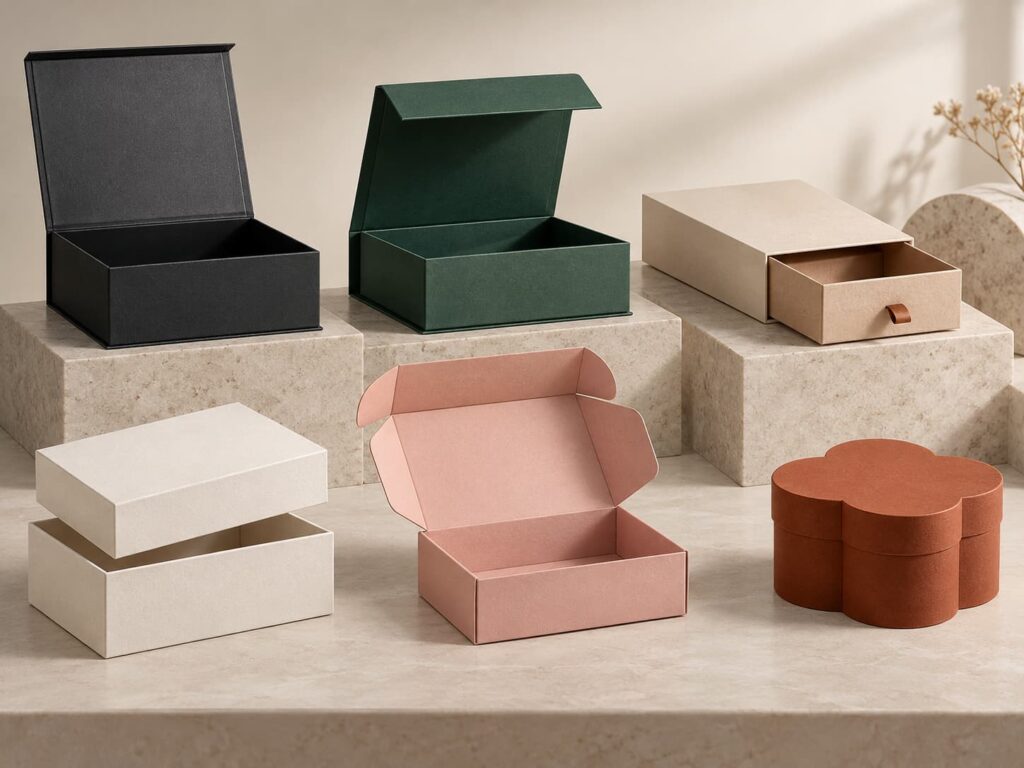
Paper Inserts for Lightweight Products
Paper packaging inserts are practical for products that do not require heavy cushioning.
They can be folded or cut into compartments for cosmetics, skincare, food gifts, and lightweight accessories.
They can also support brands that want a more paper-based packaging system.
Velvet and Flocked Inserts for Premium Products
Velvet inserts and flocked inserts are often selected for jewelry, watches, premium accessories, and luxury gifts.
Their soft surface improves presentation and can reduce direct contact with harder packaging materials.
PET and Molded Pulp Options
PET inserts can provide lightweight organization and consistent spacing for cosmetics, food, skincare, and retail sets.
Molded pulp can be an alternative for brands looking for a more paper-based protective structure.
The right custom packaging insert should match product weight, shape, fragility, surface sensitivity, presentation, and budget.
A premium material is only useful if the insert also fits the product correctly.
Which Packaging Finishing Options Add the Most Value to Custom Packaging
The right packaging finishing can improve perceived value, but adding more finishing does not automatically create better packaging.
Effective finishing should highlight important brand details and work naturally with the selected paper and structure.
Foil Stamping
Foil stamping is widely used for logos, product names, borders, and selected decorative details.
Gold, silver, rose gold, and other metallic effects can provide strong contrast against matte or textured paper.
Foil is particularly common in cosmetics, fragrance, jewelry, gifts, and luxury packaging.
Embossing and Debossing
Embossing and debossing create tactile depth without requiring additional printed color.
They are often applied to logos, patterns, and brand names.
These techniques work especially well with specialty paper packaging and minimalist designs.
Spot UV
Spot UV adds a glossy effect to selected parts of the surface.
It can highlight logos, graphics, patterns, or product names without using metallic decoration.
It is commonly used for cosmetics, electronics, fashion, and modern retail packaging.
Soft Touch, Matte and Gloss Lamination
Soft touch lamination gives the packaging a smoother, more tactile finish and works well for premium beauty, electronics, and lifestyle products.
Matte lamination creates a more understated surface, while gloss lamination provides stronger reflection and color brightness.
The choice should support the overall brand style.
Use Finishing Selectively
Specialty paper may already provide enough visual character without multiple additional effects.
A textured paper with one foil logo can sometimes feel more premium than a design combining several decorative processes.
Finishing should also be tested for compatibility with the selected material.
A professional custom packaging manufacturer should review paper texture, artwork size, finishing area, and production requirements before sampling.
How Can Brands Balance Custom Packaging Design, Quality and Price
A successful custom packaging design should create the intended brand impression without making the project unnecessarily expensive.
The goal is to balance appearance, performance, and custom packaging price.
Invest in the Areas That Matter Most
For fragile products, protection and the custom packaging insert may deserve more of the budget.
For premium products, the material and opening experience may matter more.
For e-commerce products, structural strength and shipping efficiency may provide greater value than decorative details.
Simplify the Structure When Possible
Complex structures generally require additional materials, assembly, and production steps.
If a simpler box can provide the same protection and customer experience, it may be the more efficient choice.
For example, a lid and base box may be sufficient when a multi-layer or complex magnetic structure does not add meaningful value.
Use Premium Materials Selectively
Premium materials can be concentrated in visible areas while practical materials are used internally.
Specialty paper packaging on the outer surface can be combined with standard paperboard or simpler internal components.
Reduce Unnecessary Finishing
Combining too many processes can quickly increase cost.
A single foil stamping logo or subtle embossing and debossing detail may create enough distinction without additional decoration.
Optimize Packaging Dimensions
Oversized packaging increases material consumption, insert size, carton volume, warehouse requirements, and freight cost.
Reducing unnecessary empty space can improve both packaging and transportation efficiency.
Consider Future Production
Order quantity, production setup, dies, finishing preparation, assembly, and repeat orders also affect cost.
The best custom packaging solution is not simply the cheapest option. It should protect the product, maintain the intended brand position, remain stable in production, and fit the available budget.
What Should a Packaging Manufacturer Check Before Making a Custom Packaging Sample
A custom packaging sample should be made after the main structural and production details have been reviewed.
A professional packaging manufacturer should first confirm whether the design can be manufactured reliably.
Confirm Product Dimensions
Product length, width, height, weight, and unusual shapes should be reviewed before the box and insert are developed.
For multi-product sets, the position and spacing between items should also be confirmed.
Review Structural Feasibility
The packaging structure should be checked for opening performance, wall strength, base support, assembly, and production consistency.
Structures such as magnetic gift boxes, drawer boxes, folding boxes, and custom-shaped packaging may require additional attention around joints, magnets, corners, and moving sections.
Confirm Materials and Inserts
Board thickness, wrapping paper, surface texture, and insert materials should match the product requirements.
The packaging insert should hold the product securely without making removal difficult.
Product position, insert depth, access space, and sensitive areas should all be reviewed.
Check Printing and Finishing
Artwork should be evaluated against the selected material.
Very small foil details, deep embossing, large color areas, or complex graphics may need adjustment before sampling.
Processes such as foil stamping and spot UV should be planned with production feasibility in mind.
Review the Target Budget
The sample should represent a design that can realistically proceed into mass production.
If the project already exceeds the target budget, the structure, materials, finishing, or dimensions can be optimized before sampling.
This reduces unnecessary revisions later.
What Should You Check on a Custom Packaging Sample Before Mass Production
A custom packaging sample allows brands to evaluate the physical package before committing to a larger order.
It should be reviewed for both appearance and function.
Check Product Fit
Place the actual product inside the box.
The product should remain stable without feeling excessively tight.
The packaging insert should provide support while allowing easy removal.
Review Dimensions and Proportions
Check the external and internal dimensions against the approved specifications.
Even when the product technically fits, the box should still feel visually balanced.
Test the Packaging Structure
The packaging structure should open and close smoothly.
For a magnetic gift box, confirm magnet alignment.
For a drawer box, check whether the drawer moves smoothly.
Lid and base structures should fit securely without being difficult to open.
Review Materials, Printing and Color
Check paper texture, board thickness, rigidity, wrapping, corners, and surface quality.
Brand colors, graphics, text, and Pantone colors should also be reviewed on the physical sample rather than relying only on screen appearance.
Check Finishing Details
For foil stamping, inspect alignment and edge quality.
For embossing and debossing, confirm depth and clarity.
For spot UV, check registration and contrast.
Test the Complete Unboxing Experience
Open the package as the customer would.
The box, insert, closure, ribbon, and product should work naturally together.
Once approved, the physical sample and production specifications should become references for mass production.
This helps the packaging manufacturer control consistency between the approved sample and the final order.
How LVPACK Helps Brands Choose and Develop Custom Packaging
Brands do not always need to know the exact structure, material, insert, and finishing before starting a custom packaging project.
A project may begin with a product, a reference image, existing artwork, or a general brand direction.
LVPACK helps turn these requirements into packaging that can be sampled and manufactured.
Understand the Product and Project
The development process can begin with product dimensions, weight, quantity, target market, sales channel, brand positioning, and packaging budget.
Existing designs can be reviewed for feasibility, while brands without a finished packaging solution can compare different packaging box types, materials, inserts, and finishing options.
Develop the Packaging Structure
The packaging structure can then be selected or adjusted according to the product.
Options may include rigid, magnetic, drawer, lid and base, folding, display, or custom-shaped structures.
Dimensions, board thickness, opening style, internal layout, and protection requirements should all work together.
Select Materials, Inserts and Finishing
LVPACK can help compare different packaging materials according to product value, visual direction, printing requirements, and budget.
The custom packaging insert can then be developed according to product shape, weight, protection requirements, and presentation.
Finishing may include foil stamping, embossing, debossing, spot UV, matte lamination, gloss lamination, soft touch effects, or specialty paper depending on the design.
Confirm the Design Through Sampling
A custom packaging sample can be used to check product fit, dimensions, materials, color, printing, finishing, insert accuracy, and opening experience.
Necessary adjustments can be completed before the design enters mass production.
Move Into Production and Quality Control
After sample confirmation, production can include material preparation, printing, surface finishing, die cutting, mounting, box forming, insert production, assembly, inspection, packing, and shipment.
Quality control should continue throughout production to help maintain consistency between the approved sample and the finished order.
Support Repeat Orders and Future Packaging
Growing brands may later need additional sizes, updated graphics, seasonal packaging, new products, or repeat production.
A reliable custom packaging manufacturer should therefore support more than one order.
The right packaging partner can help brands move from the first packaging concept to sampling, production, quality control, repeat orders, and future product development.
LVPACK helps connect these stages so that the final custom packaging solution is not only visually appropriate, but also practical for production, distribution, and long-term brand growth.