Custom Perfume Box Manufacturer in China – Luxury OEM & ODM Perfume Packaging Solutions

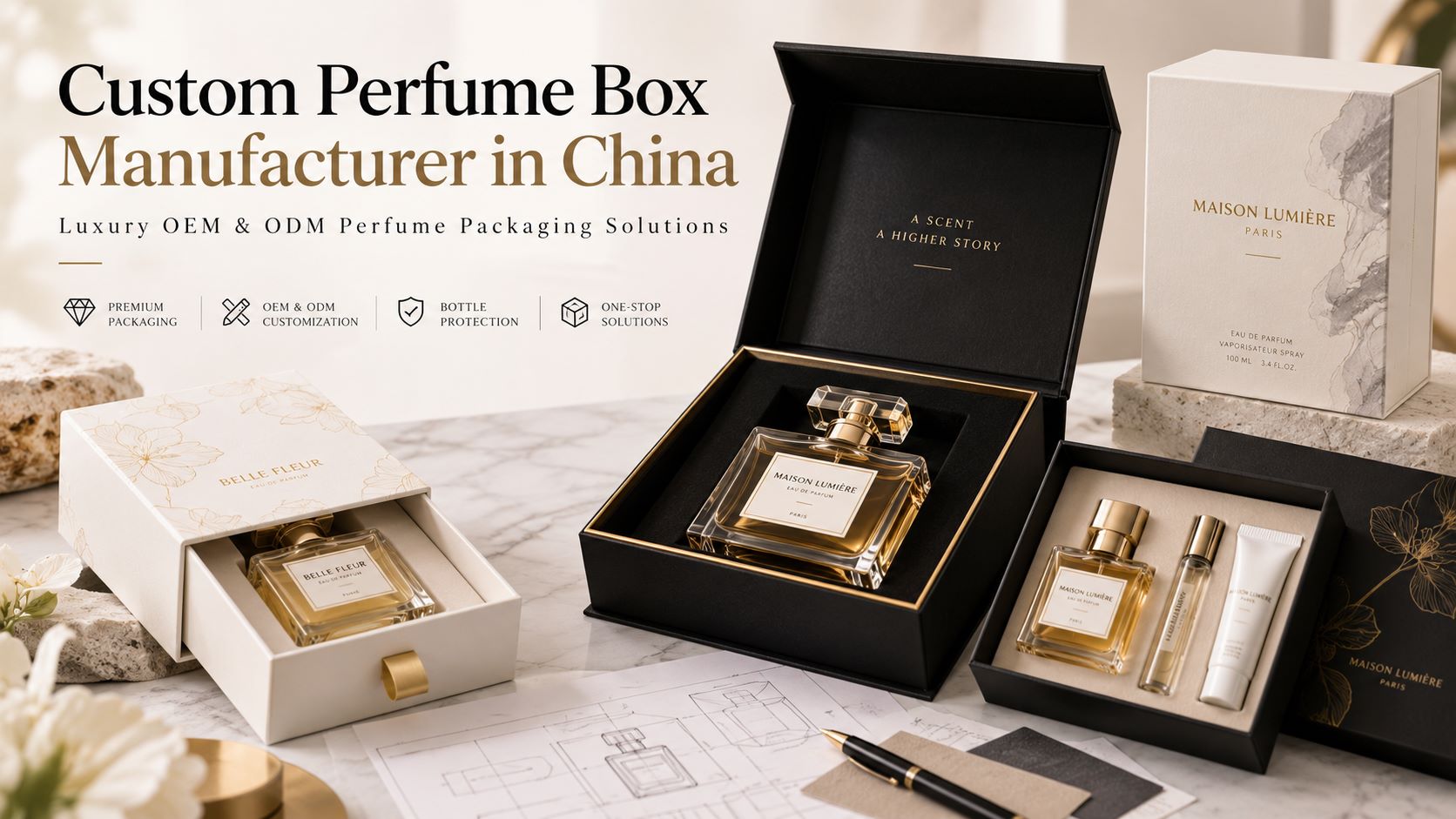
Custom perfume packaging is more than a decorative box around a fragrance bottle. It must protect glass, secure the product during transport, support the brand’s positioning and create an opening experience that feels appropriate for the fragrance.
For this reason, a good perfume box should be developed around the actual bottle rather than selected only by appearance. Bottle size, weight, cap shape, center of gravity, insert design, materials and finishing all affect the final structure.
LVPACK supports fragrance brands with custom perfume packaging development from structure and sampling to printing, finishing, inserts, mass production and quality inspection. The standard MOQ for custom packaging projects is generally 1,000 pieces.
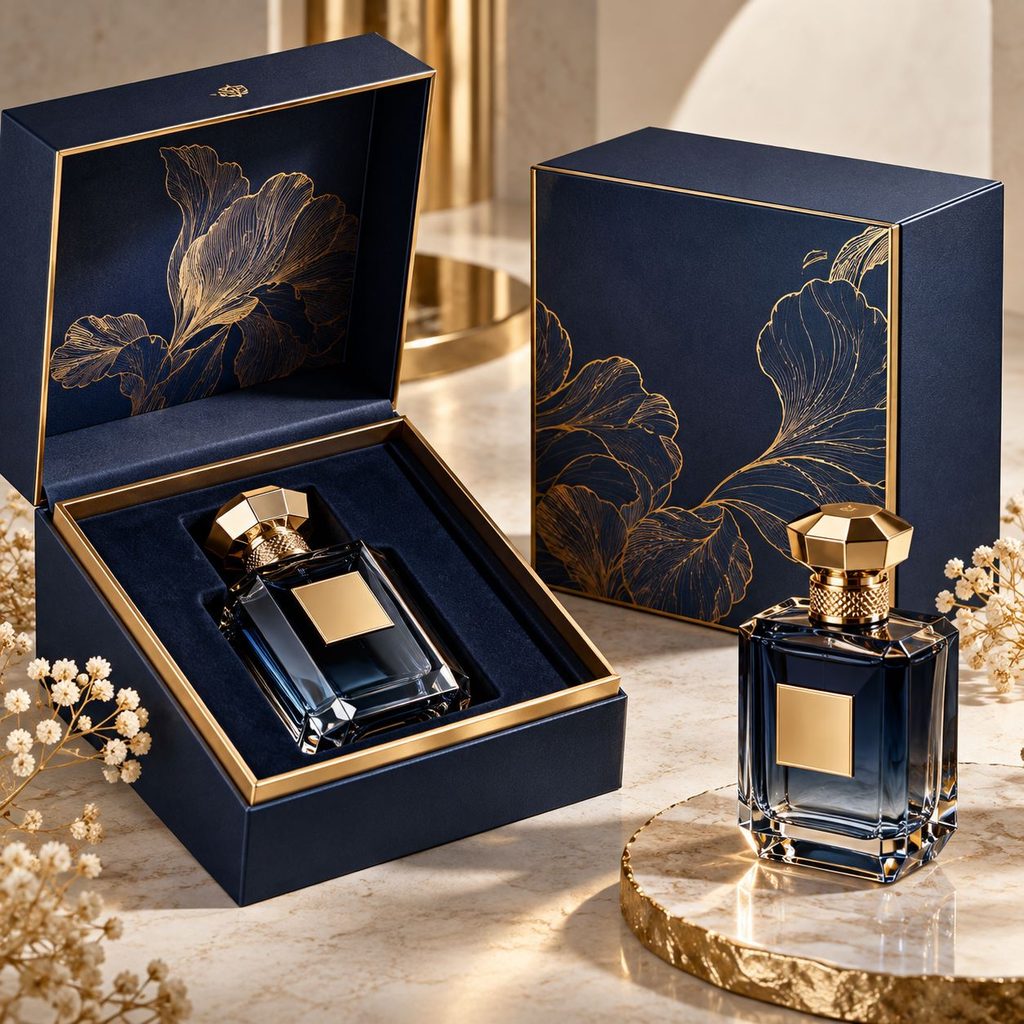
1. What Makes Custom Perfume Boxes Different From Standard Luxury Gift Packaging?
Custom perfume boxes have different requirements from ordinary gift boxes because perfume is usually packed in a rigid and relatively heavy glass bottle.
A box that looks attractive may still perform poorly if the bottle moves, the cap touches the lid, the insert is too tight or the outer structure deforms under product weight.
Good perfume packaging therefore needs to balance several factors:
- Bottle protection
- Insert fit
- Brand presentation
- Opening experience
- Production consistency
- Shipping efficiency
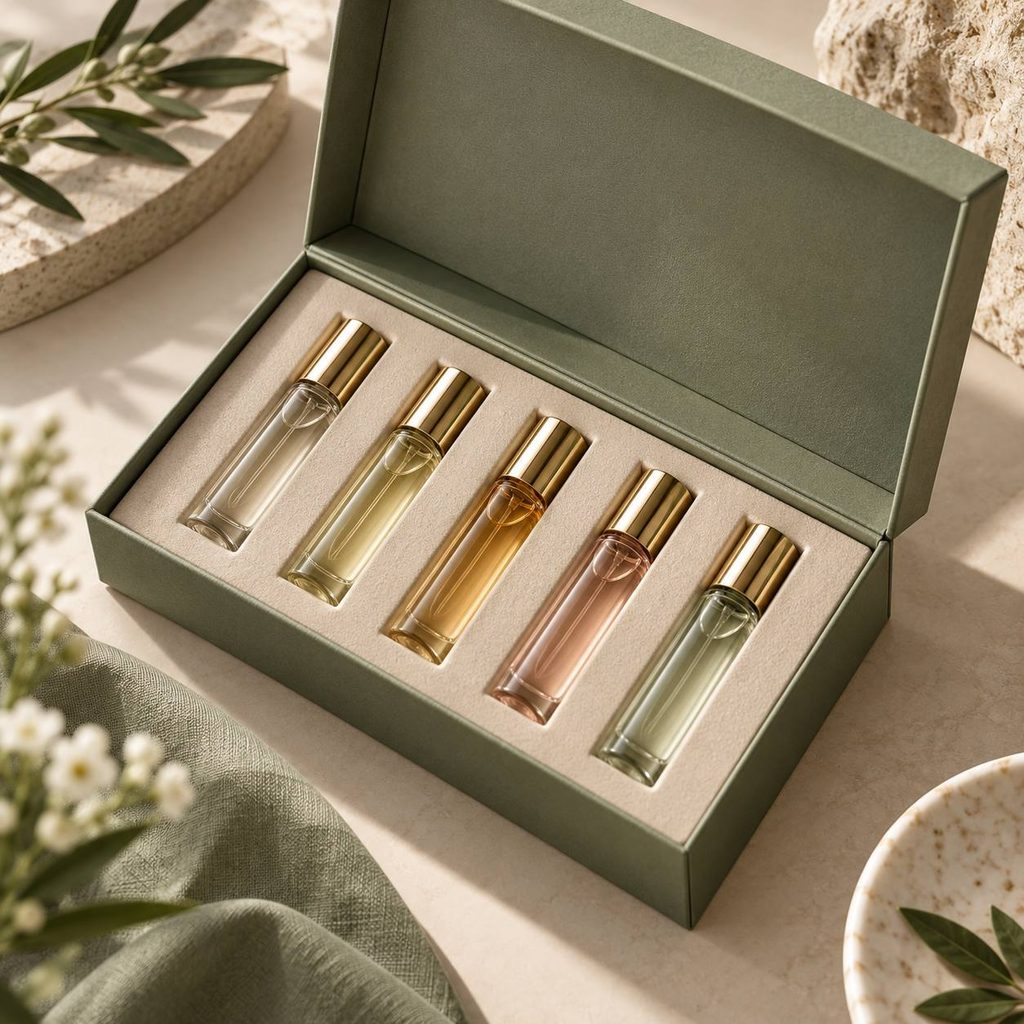
A tall 100 ml bottle may require a very different structure from a compact 30 ml niche fragrance or a discovery set containing several small vials. Heavier bottles may work well with magnetic perfume boxes or luxury rigid boxes combined with an accurately developed perfume box insert. Smaller products may suit drawer packaging, while discovery sets usually require several precisely positioned cavities.
The packaging should also reflect how the fragrance will be sold.
Department-store packaging may prioritize shelf presence and premium finishing. Ecommerce packaging often needs stronger shipping protection and efficient dimensions. Gift sets may require multiple compartments, while limited editions may place more emphasis on collectability.
The best custom perfume box is therefore not necessarily the most complicated. It is the one that protects the fragrance, supports the brand and can be reproduced consistently in production.
2. How Do We Develop Custom Perfume Packaging Around Bottle Size and Shape?
Perfume packaging development should begin with the actual bottle.
Useful information normally includes:
- Bottle height, width and depth
- Filled product weight
- Cap dimensions
- Base and shoulder shape
- Bottle photographs
- Product orientation
- Fragile decorative areas
- Preferred opening direction
Dimensions alone are not always enough.
Two bottles of similar size may require very different packaging if one uses heavy glass or an oversized cap. A sculptural bottle can also create pressure points that a simple rectangular bottle does not have.
The bottle should sit securely without being difficult to remove. Too much internal space can allow movement during transportation, while an overly tight insert can scratch painted glass or create an inconvenient unboxing experience.
The insert should normally control movement from several directions while still providing comfortable finger access.
For unusual bottles, sending a physical product sample can help improve custom perfume box design and insert accuracy. Technical drawings or 3D dimensions may be used during early development, but final fit is best confirmed with the actual production bottle.
The outer structure should be selected after the bottle and insert requirements are understood, not before.
This makes it easier to choose a structure that is visually appropriate, protective and commercially practical.
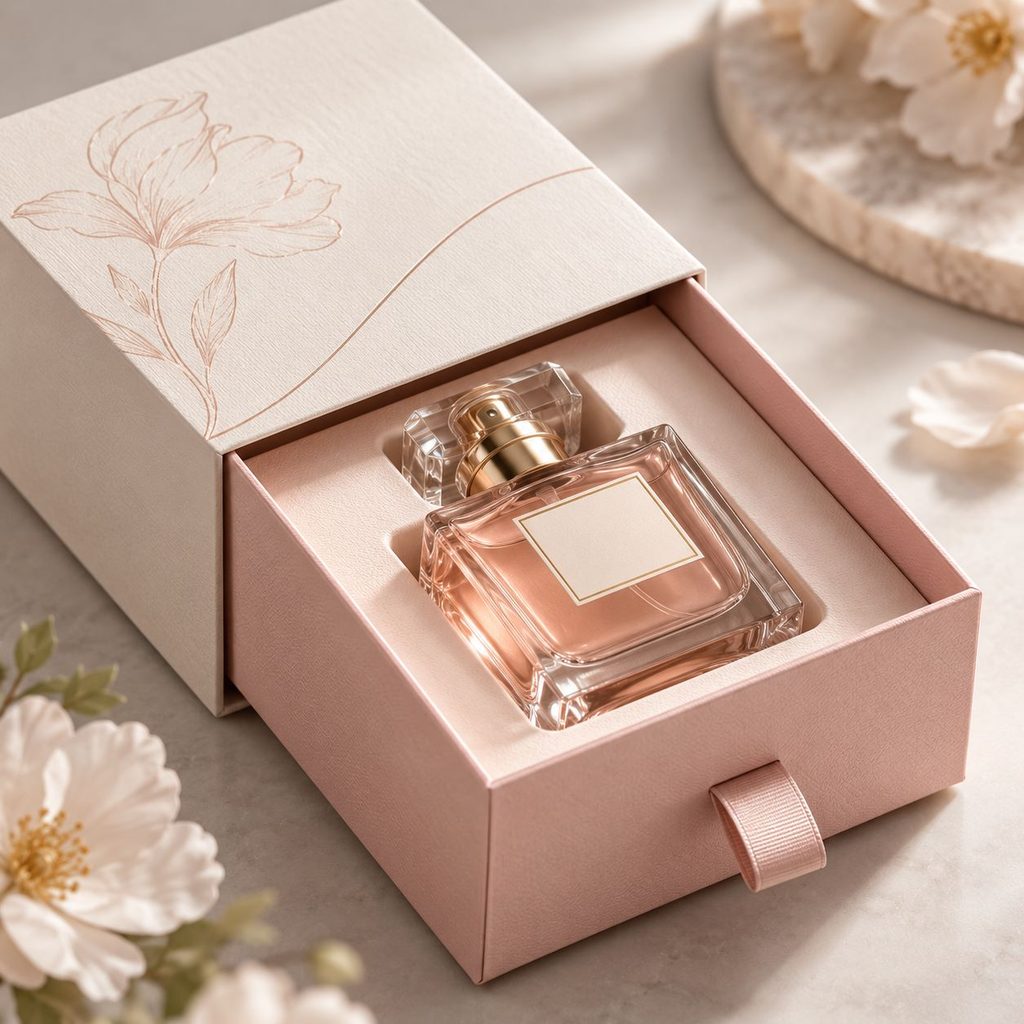
3. Which Type of Perfume Box Is Best for Your Fragrance Brand?
There is no single box structure that works for every fragrance.
The right choice depends on the bottle, retail positioning, opening experience, order quantity, production complexity and shipping requirements.
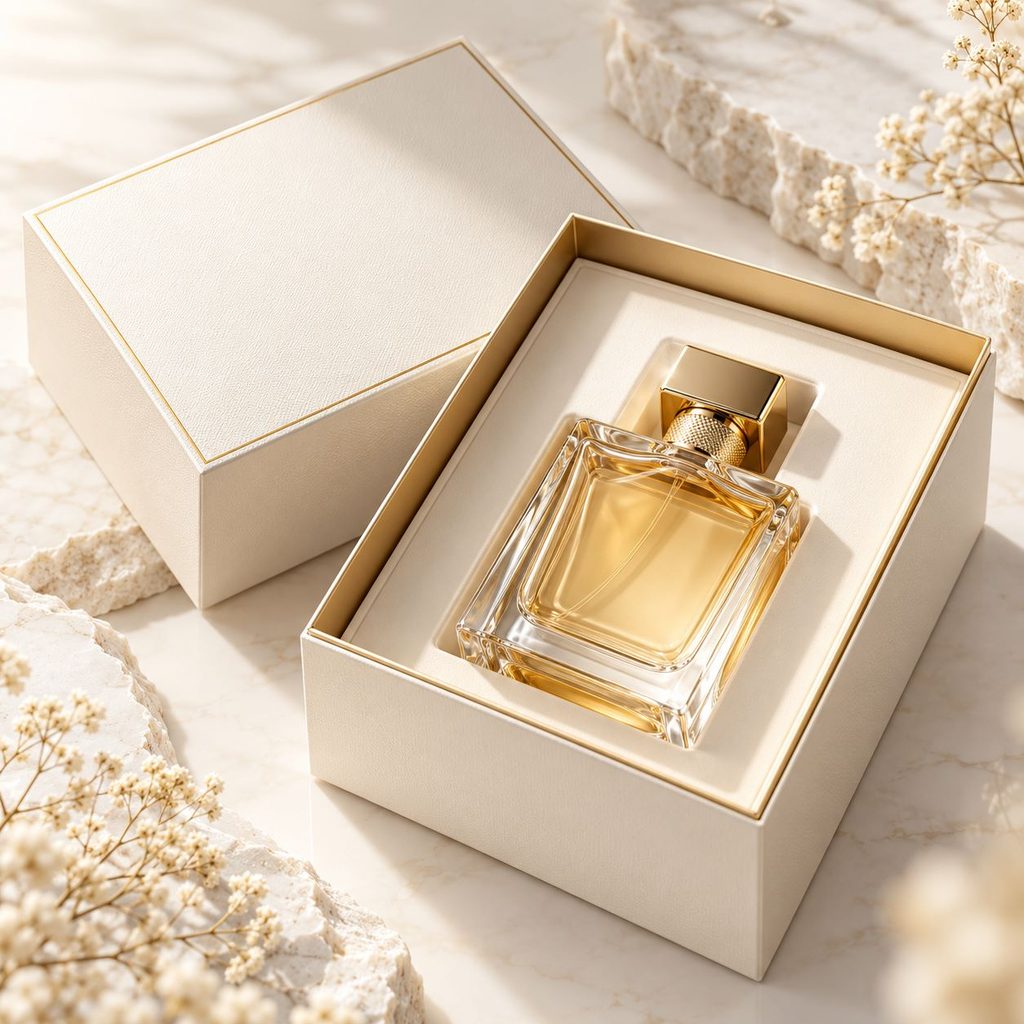
Magnetic rigid boxes are commonly used for premium single-bottle fragrances. They offer a clean presentation and controlled opening experience. Magnet positioning and lid alignment must be consistent to avoid uneven closure.
Drawer boxes provide a gradual product reveal and work well for niche fragrances, travel-size perfumes and discovery sets. Drawer clearance is important: too tight and the box becomes difficult to open; too loose and it feels unstable.
Lid-and-base rigid boxes are simple, strong and adaptable. They are particularly useful when a brand wants premium packaging without a complicated opening mechanism.
Double-door boxes create a stronger presentation and can work well for luxury collections and premium Middle Eastern fragrances. However, the two doors and center gap need careful alignment.
Book-style structures are useful when the packaging also needs space for storytelling, graphics or multiple products.
Folding rigid boxes can reduce storage and transport volume before assembly, which may be valuable for international projects.
Round or cylinder boxes provide a distinctive shape but need carefully developed inserts to stop the bottle from rotating.
A simple structure guide is:
| Packaging Requirement | Suitable Structures |
| Premium single fragrance | Magnetic, lid-and-base, book-style |
| Luxury gift presentation | Double-door, magnetic |
| Niche fragrance | Drawer, magnetic |
| Discovery set | Drawer, book-style, multi-slot rigid box |
| Shipping efficiency | Folding rigid box |
| Distinctive shelf presentation | Round or cylinder box |
| Multi-product gift set | Double-door or custom rigid box |
For brands still deciding between formats, custom packaging development can help compare practical options before sampling.
4. Which Perfume Box Inserts Best Protect Glass Bottles?
The insert is one of the most important parts of perfume packaging because it controls how the bottle sits, moves and appears when the box opens.
Common options include EVA, foam, paperboard, flocked inserts, velvet-covered inserts, molded pulp and PET trays.
EVA is frequently used for heavy or irregular perfume bottles because it can be cut precisely around the bottle profile. It provides strong support, but the cavity should not grip the bottle excessively.
Foam provides cushioning and is useful for gift sets or multi-product layouts. Its density and surface quality should be selected carefully because low-density foam may feel less premium.
Flocked or velvet-covered inserts can create a softer luxury appearance, particularly for limited editions and high-end gift packaging. Surface quality, loose fibers and glue marks should be checked during production.
Paperboard inserts offer a more paper-based solution and can work well for lightweight or medium-weight bottles. They require good structural design to prevent collapse or unwanted movement.
Molded pulp can suit sustainability-focused fragrance brands, especially when a natural material appearance is acceptable.
PET trays provide highly repeatable cavities, although brands should consider whether plastic content is consistent with their sustainability goals.
A good perfume box insert should also provide a natural removal method. Finger notches, side cutouts or ribbon tabs can make a major difference to the customer experience.
The strongest insert is not simply the tightest one. It should protect the bottle while allowing the customer to remove it comfortably.
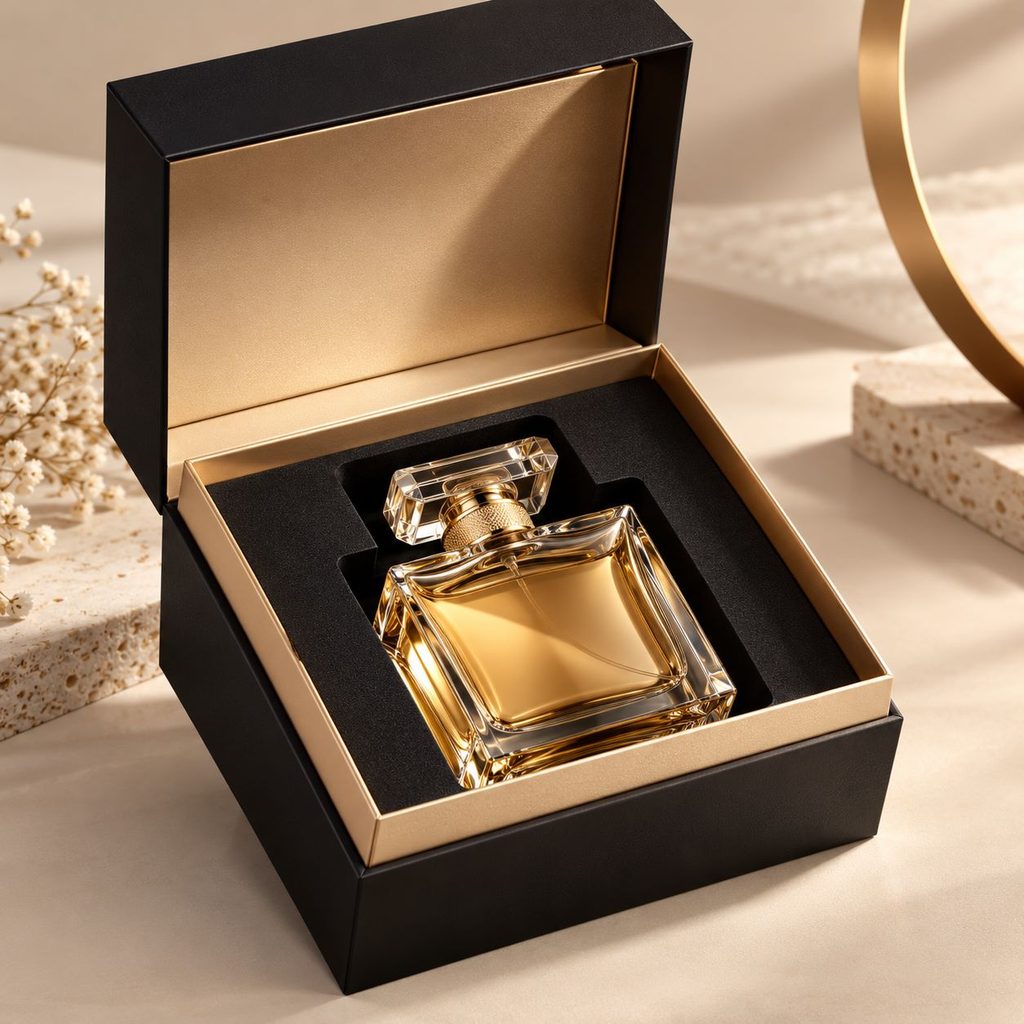
5. Which Materials Are Best for Custom Perfume Boxes?
Material selection affects box strength, surface appearance, finishing, shipping weight and final cost.
Rigid perfume boxes commonly use greyboard as the structural core. The board thickness should reflect the bottle weight, box dimensions and opening mechanism.
The outer surface may use art paper, specialty paper, black card, kraft paper, recycled paper or textured materials.
Art paper is suitable for detailed CMYK printing, gradients and complex graphics.
Specialty paper can create a premium look through texture rather than heavy decoration. Linen, leather-like, embossed or deep-color papers are often used for niche and luxury fragrance packaging.
Black card works well with foil, embossing and white ink, although dark surfaces may show scratches or fingerprints more easily.
Kraft and recycled papers can support a natural or sustainability-focused brand direction, but their base color and texture affect printing results.
Material and finishing should always be considered together.
For example, deeply textured paper may reduce fine foil definition, while some dark or recycled papers may require additional testing before printing or embossing.
This is why packaging material selection should be confirmed on the actual structure rather than from a paper swatch alone.
The best material is not necessarily the most expensive. It should support the brand, protect the product and remain stable during mass production.
6. Which Printing and Finishing Options Can Be Used for Luxury Perfume Packaging?
Luxury perfume packaging can use a wide range of printing and finishing techniques.
Common printing options include:
- CMYK printing
- Pantone spot colors
- Offset printing
- Digital printing
- Silk screen printing
- Metallic ink
- White ink
Common surface finishes include:
- Gold, silver or rose-gold foil
- Embossing
- Debossing
- Spot UV
- Matte lamination
- Gloss lamination
- Soft-touch lamination
- Scratch-resistant lamination
- Textured surface treatments
Pantone printing can be useful when brand-color consistency is important, although paper type will still influence the final visual result.
Foil stamping is widely used for logos and premium details. Small, controlled foil areas can create strong contrast without making the design feel excessive.
Embossing and debossing add tactile depth and can work particularly well for minimalist packaging.
Spot UV can create glossy contrast against matte backgrounds.
Soft-touch lamination provides a smooth tactile finish, but dark colors should be tested for fingerprints and scratch visibility.
More finishing does not automatically create better packaging.
Every additional process introduces another production stage and another potential quality-control point. A restrained combination such as specialty paper with a small foil logo can sometimes look more premium than a box using several competing effects.
The best packaging finishing options are those that reinforce the design without creating unnecessary production complexity.
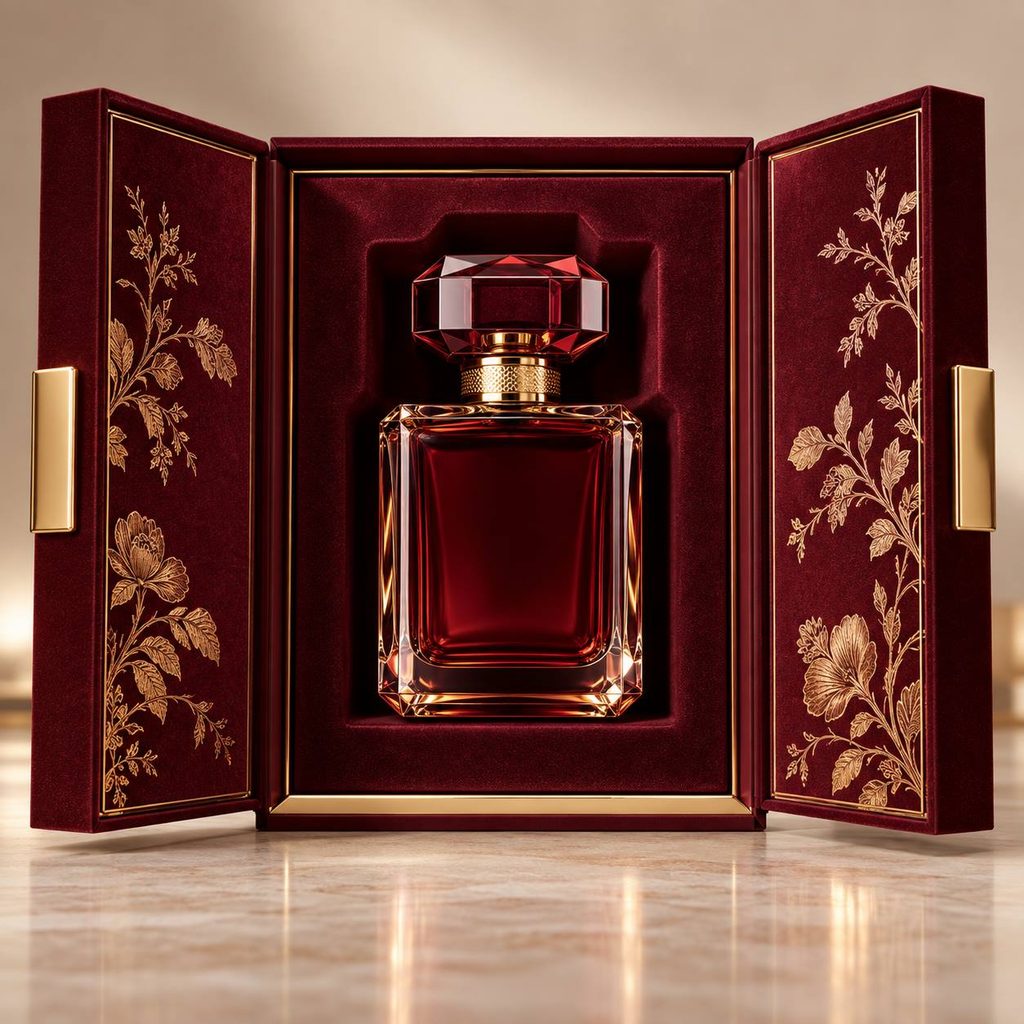
7. How Does the Custom Perfume Box Sample and Development Process Work?
Sampling turns the packaging concept into a physical product that can be tested before mass production.
A typical process may include:
- Product information review
- Structural planning
- Material selection
- Insert development
- Structural sample
- Finished sample
- Review and revision
- Final approval
- Mass-production preparation
For complicated projects, a white structural sample can be useful before creating a fully decorated sample.
This makes it possible to verify bottle fit, insert depth, box proportions and opening function without first paying for every finishing process.
A finished perfume box sample may include final paper, printing, foil, embossing, lamination, magnets, ribbons and the production-style insert.
During approval, buyers should check more than appearance.
The bottle should sit straight, remain stable, clear the lid and be easy to remove. Foil position, box alignment, wrapped corners, surface marks and insert quality should also be reviewed.
One sample round may not always be enough.
If the first sample reveals a structural or finishing issue, correcting it before production is usually much less costly than correcting thousands of finished boxes later.
8. How Do We Keep Custom Perfume Boxes Consistent From Sample to Mass Production?
A good sample is only useful if mass production can reproduce it reliably.
Consistency begins with clear specifications and an approved reference sample.
Important production standards may include:
- Paper and greyboard specifications
- Box dimensions
- Printing colors
- Foil position
- Embossing depth
- Insert dimensions
- Magnet placement
- Opening resistance
- Overall visual appearance
Quality checks should take place throughout production rather than only at the end.
Typical control points include:
| Production Stage | Main Checks |
| Incoming Materials | Paper, board, color, texture |
| Printing | Color, artwork and registration |
| Finishing | Foil, embossing, UV and lamination |
| Die Cutting | Dimensions and edges |
| Assembly | Alignment, gluing and wrapping |
| Insert Installation | Position and fit |
| Finished Packaging | Appearance and function |
| Final Packing | Protection and carton condition |
For perfume packaging, insert consistency is especially important because variations can change how the bottle sits.
Magnetic closures also need functional testing, not just visual inspection.
Final packaging should be checked for surface scratches, glue marks, uneven corners, lid alignment and bottle fit.
For repeat orders, maintaining artwork files, material specifications, structural drawings and approved samples can help improve batch-to-batch consistency.
Strong packaging quality control is therefore a process throughout production, not a single final inspection.
9. What Affects the Price of Custom Perfume Boxes in China?
The price of a custom perfume box depends on the complete packaging specification.
Main cost factors include:
- Box dimensions
- Structure
- Greyboard thickness
- Surface paper
- Printing method
- Finishing
- Insert material
- Accessories
- Order quantity
- Manual assembly requirements
A simple lid-and-base rigid box with standard paper will normally cost less than a double-door box with specialty paper, foil, embossing and a velvet-covered EVA insert.
Box size also affects both production cost and logistics.
Unnecessary internal space increases material consumption, carton volume, freight and storage requirements.
Order quantity influences unit cost because printing setup, dies, tooling and machine preparation are distributed across the total number of boxes.
However, ordering more only to lower the unit price can create unnecessary inventory.
The insert can also be a significant cost variable. A simple paperboard insert differs considerably from a multi-level flocked EVA insert for several products.
An accurate quotation should therefore be based on the actual structure, materials, finishing and quantity rather than on box size alone.
The lowest unit price is not always the lowest-cost decision if the packaging later creates damage, inconsistency or rework.
10. What Are the MOQ and Lead Time for Custom Perfume Box Manufacturing?
The standard MOQ for LVPACK custom packaging projects is generally 1,000 pieces.
Custom packaging requires preparation for materials, printing, dies, finishing, insert production, assembly and quality control. These setup costs are more efficient when spread across a production quantity.
An MOQ of 1,000 pieces can be suitable for new fragrance launches, niche perfume brands, seasonal collections, private-label projects and growing companies introducing new SKUs.
Lead time depends on the complexity of the project.
A complete packaging project may include:
- Structural development
- Sample making
- Sample revision
- Material preparation
- Printing
- Surface finishing
- Assembly
- Insert installation
- Quality inspection
- Packing
Specialty materials, unusual structures and multiple finishing processes can increase the schedule.
Shipping time should also be considered separately from manufacturing lead time.
For brands with fixed launch dates, packaging development should begin early enough to allow for at least one sample adjustment.
Clear bottle information, finalized artwork and consolidated feedback can help reduce avoidable delays.
The best production schedule is not the fastest promised date. It is one that gives enough time for development, approval, manufacturing and inspection.
11. OEM & ODM Perfume Packaging Solutions for Fragrance Brands at Different Growth Stages
Different fragrance brands require different levels of packaging support.
OEM projects are generally suitable when the brand already has clear specifications, artwork, structure and material requirements.
The manufacturer then focuses more on sampling, production execution and quality control.
ODM support is more useful when the project begins with a bottle, reference image, mood board or general idea.
In these cases, the packaging may need development around structure, insert, materials and finishing before production can begin.
New fragrance brands often need help simplifying choices and creating a production-friendly first package.
Growing brands may focus more on stronger visual identity, better unboxing and improved cost efficiency.
Established fragrance companies often prioritize repeatability, production capacity, stable material sourcing and multi-SKU coordination.
Private-label projects may need faster development using existing structural directions.
Niche fragrance brands often place more emphasis on paper texture, logo scale and subtle finishing.
DTC brands may focus more on shipping efficiency and unboxing, while retail brands also need consistent dimensions and shelf presentation.
A useful packaging system can standardize selected elements across several fragrances, such as structure, logo position or finishing, while changing colors and product names.
This can reduce development work and make repeat orders easier to manage.
OEM and ODM packaging solutions should therefore adapt to the stage of the brand rather than forcing every project into the same process.
12. Why Choose LVPACK as Your Custom Perfume Box Manufacturer in China?
Choosing a perfume packaging supplier is not only about finding a factory that can physically make a box.
The supplier also needs to understand how the bottle, insert, material, finishing and production process affect one another.
LVPACK supports custom packaging projects from concept and structure development through sampling, production and quality control.
Available box structures include magnetic boxes, drawer boxes, lid-and-base boxes, book-style boxes, double-door boxes, folding structures, custom-shaped boxes and multi-layer packaging.
Insert options include paperboard, EVA, foam, flocked material, velvet, PET, PVC and molded pulp.
Printing and finishing capabilities include CMYK, Pantone colors, digital and offset printing, silk screen, metallic ink, foil stamping, embossing, debossing, spot UV and different lamination methods.
LVPACK’s packaging team includes 80 people, including 10 quality-control staff, 8 design and sample-development staff, 50 core production staff, 6 printing and post-processing staff, and 6 merchandiser and project follow-up staff. Production is supported by five packaging production lines.
Quality inspection can cover raw materials, paper thickness, color, printing, finishing, die cutting, structural dimensions, gluing, insert installation, finished products and pre-shipment checks.
The standard MOQ is generally 1,000 pieces.
This allows support for new fragrance brands, growing DTC companies, niche perfume collections, private-label projects, established brands, importers and sourcing teams.
To begin a project, buyers can provide:
- Bottle dimensions
- Bottle weight
- Product photographs
- Physical bottle sample if available
- Preferred box structure
- Reference packaging
- Logo or artwork
- Target quantity
- Required finishing
- Target market
Even if the final packaging specification has not yet been completed, these details can provide enough information to begin custom packaging development.
A reliable perfume packaging project should move from an approved concept to a structure that can be manufactured repeatedly, inspected clearly and reordered when the brand needs the next production run.