Custom Christmas Chocolate Boxes for Better Holiday Gifting

Holiday Gifts, Retail Collections, and Brand Promotions
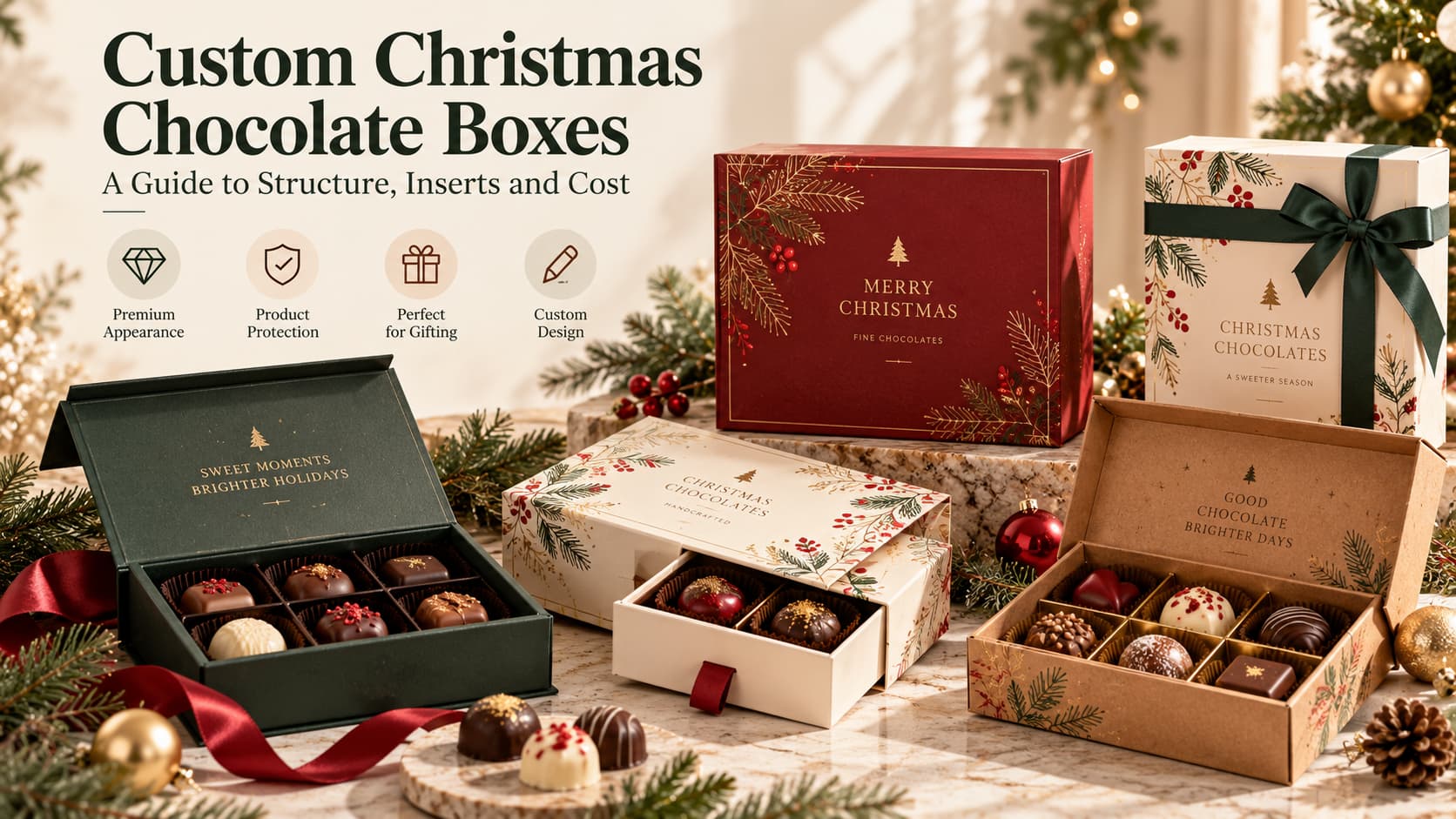
Christmas chocolate packaging does more than protect a product. It helps turn seasonal chocolates into thoughtful gifts, limited-edition collections, and memorable holiday treats. For chocolate brands, confectionery businesses, retailers, and corporate gift buyers, packaging needs to reflect the season, fit the products, support brand recognition, and suit the way the chocolates will be displayed or delivered.
Custom Christmas chocolate boxes allow brands to develop packaging around their products, seasonal campaigns, and gifting requirements. By coordinating dimensions, internal layout, artwork, and presentation style, businesses can create a festive package that remains practical for storage, handling, and distribution.
Whether you are preparing a limited-edition collection, planning holiday promotions, or developing gifts for business clients, start by defining what the packaging needs to achieve: retail visibility, premium presentation, product organization, or a combination of these goals.
1. Custom Christmas Chocolate Boxes for Holiday Gifts, Retail Collections, and Brand Promotions
The right packaging depends on the chocolates being sold, the intended recipient, the brand’s positioning, and the sales channel. Retail packaging must work on a shelf; a premium gift box should feel considered when opened; corporate packaging may need to communicate a campaign message; and e-commerce packaging must suit the fulfillment process.
Christmas Chocolate Boxes for Retail Collections
Seasonal artwork can distinguish a Christmas collection from everyday products without losing the visual identity customers already recognize. Use festive colors, illustrations, or seasonal messages alongside consistent logos, typography, and brand elements. The finished dimensions should also suit the display area and the wider product range.
- Brand recognition: retain key visual elements while introducing seasonal artwork.
- Product presentation: match the box to the number, shape, and arrangement of the chocolates.
- Shelf compatibility: consider finished dimensions and how the package sits beside other products.
- Retail information: reserve space for required product details, barcodes, and market-specific labeling.
- Range consistency: coordinate different sizes and assortments under one visual system.
A strong seasonal design should feel special without making the product look disconnected from the rest of the brand. This is particularly useful for businesses that refresh their holiday collection each year.
Christmas Chocolate Gift Boxes for Premium Gifting
For client appreciation, employee gifts, and premium seasonal collections, the packaging contributes to the perceived value before the recipient opens it. A rigid presentation box may suit a premium assortment, while a folding carton may be more practical for compact gifts or larger retail programs. Choose a structure that supports the product and intended experience rather than adding complexity for appearance alone.
Consider the number of chocolates, whether they are individually wrapped, whether flavors need separation, and whether the gift includes a greeting card or additional items. For corporate gifting, a logo or seasonal message can make the package more relevant, provided the branding remains balanced and appropriate for the occasion.
Christmas Chocolate Boxes for Assortments and Corporate Promotions
Mixed assortments may combine different shapes, sizes, flavors, and wrappers. The internal layout should keep the collection organized and make each piece convenient to access. Before approving the design, confirm the product list, dimensions, quantity per box, wrapping details, and any cards or promotional inserts.
For corporate programs, confirm the quantity and distribution plan early. Gifts for one event may have different requirements from packages shipped individually or distributed across several locations. Clear specifications make it easier to keep the project manageable through production and fulfillment.
Prepare the Basics Before Developing Your Packaging
| Project detail | What to prepare |
| Chocolate products | Product types, dimensions, quantities, and wrapping details |
| Intended use | Retail sale, gift collection, corporate gifting, or promotion |
| Brand requirements | Logo, artwork, color references, and seasonal messaging |
| Box requirements | Approximate dimensions, preferred style, and internal arrangement |
| Order planning | Estimated quantity, product variations, and target delivery date |
If the final structure is not decided, reference images and a short description of the intended use provide a useful starting point. Share your product range and project requirements to discuss suitable directions for your custom Christmas chocolate boxes.

2. Christmas Chocolate Box Designs for Assorted Chocolates and Seasonal Gift Sets
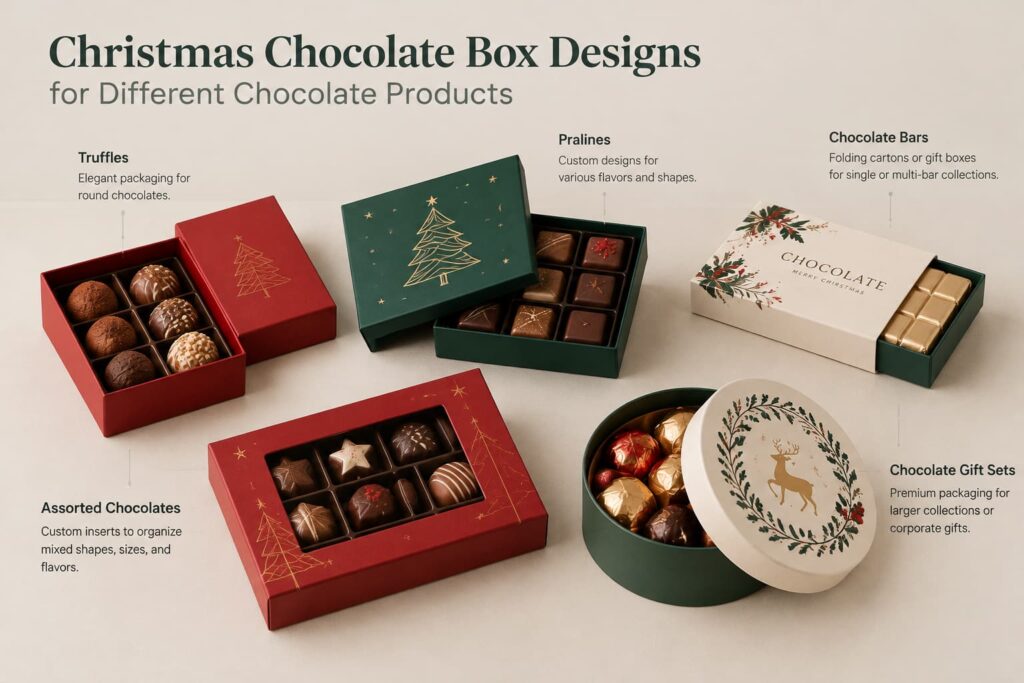
Christmas chocolate box designs should begin with the products inside, the gifting experience, and the way the collection will be sold. Individually wrapped chocolates, pralines, truffles, chocolate bars, and mixed assortments each create different dimensional and presentation requirements.
Boxes for Individual Chocolates and Pralines
Individual chocolates are often arranged in rows or separate compartments. Each space should fit the finished piece while leaving enough clearance for convenient removal. Consistent spacing and clear separation can create a polished presentation without relying on excessive decoration.
- Measure the length, width, height, or diameter of each chocolate type.
- Confirm the number of pieces and whether each compartment holds the same product.
- Allow enough space to remove individual chocolates without disturbing neighboring pieces.
- Decide whether different flavors, shapes, or wrappers need to be separated.
- Check that the open-box arrangement looks balanced.
Boxes for Chocolate Bars and Flat Products
Chocolate bars and other flat products depend on their length, width, thickness, wrappers, and stacking arrangement. A slim package may suit a single bar, while a larger gift box may hold several bars, tasting cards, or complementary items. If the set contains different bar sizes, the layout should account for each one rather than assuming every product will fit the same space.
Seasonal artwork can distinguish a limited edition from standard products while preserving the branding and product information customers expect.
Boxes for Mixed Assortments and Gift Sets
A mixed gift box may contain truffles, pralines, mini bars, or other confectionery items. Before selecting a structure, confirm the full product list, dimensions and quantities, individual wrapping, any cards or promotional inserts, and whether the assortment will vary between versions.
For collections with several variations, a shared exterior design may work with different internal layouts. This can maintain a coordinated brand appearance while allowing each assortment to fit properly.
| Product positioning | Design priority | Packaging consideration |
| Premium chocolate gifts | Refined presentation | Choose a structure and layout that support the perceived value. |
| Everyday seasonal chocolates | Practical retail presentation | Consider storage, display, and ease of handling. |
| Corporate gift assortments | Coordinated brand presentation | Allow room for logos, messages, and gift components. |
| Multi-flavor collections | Clear product organization | Match compartments to the assortment. |
| Limited-edition collections | Distinctive seasonal identity | Coordinate festive artwork with existing brand elements. |
The most suitable format depends on the actual collection. A premium box may not suit strict space or budget constraints, while a simple carton may not deliver the presentation expected for a high-value gift. Share product measurements, the number of pieces per box, and reference images before the specification is finalized.
3. Custom Christmas Chocolate Advent Calendar Boxes for Holiday Launches
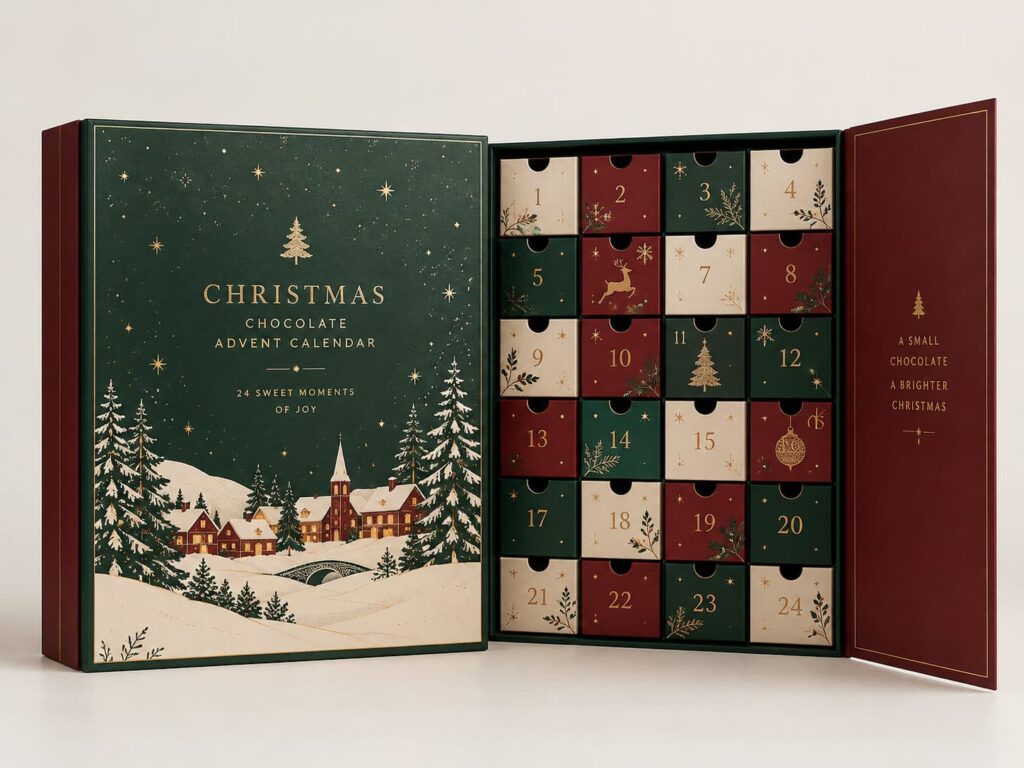
Advent calendars create a daily discovery experience through numbered compartments, doors, drawers, or individual sections. For seasonal launches, they can turn a selection of chocolates into a more engaging holiday product. The structure, compartment layout, opening sequence, and chocolate dimensions need to work together.
Numbered Compartments and Calendar Layouts
Decide the compartment count and arrangement early. A calendar containing 24 individual chocolates has different space requirements from one containing 12 larger pieces. A grid, sequence of doors, or another arrangement can work, provided each section fits the product and is easy to identify and open.
- Confirm the number of chocolates and compartments.
- Measure each product, including its primary wrapper where applicable.
- Plan the opening sequence and placement of numbers.
- Allow clearance for the chocolates and the compartment construction.
- Check that artwork remains visible and correctly aligned.
Door-Style, Drawer-Style, and Tray-Based Calendars
Door-style calendars reveal individual panels, while drawer-style structures create a different tactile experience. Some designs use removable trays or compartments within a larger box. The right option depends on product size and weight, the desired presentation, available space, assembly requirements, and the way the calendar will be handled.
Evaluate the opening experience as carefully as the closed-box appearance. Check that sections open conveniently, neighboring compartments remain intact, and the calendar maintains its shape during normal storage and handling.
Planning an Advent Calendar for Different Assortments
Some calendars contain identical chocolates; others include changing flavors, shapes, or individually wrapped products. The internal layout should reflect those differences. If the assortment is still being finalized, identify which products are confirmed and which may change. Include wrappers in the dimensional assessment and test the largest pieces first.
Advent calendars may involve more components and assembly steps than standard gift boxes. Build time into the project for structural development, sample review, artwork approval, and confirmation of the final assortment. The exact schedule depends on design complexity, materials, quantity, and destination.
| Project item | What to confirm |
| Calendar format | Numbered doors, drawers, trays, or another structure |
| Compartment layout | Count, dimensions, and arrangement |
| Chocolate assortment | Product sizes, wrappers, and variation between pieces |
| Opening experience | Ease of access and structural performance |
| Artwork | Numbering, branding, illustrations, and alignment |
| Production readiness | Approved sample, final specifications, and schedule |
To discuss custom Christmas chocolate advent calendar boxes, prepare the compartment count, chocolate dimensions, preferred opening style, and target delivery date.
4. Christmas Chocolate Packaging with Custom Printing, Foil Stamping, and Festive Finishes
Christmas chocolate packaging can create a recognizable seasonal look while preserving the brand’s identity. Traditional festive colors, winter illustrations, metallic details, and custom artwork can all contribute, but the best combination depends on the product, target market, and overall design.
Printing and Seasonal Artwork
Printed artwork establishes the box’s visual character. Some brands prefer classic red and green; others use neutral tones, winter landscapes, illustrated patterns, or a restrained premium style. Consistent typography, logo placement, and brand elements help different products look like part of the same collection.
Before approving artwork, confirm the final dimensions, print layout, product information, and placement of key elements. Check folds, seams, edges, and concealed areas so important details are not lost when the box is assembled.
Finishes for Christmas Chocolate Boxes
| Finishing option | Typical visual effect | Potential application |
| Foil stamping | Metallic or decorative accents | Logos, lettering, borders, or selected festive details |
| Embossing | Raised surface details | Brand marks, patterns, and decorative motifs |
| Debossing | Indented surface details | Subtle branding and refined textures |
| Matte or gloss lamination | Changes the surface appearance | Matching the surface to the artwork and intended look |
| Spot UV | Selective glossy areas | Highlighting specific graphics or design elements |
Not every box needs multiple finishes. A well-placed foil logo or a carefully selected texture may create a stronger result than combining several competing effects. Select finishes according to the visual direction, structure, budget, and production requirements.
Keep Seasonal Design Consistent with Your Brand
Use existing brand colors, typography, and logo guidelines as a starting point for a Christmas edition. For brands with several products, a coordinated design system can make different sizes and assortments look connected without making every package identical.
Share artwork, brand guidelines, preferred finishes, and packaging references when discussing Christmas chocolate packaging. Final print and finish specifications should be confirmed against the approved design and sample.
5. Custom Chocolate Box Inserts for Christmas Chocolates, Assortments, and Gift Sets
The inside of a Christmas chocolate box matters as much as its exterior. If chocolates move around, sit unevenly, or are difficult to remove, even attractive packaging can disappoint. Custom chocolate box inserts help organize the assortment and support a consistent presentation.
Design Inserts Around Chocolate Shapes and Sizes
Round truffles, rectangular pralines, chocolate bars, and irregularly shaped confectionery may need different compartment layouts. Design around the finished product, including its individual wrapper where applicable. A compartment that fits an unwrapped chocolate may be too small once the wrapper is added; an oversized space may allow movement.
- Measure finished products, including primary wrapping.
- Confirm quantity and the intended arrangement.
- Match compartment shape to the product’s form and orientation.
- Allow enough clearance for customers to remove pieces conveniently.
- Check that the insert fits the outer box and does not interfere with closing.
Paperboard Inserts and Mixed Gift Sets
Paperboard inserts may suit chocolate gift boxes when the structure and product requirements allow. Separate compartments can organize an assortment and create a coordinated interior appearance. Suitability depends on product weight, dimensions, handling needs, and the space available inside the outer box; no single insert material is right for every collection.
Mixed gift sets may combine pieces of different sizes or heights. The insert should reflect the complete assortment rather than using identical compartments by default. A clear product list helps identify fit issues before production and makes it easier to review layout changes if the assortment evolves.
Check Fit Before Approving the Packaging
Review the insert and outer box together. Place the actual chocolates, or accurate product samples, in their intended positions and check whether each piece fits, remains organized, and can be removed easily. Confirm that the insert sits correctly and does not interfere with the lid or closure.
- Every chocolate fits its intended compartment.
- Products remain organized during normal handling.
- The insert sits correctly inside the outer box.
- The lid or closure operates without interference.
- The finished presentation matches the approved design.
If the assortment or wrapping changes after the insert is developed, review the dimensions again. Share product measurements, quantities, wrapping details, and preferred box style to discuss custom chocolate box inserts for your Christmas collection.
6. Custom Christmas Chocolate Boxes: MOQ, Pricing, and Seasonal Order Planning
Planning a Christmas chocolate packaging project involves more than comparing the unit price. Cost depends on structure, dimensions, materials, printing, finishes, inserts, quantity, packing requirements, and delivery arrangements. The most reliable comparison uses the same specification, quantity, and destination for every quotation.
What Determines the Price?
| Cost factor | How it can affect the quotation |
| Box dimensions | Larger boxes generally use more material and may increase shipping volume. |
| Construction | Rigid boxes and folding cartons have different material and production requirements. |
| Internal inserts | Custom compartments may add design, material, and assembly costs. |
| Printing and artwork | Coverage, color requirements, and artwork versions may affect setup. |
| Surface finishes | Foil stamping, embossing, lamination, and other finishes add processing steps. |
| Order quantity | Setup costs are distributed differently across production quantities. |
| Packing and delivery | Protective packing, master cartons, freight, and delivery terms affect total cost. |
Separate essential requirements from optional design features. If the budget is limited, simplifying the layout or reducing the number of finishes may be more practical than compromising the dimensions required to fit the chocolates.
How MOQ Affects an Order
Minimum order quantity (MOQ) varies with the box structure, materials, printing setup, finishes, and production arrangement. A rigid gift box with a custom insert may have different requirements from a standard folding carton. Confirm MOQ for the exact design instead of assuming one minimum applies to every product.
- Does the minimum apply to one design or can it be shared across variations?
- Do different sizes or artwork versions require separate quantities?
- Are samples included in the quoted quantity or charged separately?
- Are inserts and other components included in the MOQ?
- Are alternatives available if the initial quantity is below the standard minimum?
For a new seasonal collection, compare a smaller initial order with a larger quantity based on realistic demand. Consider forecast sales, storage capacity, cash flow, and the risk of unsold seasonal inventory.
Compare Quotes on an Equal Basis
A lower unit price may not mean a lower total cost. One quote may include an insert and finishing process while another covers only the outer box. Sample charges, tooling, packing, freight, or other items may also be treated differently.
- Unit price and total order value.
- Sample charges and tooling or setup fees.
- Materials, dimensions, and finishing specifications.
- Insert design and assembly requirements.
- Individual packing and master-carton details.
- Freight, delivery terms, production schedule, and quotation validity.
For international orders, distinguish production cost from landed cost. The latter may include transport, insurance where applicable, customs duties, taxes, and destination-specific charges. Confirm delivery terms and responsibility for each cost before approving the order.
Prepare for a Useful Quotation
| Information to provide | Why it matters |
| Chocolate dimensions and quantity | Establishes the box size and internal layout. |
| Preferred style or reference images | Communicates the intended structure. |
| Estimated order quantity | Supports MOQ confirmation and pricing. |
| Artwork or brand guidelines | Defines printing and finishing requirements. |
| Insert requirements | Clarifies how the chocolates will be arranged. |
| Destination and target date | Supports production and shipping planning. |
If some details are not finalized, identify what is confirmed and what remains open. This gives the supplier a useful basis for discussing feasible options without treating an early estimate as a final quotation.
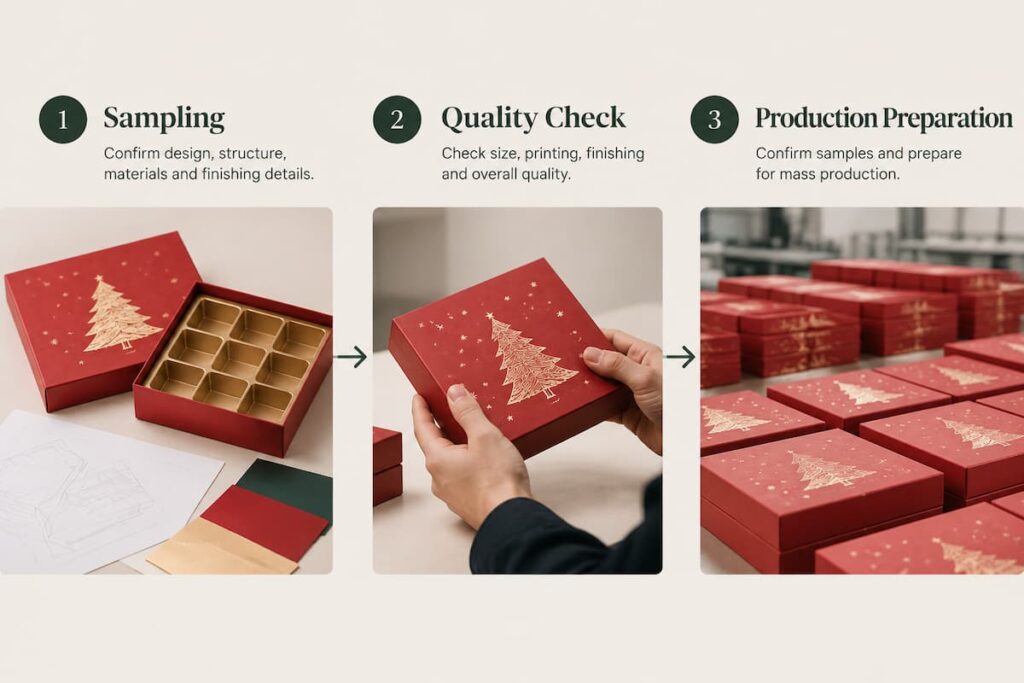
7. Christmas Chocolate Box Sampling, Quality Checks, and Production Preparation
A Christmas chocolate box may look correct in a design file but still need adjustment before mass production. Dimensions, insert fit, print colors, surface finishes, and assembly details need to work together. Sampling allows buyers to assess the structure, appearance, and product fit before approving a production run.
What to Check in a Sample
A structural sample can help confirm dimensions and opening mechanisms, while a printed sample can better demonstrate artwork and visual presentation. Clarify the sample’s purpose: not every sample reproduces all production materials or finishes. Confirm any differences before approval.
- Dimensions and structure: check overall size, proportions, closure, and assembly.
- Product fit: place the actual chocolates or accurate samples inside.
- Internal arrangement: confirm each piece fits and can be removed conveniently.
- Artwork and branding: review logo placement, text, colors, and alignment.
- Finishing details: inspect the specified foil, embossing, lamination, or other effects.
- Handling: check that the box opens, closes, and remains assembled as intended.
Approve Dimensions and Artwork Before Production
Evaluate the insert and outer box together. Use wrapped dimensions for individually wrapped chocolates and test the largest or most difficult pieces first. Confirm that the layout accommodates the full assortment and does not interfere with the closure.
- Review the latest artwork version.
- Check logos, text, numbers, illustrations, and required product information.
- Confirm barcode placement and labeling where applicable.
- Ensure important elements do not fall across folds, seams, or concealed areas.
- Document approved colors and finishing instructions.
- Resolve any differences between the sample and the production specification.
Quality Checks During Production
| Inspection area | What to review |
| Dimensions | Box size, insert fit, and closure alignment |
| Printing | Artwork accuracy, legibility, and consistency with the approved reference |
| Surface finish | Foil placement, embossing, lamination, and visible defects |
| Assembly | Box construction, insert placement, and closure performance |
| Product arrangement | Fit of the approved chocolates in the intended layout |
| Packing | Protection during handling and suitability for the agreed shipping method |
Ask which checks are included in the supplier’s quality process and whether inspection records or sample approvals can be provided. Do not assume every supplier follows the same inspection procedure.
Prepare for Seasonal Delivery
Christmas projects often have a fixed launch date. The plan should account for sample review, artwork approval, specification confirmation, manufacturing, inspection, and shipping. Before production is authorized, document the approved sample, final artwork, dimensions, materials, insert layout, quantity, packing method, and requested delivery date.
Changes after approval can affect cost and schedule, especially when they involve the structure, materials, artwork, or internal components. Confirm the impact of any change before proceeding.
8. Request a Quote for Custom Christmas Chocolate Boxes
Whether you are developing a retail collection, a premium gift set, or packaging for a corporate Christmas campaign, a useful inquiry starts with your product details, intended presentation, estimated order quantity, and target delivery date. These details help identify suitable options and clarify what needs to be confirmed before sampling or production.
What Information Should You Prepare?
You do not need a complete production-ready design to begin a discussion. Provide the information currently available and identify details that are still being decided.
- Product details: chocolate types, dimensions, quantity per box, and individual wrapping.
- Packaging preferences: reference images, preferred box style, or examples you like.
- Branding requirements: logo, artwork, brand guidelines, and seasonal design references.
- Internal layout: compartments, a custom insert, greeting card, or additional gift items.
- Order quantity: estimated volume and number of product variations.
- Delivery requirements: destination market and the date the finished packaging is needed.
Can You Start Before the Design Is Finalized?
Yes. An inquiry can begin with a concept, reference image, or description of the intended package. You may know the number of chocolates but still need to decide their arrangement, or have approved artwork while the box dimensions remain open. Explain what is confirmed and what still needs review so that proposed options can be evaluated against the actual products, budget, and production requirements.
Discuss Your Christmas Chocolate Packaging Project
The most effective packaging is developed around the product and the purpose of the collection. Clear information at the beginning makes it easier to review suitable structures, assess internal layouts, and plan the next steps.
Contact our team to discuss your custom Christmas chocolate boxes. Share your product details, preferred packaging style, estimated order quantity, and target delivery date to start planning packaging for your seasonal collection.