Cosmetic Box Manufacturers in China (2026): A Complete Sourcing Guide for Beauty Brands

Top 10 Cosmetic Box Manufacturers in China (2026): Compare Custom Packaging Factories for Beauty Brands
Choosing a cosmetic box manufacturer in China is not just about finding a supplier with attractive product photographs. The right factory must understand how your cosmetics fit inside the packaging, how your brand colors should appear on different materials, and how an approved sample can be reproduced in a commercial production run.
For skincare, makeup, and beauty gift sets, packaging problems often begin with details that are easy to overlook: an insert that does not properly secure a glass bottle, a lid that feels too tight, or foil stamping that looks different from the approved artwork. These issues can affect presentation, customer experience, and launch schedules.
China offers manufacturers specializing in printed folding cartons, rigid cosmetic boxes, luxury gift packaging, and OEM/ODM development. Ten suppliers worth evaluating in 2026 include LVPACK, Packoi, Top&Top Printing Packing, Shanghai DE Printed Box, JYX Packaging, Zhejiang Feifan Packaging, Shenzhen Lion Packaging, Innove Packaging, Sun Nature/Sinicline, and Dongguan Caihuan Paper.
This guide compares their packaging capabilities and explains how beauty brands can evaluate box structures, printing, prices, sampling, quality control, and production requirements before selecting a supplier.
1. Which Are the Top 10 Cosmetic Box Manufacturers in China for Custom Beauty Packaging?
The top cosmetic box manufacturers in China serve different segments of the beauty packaging market. Some are better suited to printed retail cartons, while others focus on luxury rigid boxes, custom inserts, or coordinated branded materials. A useful shortlist should consider manufacturing capabilities, minimum order quantities, structural experience, and the requirements of your specific products.
Top 10 Cosmetic Box Manufacturers at a Glance
| Manufacturer | Location | Main Capabilities | MOQ | Potential Fit |
| LVPACK | China | Rigid boxes, magnetic boxes, inserts, OEM/ODM | 1,000 pcs | Premium skincare and gift sets |
| Packoi | Guangzhou | Printed cartons, gift boxes, branded paper packaging | Product-specific | Retail beauty packaging |
| Top&Top Printing Packing | Shenzhen | Cosmetic cartons, rigid boxes, printing | By quotation | Print-intensive packaging |
| Shanghai DE Printed Box | Shanghai | Folding cartons, rigid boxes, corrugated packaging | By quotation | Multiple packaging formats |
| JYX Packaging | Dongguan | Luxury rigid boxes, structural development | By quotation | Premium beauty and fragrance |
| Zhejiang Feifan Packaging | Wenzhou | Folding cartons, rigid boxes, printed materials | By quotation | Multi-product packaging |
| Shenzhen Lion Packaging | Shenzhen | Magnetic boxes, drawer boxes, paper packaging | From 500 pcs on selected products | Smaller custom orders |
| Innove Packaging | Historically associated with Shenzhen | Specialty paper boxes and tubes | Confirmation required | Alternative paper structures |
| Sun Nature / Sinicline | Wuhan | Beauty packaging, labels, branded components | By quotation | Coordinated packaging |
| Dongguan Caihuan Paper | Dongguan | Rigid boxes, gift boxes, custom paper packaging | By quotation | Specialty gift packaging |
The order above is a procurement shortlist, not an independently audited quality ranking. Published quantities and company capabilities should be confirmed against the final packaging specifications.
1.1 LVPACK — Custom Cosmetic Gift Boxes and OEM/ODM Development
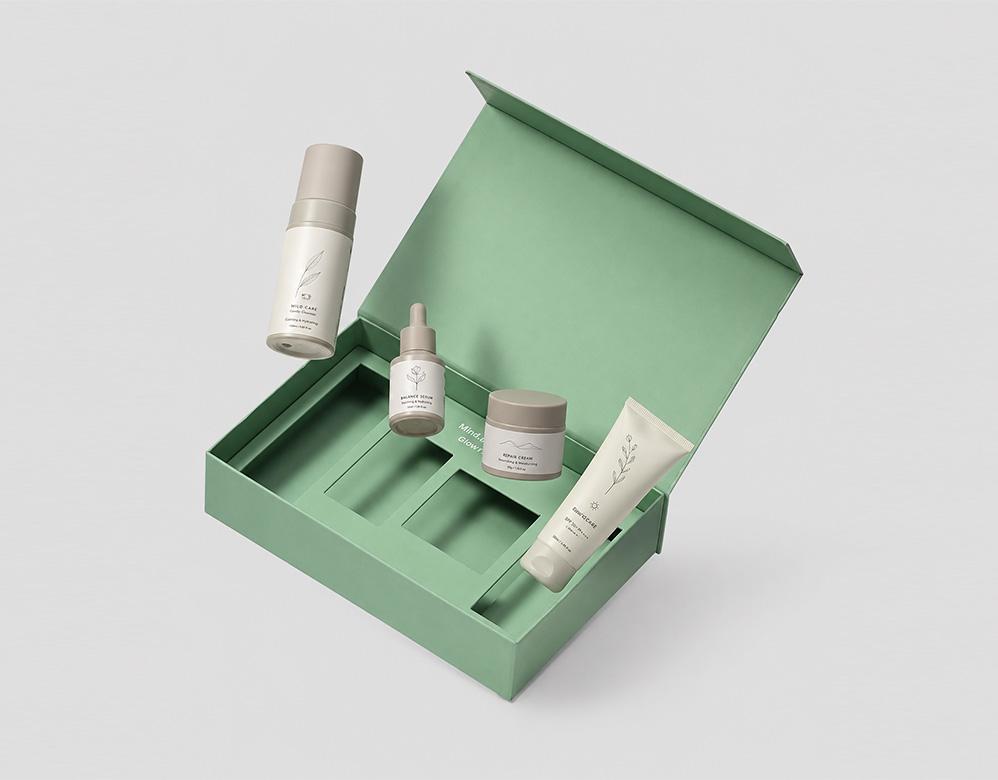
Luxury Vision Packaging (LVPACK) manufactures customized paper packaging for cosmetics, skincare, fragrance, jewelry, and premium gifts. Established in 2013, the company provides structural development, sample production, printing, finishing, assembly, and quality inspection.
For a skincare company preparing a new collection, LVPACK can help turn reference images and product dimensions into a workable box design. This includes decisions about opening structure, board thickness, protective inserts, and decorative finishing.
Its capabilities cover custom cosmetic boxes, magnetic closure boxes, drawer-style packaging, lid-and-base structures, and gift sets with product-specific inserts.
| Company Information | Details |
| Company | Luxury Vision Packaging Co., Ltd. |
| Established | 2013 |
| Company-reported Industry Experience | 20+ years |
| Employees | 80 |
| Production Lines | 5 |
| Design and Sampling Team | 8 |
| Quality Control Team | 10 |
| Standard MOQ | 1,000 pieces |
LVPACK offers CMYK and Pantone printing, foil stamping, embossing, debossing, spot UV, and different laminated or textured surfaces. Insert options include paperboard, EVA, sponge, and flocked materials.
For premium beauty products, its structural development service is particularly relevant. Packaging for a serum bottle, cream jar, and facial tool needs more than an attractive outer box; the internal layout should allow products to remain correctly positioned without making them difficult to remove.
The standard MOQ of 1,000 pieces makes LVPACK more suitable for planned commercial production than extremely small trial orders.
LVPACK is worth considering for growing beauty brands, skincare gift sets, and projects requiring detailed customization before bulk manufacturing.
1.2 Packoi — Printed Retail Packaging and Brand Materials
Packoi is a Guangzhou-based packaging supplier providing custom printed boxes, gift packaging, paper bags, and supporting branding materials.
Its product range includes folding cartons, rigid paper boxes, mailers, and promotional packaging. These offerings may suit a cosmetics business that needs several packaging components for one product collection.
For example, a makeup launch may require individual cartons, printed promotional cards, shopping bags, and seasonal gift packaging. Managing these products through one supplier can simplify artwork coordination.
Packoi’s minimum order quantities depend on product type and specifications. Buyers should confirm the quantity for the particular box structure rather than relying on a general MOQ.
A brand with straightforward printed retail packaging may find Packoi relevant, while a complex rigid skincare gift set should be evaluated through an appropriate structural sample.
1.3 Top&Top Printing Packing — Cosmetic Cartons and Printing
Established in 2005, Shenzhen Top&Top Printing Packing supplies printing and packaging services for cosmetics and other consumer products.
According to its company information, Top&Top operates a 6,800-square-meter facility and reports more than 600 employees. Its published product offering includes cosmetic cartons, rigid boxes, round paper boxes, and branded paper packaging.
Printing capability is particularly relevant when a makeup brand uses the same visual identity across several SKUs.
Different substrates can make the same printed color appear slightly different. A suitable packaging manufacturer should therefore be able to discuss artwork specifications, physical proofs, paper selection, and production color control.
Top&Top is a candidate for buyers prioritizing customized printing and paper converting services. The final production capacity available for an order should be confirmed during the quotation process.
1.4 Shanghai DE Printed Box — Folding and Rigid Paper Packaging
Shanghai DE Printed Box offers printed paper packaging across several structures, including folding cartons, rigid gift boxes, corrugated packaging, and paper bags.
Its range may be useful for established beauty brands sourcing individual retail cartons alongside gift-oriented packaging.
For example, one skincare range may use folding cartons for daily retail products and rigid gift boxes for promotional collections. Although these formats share branding, they require different manufacturing processes.
Buyers comparing Shanghai DE should ask about the particular structure they need, including material specifications, sample development, assembly, and production arrangements.
A broad catalogue is useful, but a manufacturer should still demonstrate relevant experience with the exact box format being purchased.
1.5 JYX Packaging — Premium Beauty and Fragrance Presentation
JYX Packaging focuses on premium custom packaging and offers product development services covering structure, material, appearance, and sampling.
The company maintains a manufacturing presence in Dongguan and publishes a development process that includes concept definition, structural work, prototyping, and sample testing.
JYX is relevant to premium skincare and fragrance projects where internal construction matters as much as external appearance.
A heavy glass fragrance bottle, for example, may require an engineered insert and a rigid structure that maintains alignment during repeated opening and handling.
The manufacturer must account for product dimensions, insertion and removal, decorative finishes, and practical assembly.
For complex packaging, physical prototypes should be evaluated using the actual products rather than approximate dimensions alone.
1.6 Zhejiang Feifan Packaging — Printed Cartons and Coordinated Paper Products
Zhejiang Feifan Packaging is a Wenzhou-based paper packaging and printing manufacturer. The company states that it was founded in 1992 and supplies folding cartons, rigid boxes, printed labels, bags, and other paper packaging products.
Its published capabilities include printing, foil stamping, embossing, texturing, and spot UV.
Feifan may be suitable for beauty businesses managing several product sizes or related packaging formats.
A skincare range with cleanser, toner, moisturizer, and serum products may require different carton dimensions while maintaining common artwork standards and materials.
For these projects, repeatable die-cutting, printing, and converting specifications are more important than an elaborate gift-box mechanism.
Buyers should verify the contracting company, applicable documentation, and manufacturing arrangements for their selected product.
1.7 Shenzhen Lion Packaging — Custom Packaging with Selected Lower MOQs
Shenzhen Lion Packaging, operating under the Lionwrapack brand, develops custom paper packaging including rigid boxes, magnetic boxes, drawers, folding cartons, and branded packaging accessories.
Its published B2B information advertises a standard MOQ of 500 pieces and production timing of 15–20 days after design approval for selected custom packaging products. Actual terms depend on the project.
This may interest smaller beauty brands preparing limited collections.
However, a lower MOQ does not necessarily produce a low unit price. Setup costs and material purchasing are distributed over fewer boxes, and complex construction may still require considerable manual assembly.
Buyers should compare quotations at different quantities and confirm whether the selected design qualifies for the advertised minimum.
1.8 Innove Packaging — Specialty Paper Box Formats
Innove Packaging has appeared in supplier listings for specialty paper boxes and cylindrical packaging products.
Paper tubes can offer a different presentation from conventional folding cartons, but their practical suitability depends on the product.
A cylindrical package needs appropriate lid fit, internal clearance, printing space, and stability. These requirements become more demanding when the contents are heavy or fragile.
Innove may be worth researching for alternative paper structures, although buyers should establish current company and manufacturing information before beginning an order.
For an active procurement project, obtain recent samples, written specifications, current contact information, and documented commercial terms.
1.9 Sun Nature / Sinicline — Beauty Packaging and Branded Components
Sun Nature, also known as Sunnature, is associated with the packaging business of Wuhan Sinicline Industry Co., Ltd.
Its related product offering includes beauty packaging, printed materials, labels, and branded accessories.
This may be useful for beauty brands launching products with several coordinated packaging components.
A single collection could require a retail carton, a gift presentation box, an insert card, and supplementary branded materials.
Managing these items through a related supplier network may simplify communication. However, the buyer should understand which business is responsible for manufacturing, inspection, and delivery of each product.
1.10 Dongguan Caihuan Paper — Gift Boxes and Specialty Paper Packaging
Dongguan Caihuan Paper supplies different paper packaging formats, including cosmetic boxes, perfume packaging, gift boxes, corrugated boxes, and paper bags.
The company describes more than 25 years of industry experience on its official website.
Its product range makes it a candidate for gift-oriented cosmetic packaging.
A beauty set containing products of different heights and shapes may need internal compartments, careful wrapping, and precise assembly.
Before ordering a complex structure, buyers should inspect samples for corner quality, surface alignment, glue marks, insert fit, and opening performance.
Which Manufacturer Should You Shortlist?
Instead of selecting a supplier solely by position in a list, start with your product requirements.
| Packaging Project | Manufacturers to Investigate | Main Evaluation |
| Premium skincare gift sets | LVPACK, JYX, Caihuan | Structure, inserts, finishing |
| Printed makeup cartons | Packoi, Top&Top, Feifan | Printing, die-cutting, unit cost |
| Magnetic rigid boxes | LVPACK, JYX, Lionwrapack | Closure fit and assembly |
| Multiple carton and gift-box formats | Shanghai DE, Packoi, Feifan | Production coordination |
| Smaller custom orders | Lionwrapack, selected Packoi products | Design-specific MOQ |
| Specialty paper tubes | Innove, subject to current verification | Manufacturing status and structure |
| Boxes and branded accessories | Packoi, Sinicline | Artwork and supply coordination |
A useful shortlist usually includes suppliers whose capabilities match the chosen structure, quantity, and price position. Requesting comparable samples and quotations will reveal more than a general company profile.
2. Which Custom Cosmetic Packaging Boxes Are Best for Skincare, Makeup, and Beauty Gift Sets?
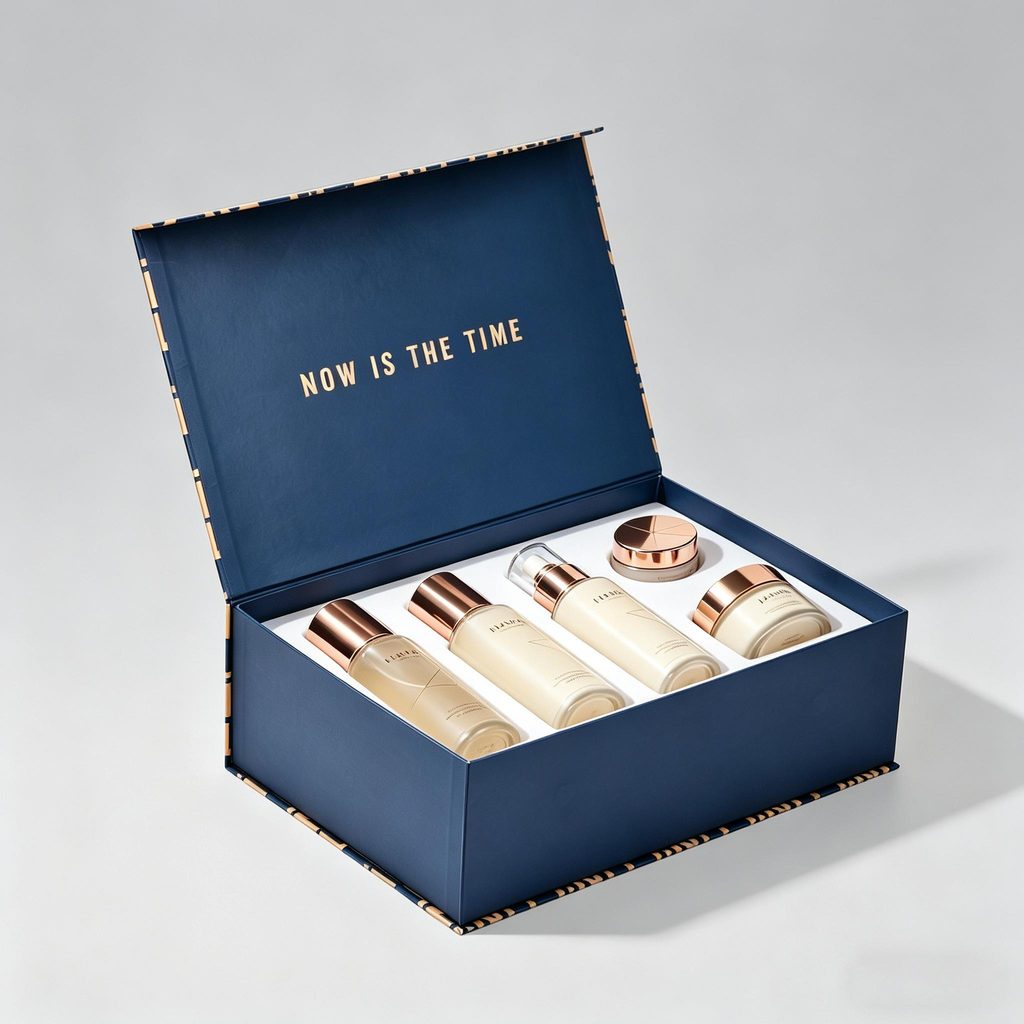
The right custom cosmetic packaging box depends on the product’s dimensions, weight, fragility, retail channel, and brand positioning. Folding cartons often work well for individual skincare or makeup products, while rigid boxes are more appropriate for premium gift sets that require a substantial presentation. Products sold together may also need custom inserts to keep each item in place.
Rather than choosing a box solely because it looks attractive in a catalogue, beauty brands should evaluate how the complete packaging system will perform.
Match the Box Structure to Your Cosmetic Product
Not every beauty product needs expensive rigid packaging.
A lightweight lipstick or compact palette may need a printed carton that protects the retail presentation and communicates essential product information. A skincare gift set containing several glass containers has different structural demands.
| Cosmetic Product | Suitable Packaging Option | Main Consideration |
| Lipstick and small makeup items | Folding cartons | Accurate sizing and efficient packing |
| Foundation bottles | Folding cartons with suitable support | Product fit and closure reliability |
| Glass serum bottles | Cartons or rigid boxes with inserts | Movement and impact protection |
| Cream jars | Folding cartons, lid-and-base boxes | Container weight and dimensions |
| Eyeshadow palettes | Printed cartons, sleeves, rigid gift boxes | Surface protection and retail presentation |
| Skincare collections | Rigid magnetic or lid-and-base boxes | Product arrangement and gift presentation |
| Beauty subscription sets | Corrugated outer packaging with inner packaging | Distribution protection and efficient assembly |
These are starting points rather than universal specifications. A heavy product may require stronger construction even when its dimensions are small.
Folding Cartons or Rigid Cosmetic Boxes?
A folding carton is typically made from a printed and die-cut paperboard sheet. It can be shipped flat and assembled when required.
For individual cosmetics sold in large quantities, this structure often provides an effective balance between printing flexibility, material use, storage efficiency, and cost.
A rigid box uses thicker board with a wrapped outer surface. It can create a more substantial presentation and accommodate specialty opening mechanisms or inserts.
Brands considering rigid gift boxes should understand that the construction generally involves more materials, converting stages, and assembly work.
A rigid structure may make commercial sense for a premium skincare set, but it can add unnecessary cost to an everyday cosmetic product.
The practical decision is based on how the box supports the product’s price, distribution, customer experience, and brand presentation.
Why Inserts Matter for Glass Skincare Containers
The outer box and its insert should be designed as a system.
Imagine a gift set containing a 30 ml serum, a cream jar, and a small applicator. Even if the outer box looks attractive, the products may move when it is turned or lifted.
A well-designed insert positions each item and makes the arrangement easy to understand.
Different insert materials produce different results.
| Insert Material | Typical Application | Important Consideration |
| Folded paperboard | Retail sets and lightweight products | Structural design and material thickness |
| Molded pulp | Selected protective packaging projects | Tooling, surface finish, and fit |
| EVA foam | Premium gift sets and shaped compartments | Material grade and dimensional accuracy |
| Sponge or foam | Protective support for selected products | Compression and material suitability |
| Flocked insert | Decorative presentation packaging | Surface appearance and product contact |
| PET insert | Formed trays and visible product presentation | Material choice and project requirements |
The best insert is not necessarily the softest or most expensive.
It should fit the actual product, permit convenient removal, remain stable during intended handling, and satisfy the buyer’s material requirements.
Brands ordering custom packaging inserts should provide the factory with physical samples or verified dimensional drawings wherever possible.
Packaging Structure Should Support the Customer Experience
Beauty brands often focus on how a box appears when closed. The way it opens is equally important.
A magnetic box can create a controlled opening experience. A drawer box reveals the products through a sliding movement. A lid-and-base structure provides a familiar presentation with fewer mechanical features.
However, each option introduces practical questions.
A drawer that fits too tightly may be difficult to open. A loose drawer may slide out unexpectedly. A magnetic lid may fail to align if the structure or assembly is inaccurate.
For premium packaging, these details influence how the finished product feels to the customer.
Before approving a structure, test the box using the actual products and the intended opening sequence.
An attractive digital rendering is useful for visual approval, but it cannot confirm the physical performance of the finished packaging.
3. How Do Cosmetic Box Manufacturers Handle Custom Printing, Luxury Finishes, and Bulk Production Quality?
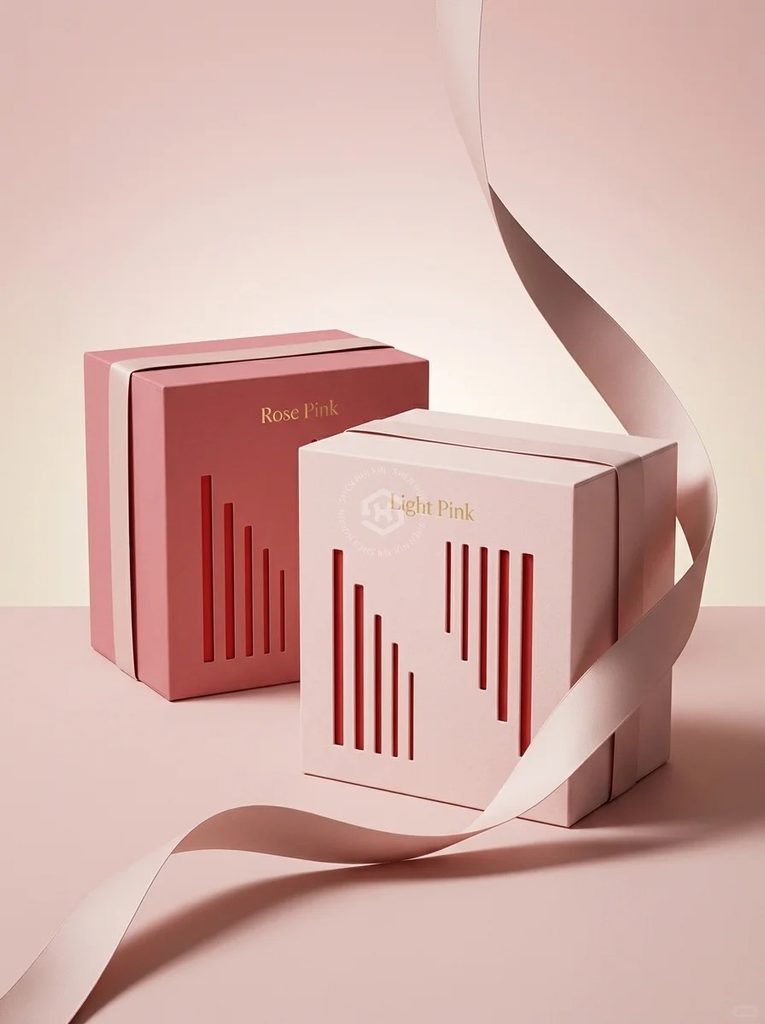
Custom cosmetic box printing involves more than reproducing artwork on paper. Manufacturers must match colors, choose suitable printing methods, prepare surfaces, and apply decorative finishes without compromising the box’s appearance or function. Beauty brands should assess whether the supplier can produce the intended finish consistently, particularly when the packaging combines metallic foil, textured paper, embossing, or soft-touch surfaces.
These capabilities matter because cosmetic packaging frequently relies on color and tactile details to communicate a brand’s identity.
CMYK and Pantone Printing: What Should Beauty Brands Specify?
CMYK printing combines cyan, magenta, yellow, and black inks to reproduce full-color artwork.
It is commonly used for photographic graphics, illustrations, gradients, and other designs containing multiple colors.
Pantone or spot-color printing is useful when a brand needs a specific reference color that may be difficult to reproduce consistently through ordinary process printing.
Neither method eliminates the influence of the substrate.
The same artwork can appear different on white coated paper, natural kraft, uncoated specialty paper, or a laminated surface.
For a beauty brand with several products displayed together, these differences may be noticeable.
A reliable print specification should identify:
Artwork files and final dimensions
CMYK and spot-color requirements
Pantone references where applicable
Printing substrate
Surface coating or lamination
Approved color proof
Acceptable production variation
Brands should distinguish between approving a color on a monitor and approving a printed result on the intended material.
Screen colors depend on display settings and cannot independently confirm the appearance of the finished printed box.
Which Finishing Processes Are Suitable for Luxury Cosmetic Packaging?
Decorative finishing helps distinguish premium beauty packaging, but the correct process depends on the design.
| Finishing Process | Visual or Tactile Effect | Manufacturing Consideration |
| Hot foil stamping | Metallic or colored foil details | Registration, adhesion, line thickness |
| Embossing | Raised decorative elements | Board and covering paper compatibility |
| Debossing | Recessed patterns or lettering | Pressure and material response |
| Spot UV | Selective gloss contrast | Coating alignment and surface compatibility |
| Matte lamination | Reduced surface gloss | Scuff visibility and material choice |
| Gloss lamination | Reflective finish | Surface appearance and handling |
| Soft-touch finish | Smooth, tactile surface | Rub resistance and compatibility |
| Specialty paper | Texture or distinctive appearance | Printability, wrapping, and finishing behavior |
A cosmetic brand might use matte paper with subtle gold foil for a premium skincare collection.
Another may prefer a clean white box with embossed lettering and no metallic decoration.
Neither approach is automatically superior. The finish should suit the product’s visual identity and price position.
Manufacturers offering custom box printing should explain which processes are technically appropriate for the chosen substrate.
Can a Factory Reproduce a Complex Finish at Scale?
A sample may be made with careful manual attention. During mass production, the same result must be achieved across hundreds or thousands of units.
Potential issues include slight foil misalignment, uneven embossing, visible wrapping defects, surface scratches, and inconsistent coating.
These problems are particularly noticeable on minimalist beauty packaging, where a small logo or decorative feature may be the main visual element.
The production team should therefore define inspection criteria before manufacturing begins.
For a foil-stamped logo, buyers may need to agree on position, completeness of transfer, color appearance, and acceptable imperfections.
For wrapped rigid boxes, the inspection should also consider corners, edges, glue marks, and surface cleanliness.
A physical approved sample gives buyers a stronger reference than a rendering, but detailed written specifications are still valuable.
How Much Finishing Is Too Much?
More finishing does not always make packaging more effective.
A box combining foil stamping, embossing, spot UV, specialty paper, and soft-touch lamination may look impressive in a presentation. It also introduces several production stages and potential sources of variation.
Before choosing multiple finishes, ask what each one contributes.
Does the foil improve logo visibility? Does the surface texture reinforce the brand’s visual identity? Will the finished box remain attractive after handling and transport?
If a process adds cost without improving presentation or usability, it may be worth removing.
For international beauty brands, a restrained design with consistent manufacturing can be more effective than an elaborate structure with difficult-to-control details.
4. How Much Do Custom Cosmetic Boxes Cost in China, and What Affects Factory Pricing?
The cost of custom cosmetic boxes in China depends on structure, dimensions, board material, printing, decorative finishing, inserts, order quantity, and delivery requirements. A basic folding carton and a magnetic rigid gift box cannot be compared using unit price alone because they involve different materials and manufacturing operations. To compare quotations fairly, buyers need to supply the same technical specification to each factory.
A low quotation may be attractive, but the real purchasing cost includes more than the price printed beside each box.
Why Do Similar Cosmetic Box Quotations Differ?
Two suppliers may quote different prices for a box that appears almost identical in a photograph.
The difference may come from details that are not visible in the image.
One supplier may propose thicker paperboard, a more expensive covering material, or an insert made from a different material. Another may assume a simpler finishing process or more basic shipping protection.
The manufacturing method also matters.
Folding cartons can often be produced using automated printing, die-cutting, and gluing equipment. Rigid boxes commonly require additional wrapping and assembly operations.
These differences affect labor, material consumption, setup requirements, and production time.
| Cost Factor | What Changes the Price | What Buyers Should Confirm |
| Box structure | Folding carton, rigid box, magnetic, drawer | Exact construction |
| Dimensions | Material area and cutting yield | Internal and external sizes |
| Paperboard | Type, thickness, grade | Material specification |
| Printing | Color count and printing method | Artwork and approved proof |
| Finishing | Foil, embossing, lamination, UV | Process and coverage |
| Inserts | Material, cutting, shaping, fitting | Product arrangement |
| Quantity | Setup cost per unit and production efficiency | Price breaks |
| Assembly | Automation and manual operations | Finished or flat delivery |
| Packing | Export cartons and protective materials | Packing method |
| Shipping | Volume, weight, route, destination | Incoterms and freight basis |
Buyers requesting wholesale cosmetic packaging boxes should confirm whether all these elements are included in the quoted price.
How Does MOQ Affect the Unit Price?
Custom packaging involves setup work that may be required regardless of the order quantity.
A printing job may need plates, cutting dies, machine preparation, and approved proofs. Specialty finishing may require additional tooling.
When these fixed costs are spread across a larger production run, the setup cost per box usually decreases.
Consider a simplified example.
A project has a one-time setup cost of $300. At 1,000 boxes, the setup contributes $0.30 per box. At 3,000 boxes, the same setup contributes $0.10 per box.
This does not mean the finished unit price will fall by exactly $0.20. Material consumption, labor, waste, and other costs still apply.
However, it illustrates why quantity affects factory quotations.
Brands should ask for price breaks at realistic order volumes rather than automatically ordering the largest quantity.
Purchasing 10,000 boxes at a lower unit price is not economical if the product design may change before those boxes are used.
What Should a Cosmetic Packaging Quotation Include?
A useful quotation should make the supplier’s assumptions clear.
For example, an offer described only as “custom magnetic cosmetic box, 2,000 pieces” leaves too many unanswered questions.
A stronger quotation identifies the finished size, structure, material, inserts, printing, finishing, packing, quantity, tooling charges, and commercial terms.
The following information should be agreed upon.
| Quotation Item | Required Detail |
| Product | Box type and intended application |
| Size | Internal or external dimensions, clearly identified |
| Material | Paperboard and covering paper |
| Printing | Color method and artwork reference |
| Surface Finish | Lamination, foil, embossing, UV, or other treatment |
| Insert | Material, shape, and product arrangement |
| Quantity | Units per design and total quantity |
| Sample | Type, cost, and approval process |
| Tooling | Included or separately charged |
| Packing | Units per export carton and protection |
| Delivery | Incoterm, destination, and shipment arrangement |
| Production | Schedule following final approval |
Without this level of detail, comparing supplier quotations can become misleading.
How Can Beauty Brands Reduce Packaging Cost Without Weakening the Design?
The most effective cost reduction often begins with the structure rather than negotiations over the final unit price.
For example, replacing an unnecessarily complicated opening mechanism with a simpler rigid structure may reduce assembly work.
Using one well-chosen finish instead of several decorative processes can also improve production efficiency.
Brands can consider:
Reducing unused space inside the box
Standardizing dimensions across related products
Limiting finishing to the most visible features
Selecting insert materials according to actual protection needs
Sharing realistic order forecasts with the manufacturer
Reviewing whether the box should be delivered assembled or flat
Avoiding unnecessary changes after sample approval
These decisions should be tested against the actual products.
Reducing board thickness or insert support solely to save money may create new problems during handling or delivery.
For a meaningful price comparison, ask suppliers to quote the same specification first, then evaluate alternative designs separately.
5. How Can a Cosmetic Packaging Factory Ensure Sample-to-Bulk Quality and Reliable Delivery?
A cosmetic packaging factory should treat the approved sample as a manufacturing reference, supported by written material, printing, dimension, finishing, and assembly specifications. Sample approval alone is not sufficient if the bulk production requirements remain unclear. Quality control should address critical risks throughout material preparation, printing, converting, assembly, packing, and shipment.
For beauty brands working toward a launch date, the difference between a good sample and a reliable production process can determine whether the packaging arrives ready for use.
What Can Go Wrong Between Sampling and Mass Production?
A prototype is usually produced in a smaller quantity and may involve manual adjustments.
Bulk production introduces different conditions: large material batches, repeated machine operations, multiple workers, and faster assembly processes.
Variations can occur at several stages.
| Potential Issue | Possible Cause | Recommended Control |
| Box is too tight for product | Incorrect dimensions or clearance | Test actual products in sample |
| Insert allows movement | Improper cavity design | Verify fit and handling |
| Printed color varies | Material or printing variation | Approve physical color reference |
| Foil is misaligned | Registration or setup issues | Define finishing inspection criteria |
| Corners are uneven | Wrapping and assembly variation | Inspect structural workmanship |
| Magnetic lid does not align | Structural or assembly variation | Test closure performance |
| Surface is scratched | Handling or packing method | Specify packing protection |
| Shipment is delayed | Materials, revisions, or scheduling | Confirm milestones before production |
These issues are not unique to China. They are practical manufacturing risks that buyers should address with any packaging supplier.
What Should Be Approved Before Production Begins?
A cosmetic packaging sample should be evaluated with more than a quick visual inspection.
For a gift set containing several skincare products, place the actual filled containers inside the box.
Check that every item fits the insert, remains stable during reasonable handling, and can be removed comfortably.
Open and close the packaging repeatedly. Inspect the printed surfaces under suitable lighting and review the areas around corners, folds, and decorative details.
The final approval should identify:
Finished box dimensions
Material type and thickness
Approved artwork and colors
Printing and finishing requirements
Insert dimensions and layout
Closure and opening performance
Acceptable workmanship
Packing and shipping protection
If changes are made after the sample is approved, they should be documented.
A revised insert, different board grade, or new covering paper can affect the final result even when the outer artwork stays the same.
Where Should Quality Control Take Place?
A reliable quality-control process does not begin only after the boxes are finished.
Incoming materials should be checked against the agreed specifications. Printing and finishing processes should be monitored during production. Structural dimensions and assembly quality should be checked before the finished boxes are packed.
For premium rigid packaging, useful inspection stages include material preparation, printing approval, finishing, box forming, insert assembly, and final packing.
A beauty brand can request inspection records or agree on a third-party inspection arrangement when appropriate.
For buyers needing custom packaging quality control support, the most valuable questions concern how defects are identified, how corrective action is handled, and what standards are used to accept or reject finished goods.
A supplier’s certification may indicate a management system, but it does not replace inspection of the actual products.
How Should Buyers Manage Production Lead Times?
Production timing depends on the complete scope of work.
A project with an approved dieline and standard paper may progress differently from one requiring a new rigid structure, specialty materials, several prototypes, and complex finishing.
The commercial schedule should distinguish between:
Specification development and artwork confirmation.
Sample preparation and approval.
Material procurement and production preparation.
Bulk manufacturing and inspection.
Packing and international shipment.
The time required for each stage should be confirmed with the selected factory.
Buyers should not assume that a published lead time begins with the first inquiry. Many suppliers calculate production timing only after sample approval, receipt of required payment, and completion of technical confirmations.
Beauty brands preparing seasonal launches should also allow for international shipping, customs handling, and unexpected revisions.
How Can a Brand Reduce the Risk of Launch Delays?
A practical approach is to work backward from the required packaging arrival date.
First determine when the products must be packed or assembled. Then account for international transport, production, material preparation, and sample approval.
The schedule should identify who is responsible for each decision.
For example, delays may occur when a factory is ready to proceed but is waiting for updated artwork or confirmation of insert dimensions.
Clear responsibilities and realistic approval dates help reduce these delays.
The manufacturer should also understand which specifications cannot change after approval.
For an established beauty line, maintaining consistent material and printing references across repeat orders can reduce the amount of redevelopment required.
6. How to Choose a Reliable Custom Cosmetic Box Manufacturer in China for Your Beauty Brand?
Choosing a reliable custom cosmetic box manufacturer in China requires evaluating the factory’s experience with your specific packaging structure, its sampling process, quality-control procedures, communication, and ability to meet commercial requirements. A large product catalogue is useful, but comparable samples, clear specifications, and a detailed quotation provide stronger evidence of whether the supplier can deliver your project successfully.
A manufacturer that performs well for a standard folding carton may not be the right partner for an intricate skincare presentation box.
Start with Manufacturing Fit, Not Company Size
Company size, equipment lists, and production capacity can provide context, but they do not automatically establish suitability.
A buyer ordering 2,000 rigid skincare gift boxes may benefit more from a supplier with relevant structural experience than one focused on producing millions of basic retail cartons.
Begin with the product.
Does your packaging require a magnetic closure, drawer mechanism, custom insert, specialty paper, or unusual surface finish?
Can the supplier show examples of similar packaging?
Does it have a clear method for developing and approving a sample?
These questions narrow the shortlist before buyers spend time comparing prices.
How Can You Verify a Cosmetic Packaging Supplier?
An initial supplier assessment should cover several areas.
| Assessment Area | Questions to Ask |
| Company Identity | Which legal entity will issue the quotation and invoice? |
| Manufacturing | Where will the packaging be produced? |
| Relevant Experience | Can the supplier show comparable products? |
| Sampling | How is a sample developed and approved? |
| Materials | Can the proposed materials be specified clearly? |
| Printing | How are artwork and color references managed? |
| Quality Control | Which checkpoints apply to the order? |
| Capacity | Can the factory support the required quantity? |
| Delivery | Which production and shipment milestones are included? |
| Documentation | Which certificates and test reports apply to the actual order? |
For a significant purchase, buyers may also arrange a factory visit, video walkthrough, or independent inspection.
These steps are particularly useful when beginning a long-term relationship or developing packaging with high tooling costs.
Which Certifications Matter for Cosmetic Packaging?
Certification requirements depend on the packaging material, buyer expectations, market, and intended use.
Some manufacturers publish information about ISO management certifications, FSC-related paper sourcing, or other compliance programs.
However, buyers should not assume that a certificate displayed on a company website automatically covers every product or manufacturing facility.
Check the certificate holder, scope, expiry, and applicable product or material.
For paper sourced under a certified chain-of-custody program, the documentation and claims should be assessed against the actual transaction.
Beauty brands should also distinguish cosmetic product compliance from outer packaging requirements.
A decorative paper box does not automatically need the same testing as a container that directly holds a cosmetic formulation.
When documentation is required by the importing market or brand, confirm the exact material and regulatory scope before production.
Compare Suppliers Using the Same Specification
A supplier comparison becomes unreliable when each manufacturer quotes a different design.
One factory may assume a lighter board. Another may include a premium insert and additional finishing. A third may exclude tooling or export packing.
To compare offers accurately, provide all shortlisted suppliers with the same request for quotation.
A practical evaluation may consider:
| Criteria | Example Evaluation Weight |
| Experience with the required structure | 25% |
| Sample quality and specification accuracy | 25% |
| Pricing and commercial clarity | 20% |
| Quality-control process | 15% |
| Communication and project support | 10% |
| Delivery planning | 5% |
These weights are an example that buyers can adjust, not an industry standard.
A brand with a fixed seasonal launch date might give delivery planning greater weight. A luxury fragrance company developing a complex presentation box may prioritize structural engineering and sample quality.
The purpose of the evaluation is to avoid choosing a supplier based on one attractive factor while overlooking others.
Warning Signs During Supplier Selection
Certain problems should be addressed before an order is placed.
Be cautious if a supplier cannot provide a clear specification, changes the proposed materials without explanation, or offers a production date before understanding the design.
Other concerns include quotations that omit essential components, inconsistent answers about manufacturing arrangements, and reluctance to establish sample-approval criteria.
A low price by itself is not a warning sign. It becomes a concern when the supplier cannot explain what is included or how the intended quality will be achieved.
For a new beauty packaging project, clear technical communication is often as valuable as a small unit-price difference.
The Right Supplier May Change as Your Brand Grows
An emerging cosmetics business may begin with standard cartons or small custom orders.
As sales increase, it may need more specialized inserts, consistent finishes across product lines, improved replenishment planning, or a more developed OEM/ODM process.
This means the best manufacturer for an initial test launch may not be the best choice for a larger premium collection.
Brands should consider both current requirements and realistic future needs.
A suitable long-term packaging partner should be able to discuss design changes, repeat ordering, material consistency, and expansion into related products.
7. Why Source Custom Cosmetic Packaging from China Instead of Local Manufacturers?
China can be a practical source for custom cosmetic packaging because buyers can access a broad network of paperboard suppliers, printing companies, finishing specialists, tooling providers, and box manufacturers. This can support projects involving several materials or manufacturing processes. However, sourcing from China is not automatically the best choice for every beauty brand. Order size, shipping costs, development time, communication, and replenishment needs must also be considered.
The decision should be based on the total requirements of the packaging project rather than the factory unit price alone.
What Makes China’s Cosmetic Packaging Supply Chain Useful?
Custom paper packaging depends on several connected activities.
These may include sourcing board and specialty paper, printing, laminating, die-cutting, foil stamping, manufacturing inserts, assembling boxes, and packing finished orders.
China has established manufacturing clusters where many of these services are available through local supply networks.
For buyers, this can be useful when developing packaging that combines multiple materials and processes.
For example, a premium skincare box may involve greyboard, a specialty covering paper, metallic foil, a flocked insert, and a magnetic closure.
Producing the finished box requires coordinating these components within the agreed specification.
A manufacturer experienced with custom rigid boxes can help evaluate material compatibility, construction methods, and practical assembly requirements.
Does Sourcing from China Always Reduce Costs?
No.
Factory prices are only one part of the purchasing calculation.
International buyers may also incur sample shipping, tooling, freight, customs charges, taxes, inspection, and storage costs.
The total landed cost depends on the commercial terms and destination.
For a large order, international manufacturing may provide attractive production economics.
For a small order needed urgently, local manufacturing may be more practical once shipping costs and timing are considered.
| Purchasing Factor | Sourcing from China | Local Manufacturing |
| Custom manufacturing options | Broad supplier selection | Depends on local industry |
| Complex finishing | Access to specialized supply networks | Capability varies |
| Small urgent orders | Freight and setup may reduce attractiveness | May offer logistical advantages |
| Large repeat orders | Can be commercially attractive | Depends on capacity and pricing |
| Communication | Requires coordination across time zones | Often easier for local meetings |
| Shipping | International freight and customs | Usually shorter domestic distribution |
| On-site approvals | May require travel or remote review | May be easier to arrange |
The appropriate choice depends on the project’s priorities.
When Is a Chinese Manufacturer a Strong Option?
China may be particularly suitable for a beauty brand planning a commercially sized production run of customized paper boxes.
This includes projects requiring multiple finishing processes, rigid-box development, inserts, or several related packaging designs.
A manufacturer that supports design, sampling, and production can help reduce the number of separate suppliers involved in the project.
The buyer should still verify the actual scope of work and whether critical processes are performed in-house or managed through external partners.
For brands comparing custom packaging manufacturers in China, the most useful question is not simply where the supplier is located.
It is whether the company can deliver the required design at an acceptable total cost, quality level, and schedule.
When Might Local Packaging Production Be Better?
Local production can be a sensible option when quantities are very small, the packaging is needed quickly, or the project requires frequent in-person design approvals.
It may also be useful for brands that replenish packaging in small quantities at short intervals.
For example, a cosmetics company testing a new product at a handful of retail stores may prefer a local supplier even if the per-unit packaging cost is higher.
The additional flexibility may outweigh the difference in manufacturing price.
Some brands use a combination of local and overseas suppliers, depending on the product line and purchasing volume.
There is no need for every packaging project to follow the same sourcing strategy.
How Can Overseas Buyers Improve Communication?
Successful international sourcing begins with clear information.
Manufacturers need accurate dimensions, artwork, quantities, materials, and delivery requirements.
Reference photographs can communicate visual preferences, but they cannot always establish the box’s technical construction.
For complex packaging, a detailed specification is more reliable than an informal description.
Buyers should also confirm the preferred communication channel, responsible project contacts, approval procedures, and timing of progress updates.
When changes are made, both parties should work from the latest approved version.
This reduces the risk of producing packaging according to an outdated drawing or artwork file.
8. How to Start an OEM/ODM Custom Cosmetic Box Project with a China Manufacturer?
Starting an OEM/ODM custom cosmetic box project usually involves sharing product information, defining the packaging concept, selecting materials, developing a sample, and approving specifications before bulk production. A buyer does not always need a completed dieline at the beginning. However, accurate product dimensions, expected quantity, design references, and a realistic launch schedule help the manufacturer evaluate feasibility and prepare a useful quotation.
The better the initial information, the easier it is to identify a workable packaging solution.
What Information Should You Send to a Cosmetic Box Manufacturer?
A packaging inquiry should explain what needs to fit inside the box and what the packaging needs to achieve.
For example, a message requesting “a luxury box for skincare” leaves many decisions unresolved.
A stronger inquiry explains the products, intended arrangement, preferred structure, quantity, and visual style.
| Information | Example |
| Product Type | Serum bottle and cream jar gift set |
| Product Dimensions | Exact measurements of each item |
| Product Weight | Weight of filled containers |
| Packaging Structure | Magnetic rigid box |
| Quantity | 2,000 sets |
| Artwork | Logo and preliminary design files |
| Materials | Specialty paper with protective insert |
| Finishing | Matte surface and foil-stamped logo |
| Destination | Importing country and delivery location |
| Launch Schedule | Required packaging arrival date |
These are example inquiry details, not fixed specifications.
A manufacturer can use the information to assess materials, internal arrangement, tooling requirements, and production feasibility.
Can You Develop Cosmetic Packaging Without a Dieline?
Yes. A completed dieline is helpful, but it is not always necessary for the initial discussion.
A brand may begin with product samples, a reference photograph, logo files, and an approximate packaging concept.
An OEM/ODM manufacturer can assess the required structure and develop technical drawings or prototypes as part of the project.
The exact scope should be agreed upon before development begins.
For example, a skincare startup may request a magnetic gift box that holds three glass bottles.
The initial engineering work would involve confirming the dimensions, choosing an opening structure, developing the insert layout, and evaluating the intended finish.
A prototype can then be used to check whether the packaging works as expected.
A Practical Cosmetic Packaging Development Process
Packaging Requirements
Confirm the products, quantities, dimensions, design direction, target budget, and destination.
Structural Development
Evaluate box construction, internal layout, materials, and technical drawings.
Sample Production
Develop and review a physical prototype using the intended products and finishing requirements.
Sample Approval
Confirm dimensions, materials, printing, inserts, closure performance, and workmanship.
Bulk Manufacturing
Produce boxes according to the approved specifications and agreed commercial terms.
Inspection and Shipment
Review finished goods, prepare export packing, and arrange shipment according to the agreed delivery terms.
The precise sequence and timing may vary depending on whether the project uses an existing structure or requires a completely new design.
How Does LVPACK Support Custom Cosmetic Packaging Projects?
Luxury Vision Packaging provides OEM/ODM packaging services for beauty brands developing customized paperboard packaging.
Its capabilities include structural design, material selection, prototyping, printing, decorative finishing, inserts, production, and quality inspection.
LVPACK works with custom magnetic boxes, drawer-style structures, lid-and-base boxes, and other rigid gift packaging formats.
For brands developing custom cosmetic gift boxes, this service can help coordinate the box construction with the arrangement of skincare or makeup products inside.
The company was established in 2013 and reports 80 employees, including dedicated design and quality-control teams.
Its standard MOQ is 1,000 pieces.
Final pricing and production timing depend on the approved packaging specifications, materials, finishes, and order requirements.
Request a Custom Cosmetic Packaging Quotation
Preparing to launch a skincare collection, introduce a new makeup product, or upgrade an existing gift box?
LVPACK can help evaluate a packaging concept and develop a solution based on your product dimensions, design preferences, and commercial requirements.
Whether you need a magnetic presentation box, drawer-style packaging, or an insert designed for several cosmetic products, the first step is to share the details of your project.
Send your product measurements, estimated quantity, reference images, preferred materials, and target delivery requirements.
The LVPACK team can review the requirements, discuss available customization options, and provide a quotation based on the proposed packaging design.
Contact LVPACK to start developing custom cosmetic packaging for your next product collection.